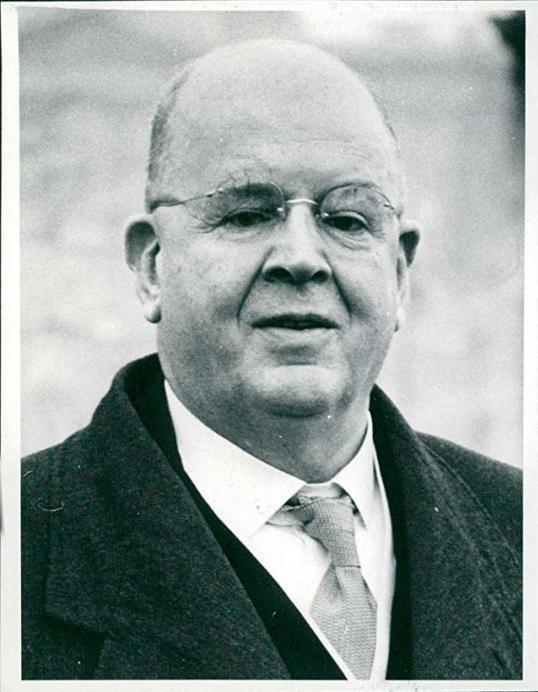
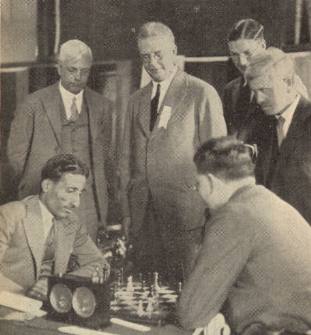
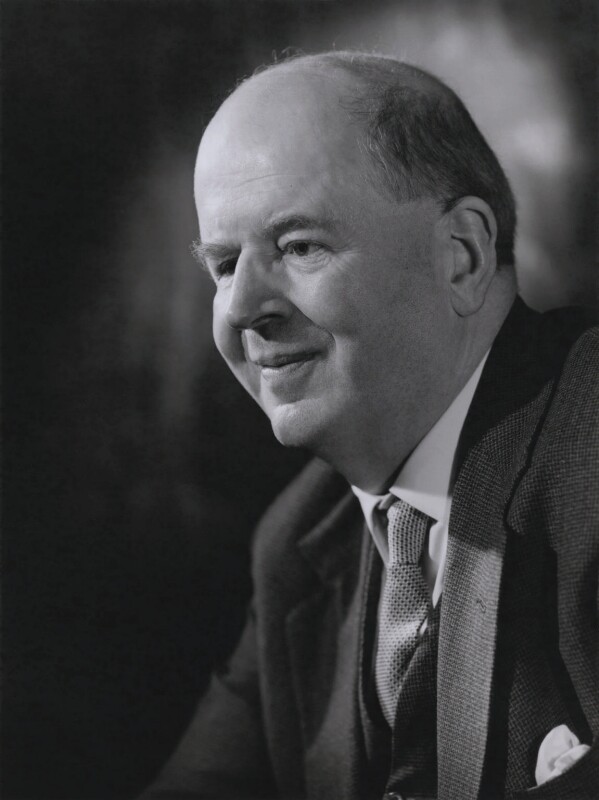
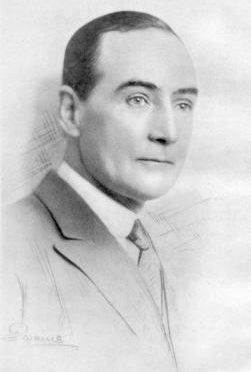
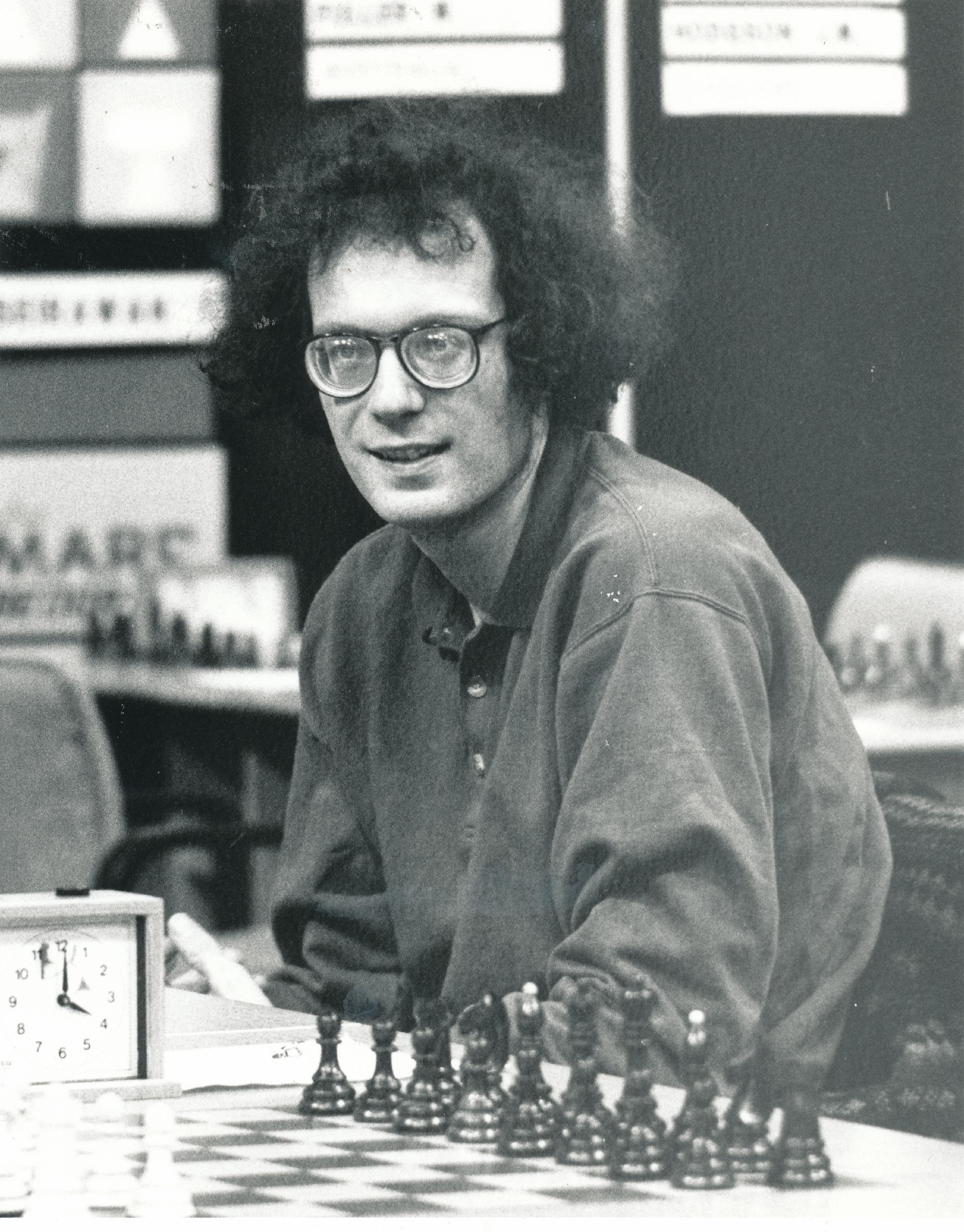
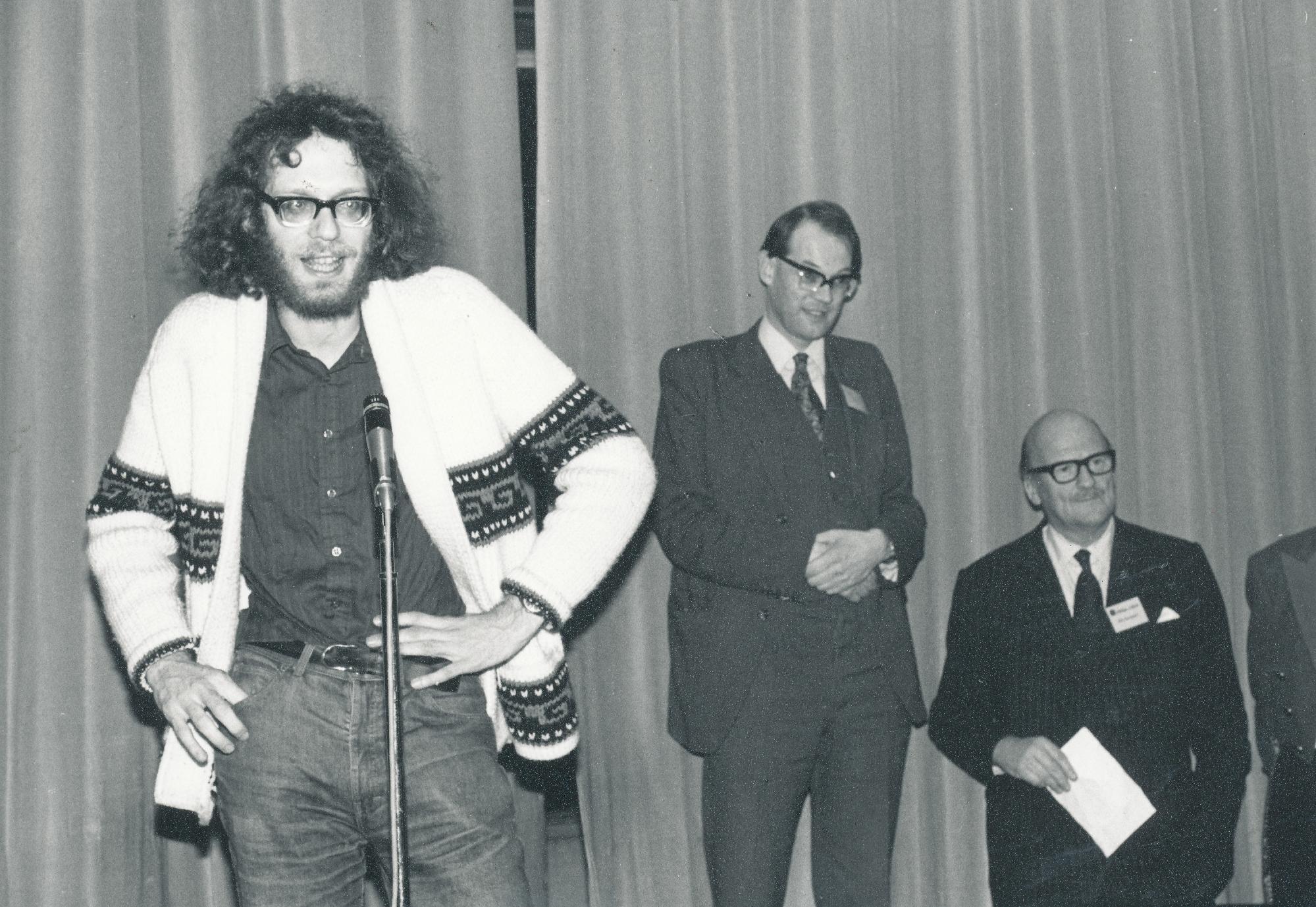
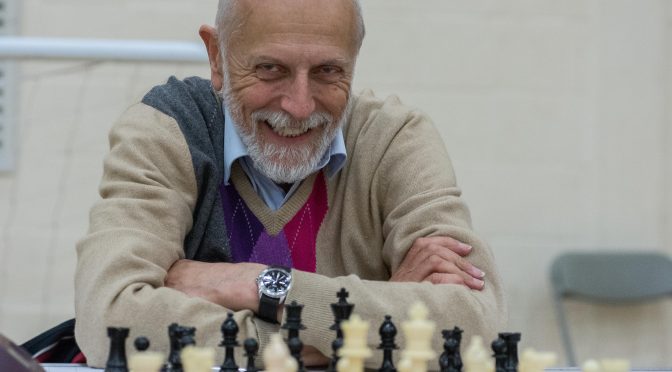
We remember IM Michael Basman who passed away on October 26th, 2022
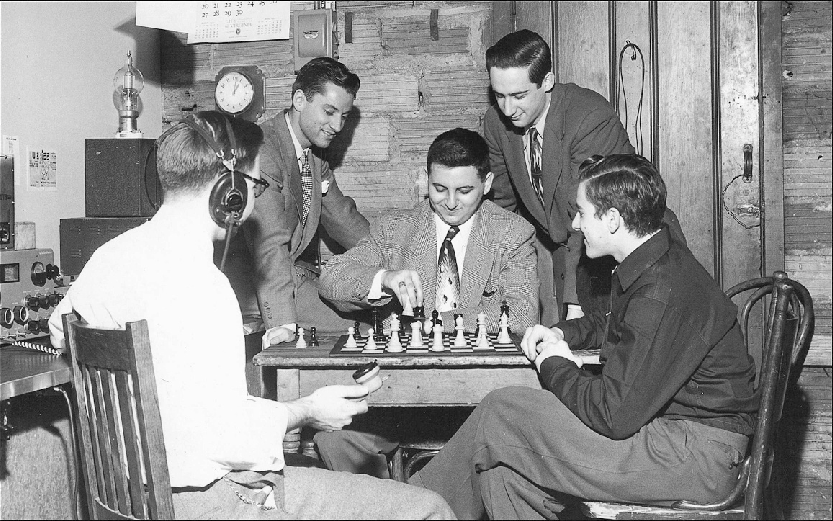
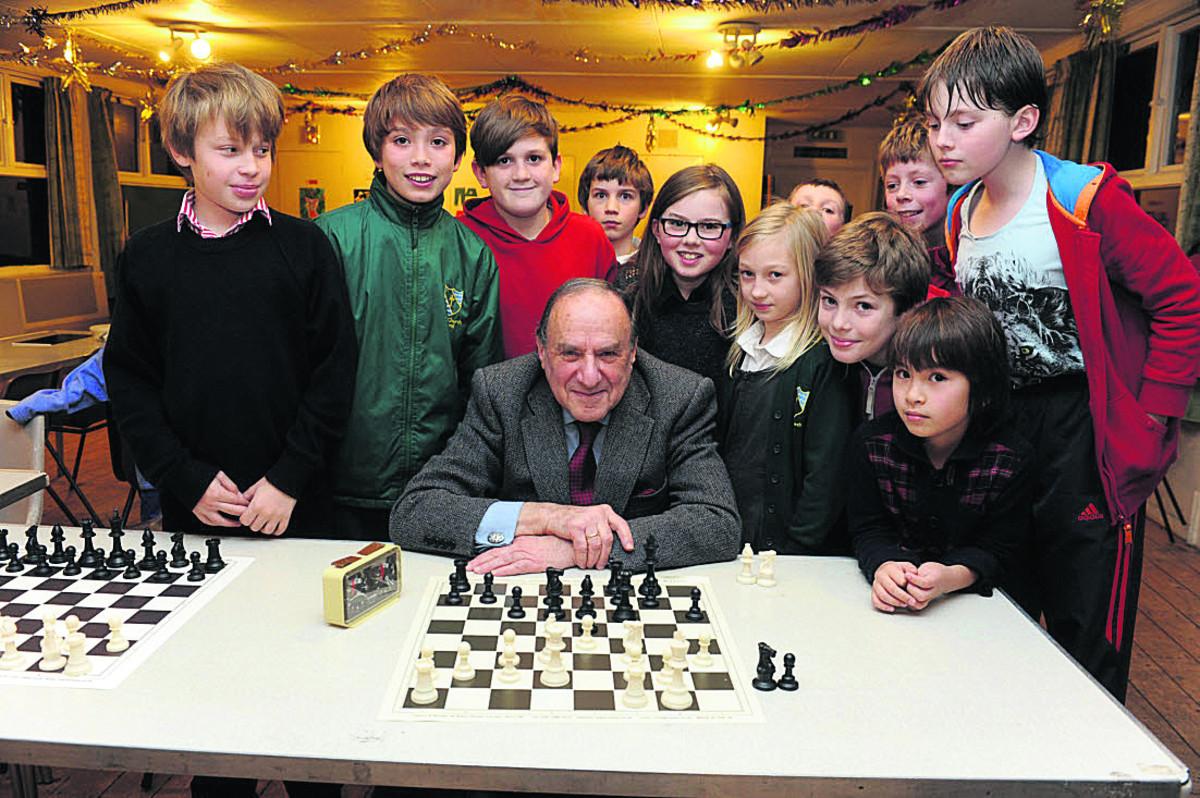
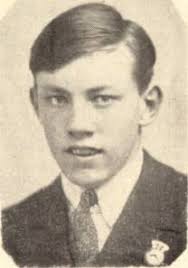
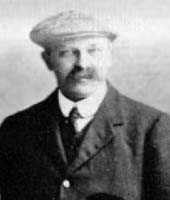
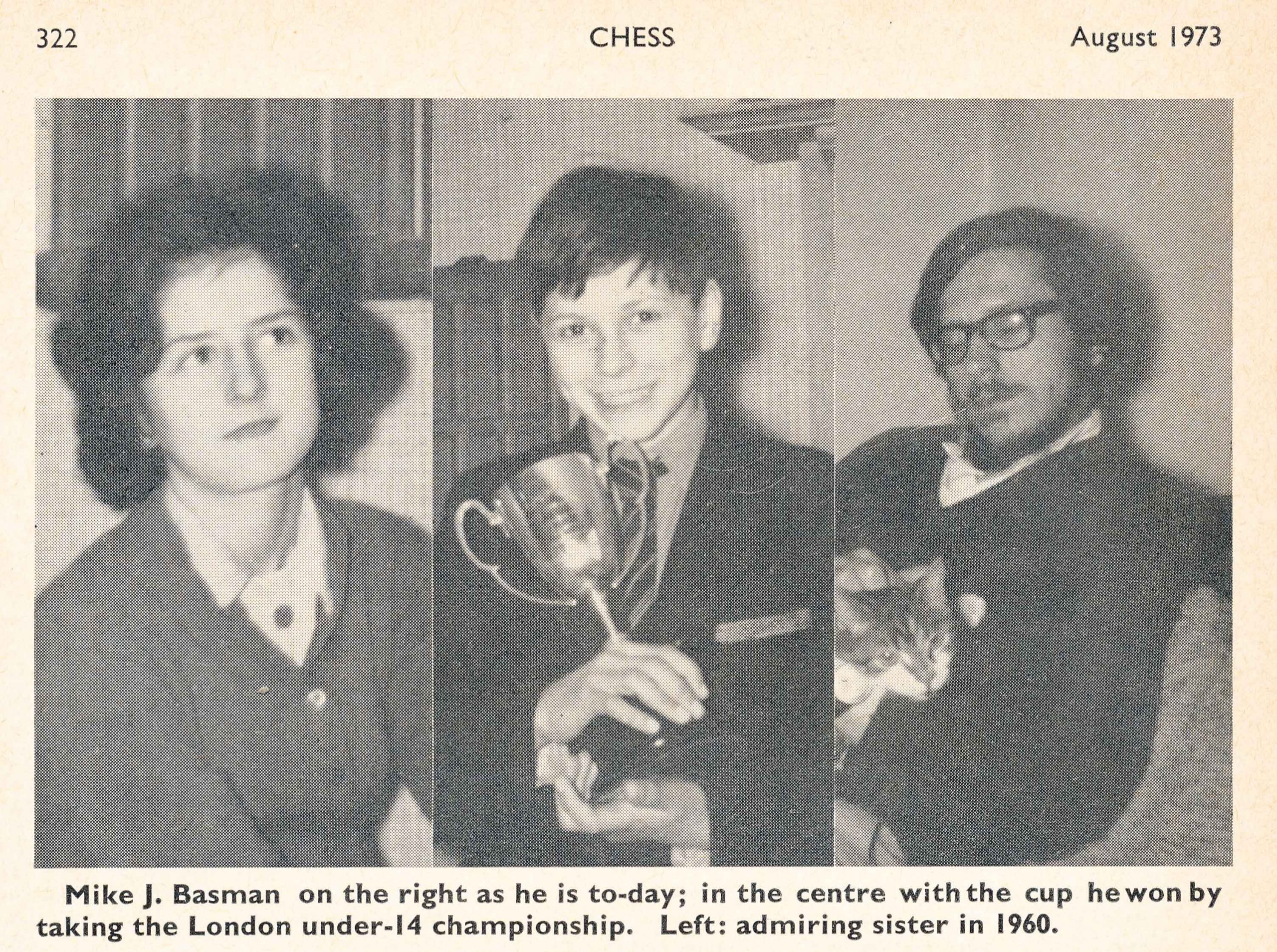
Mike J. Basman on the right as he is to-day; in the centre with the cup he won by taking the London under-14 championship. Left : admiring sister in 1960. From CHESS, August 1973, page 322.
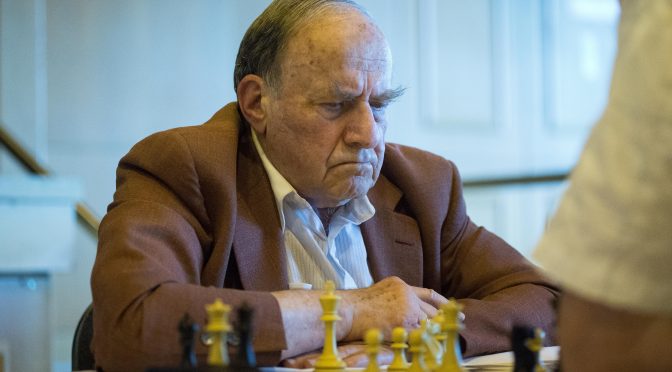
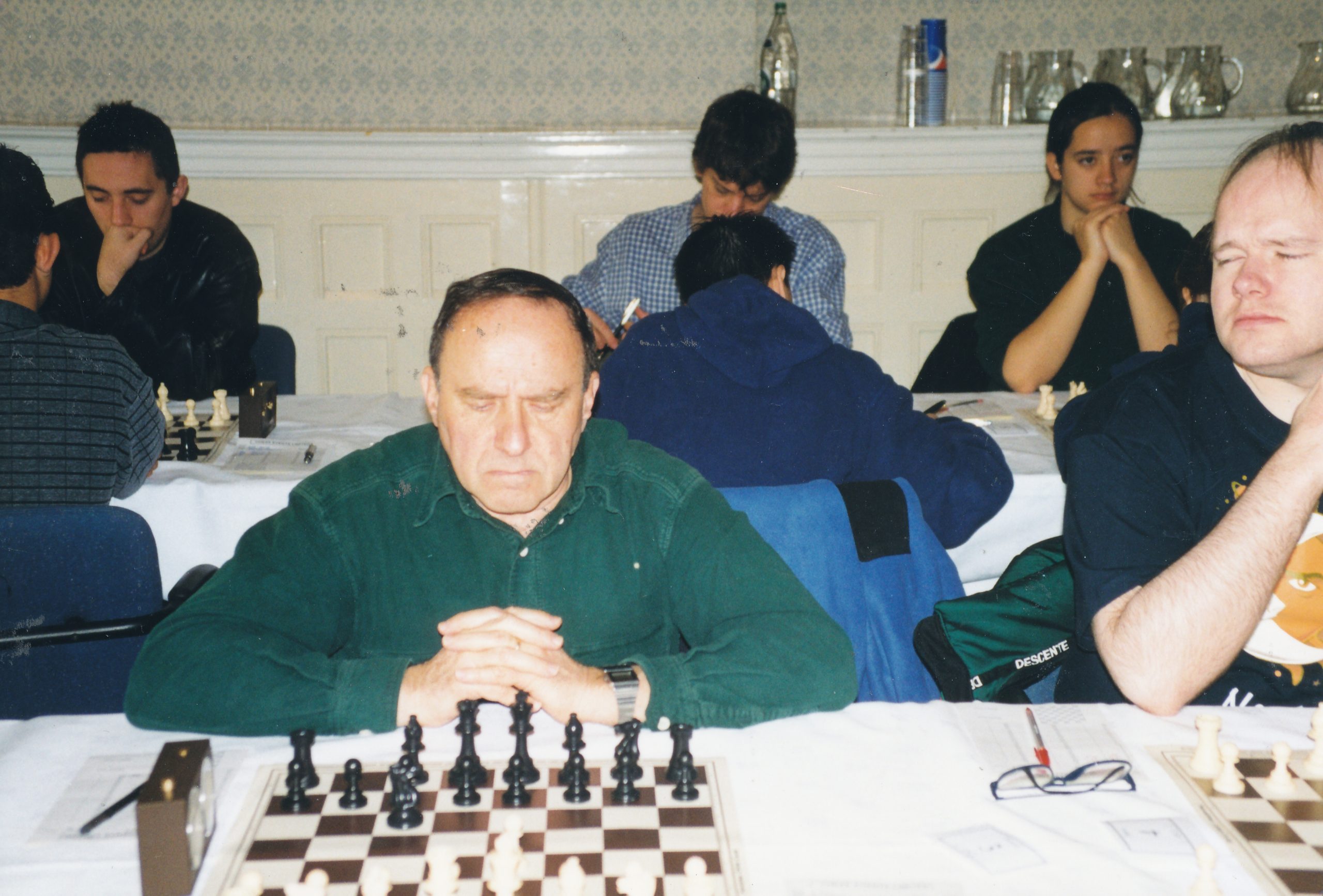
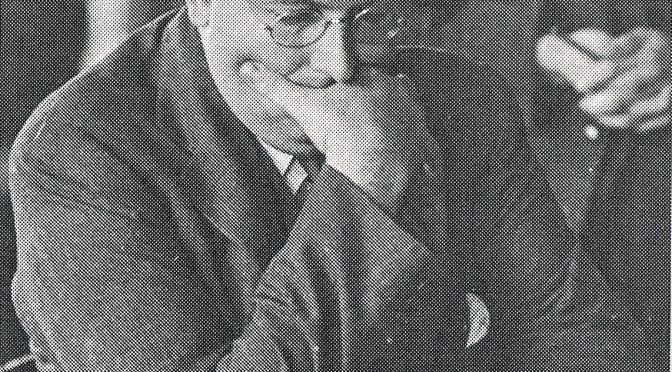
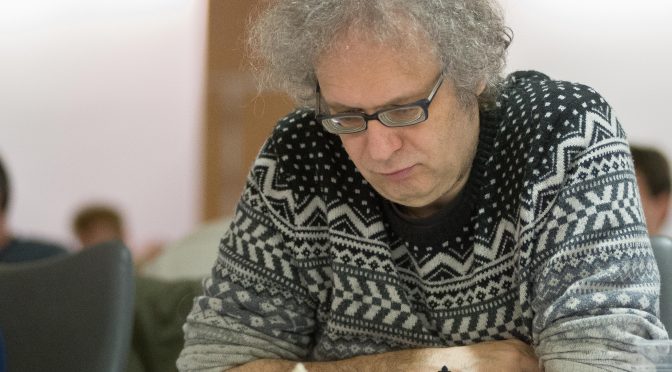
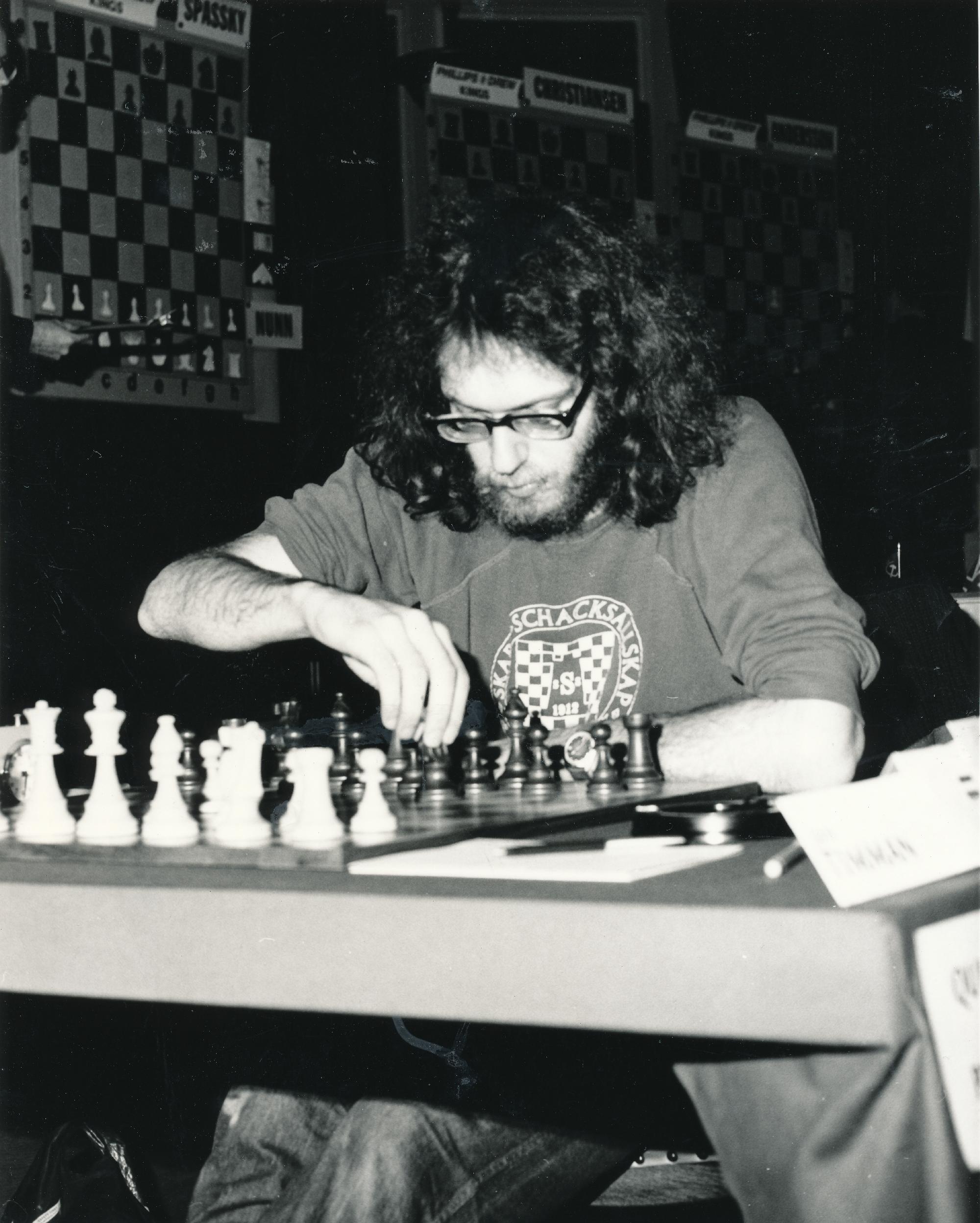
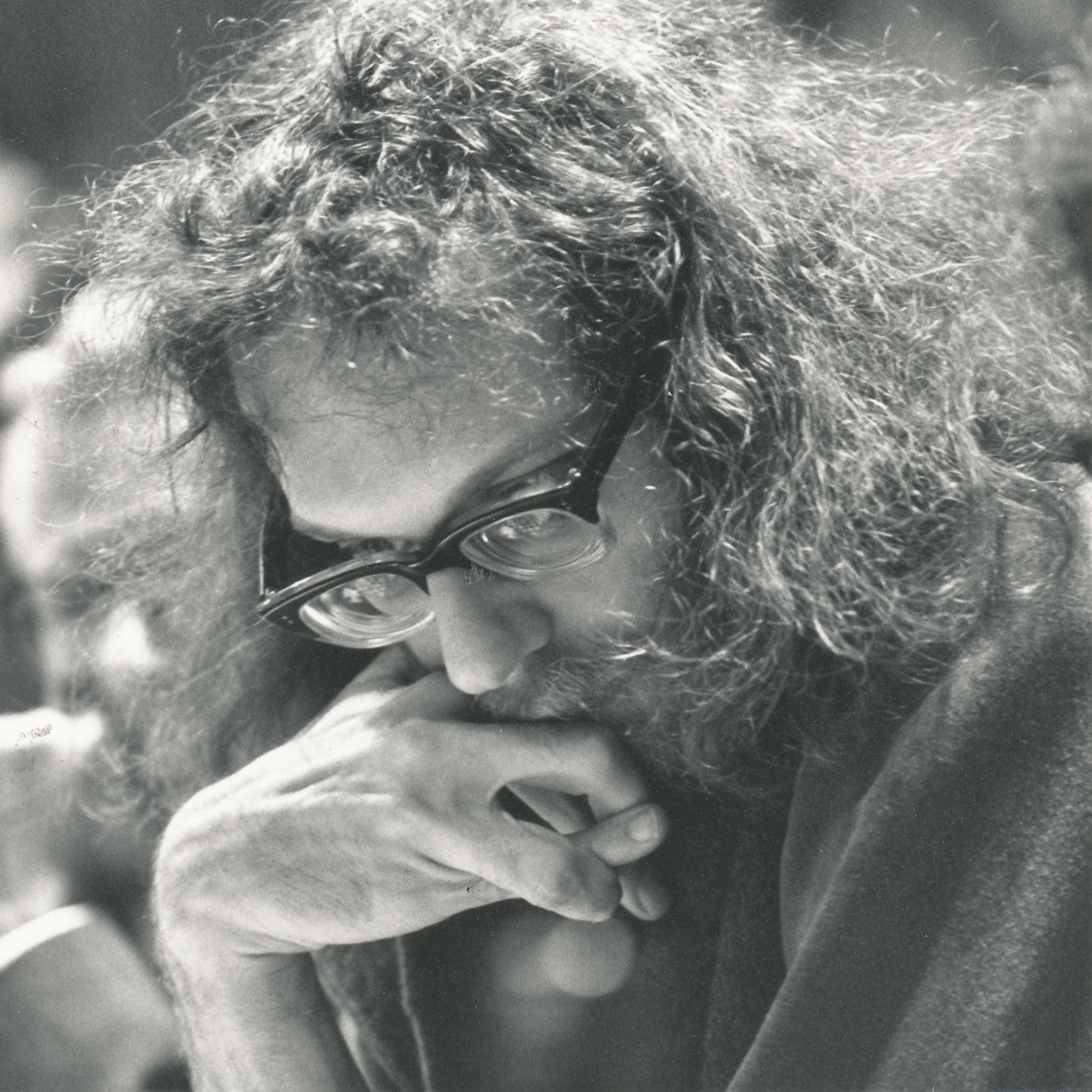
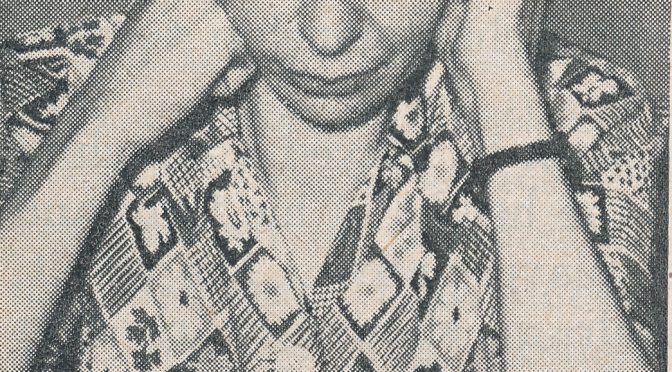
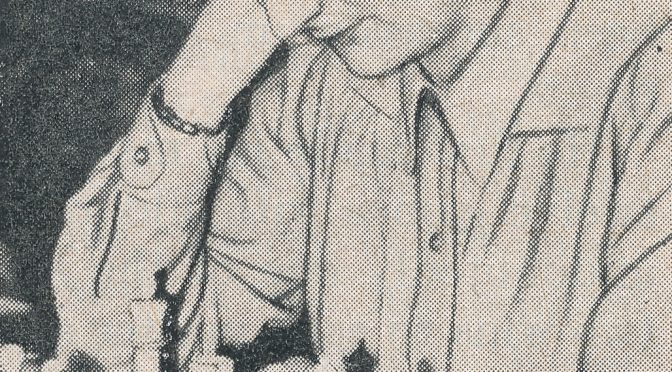
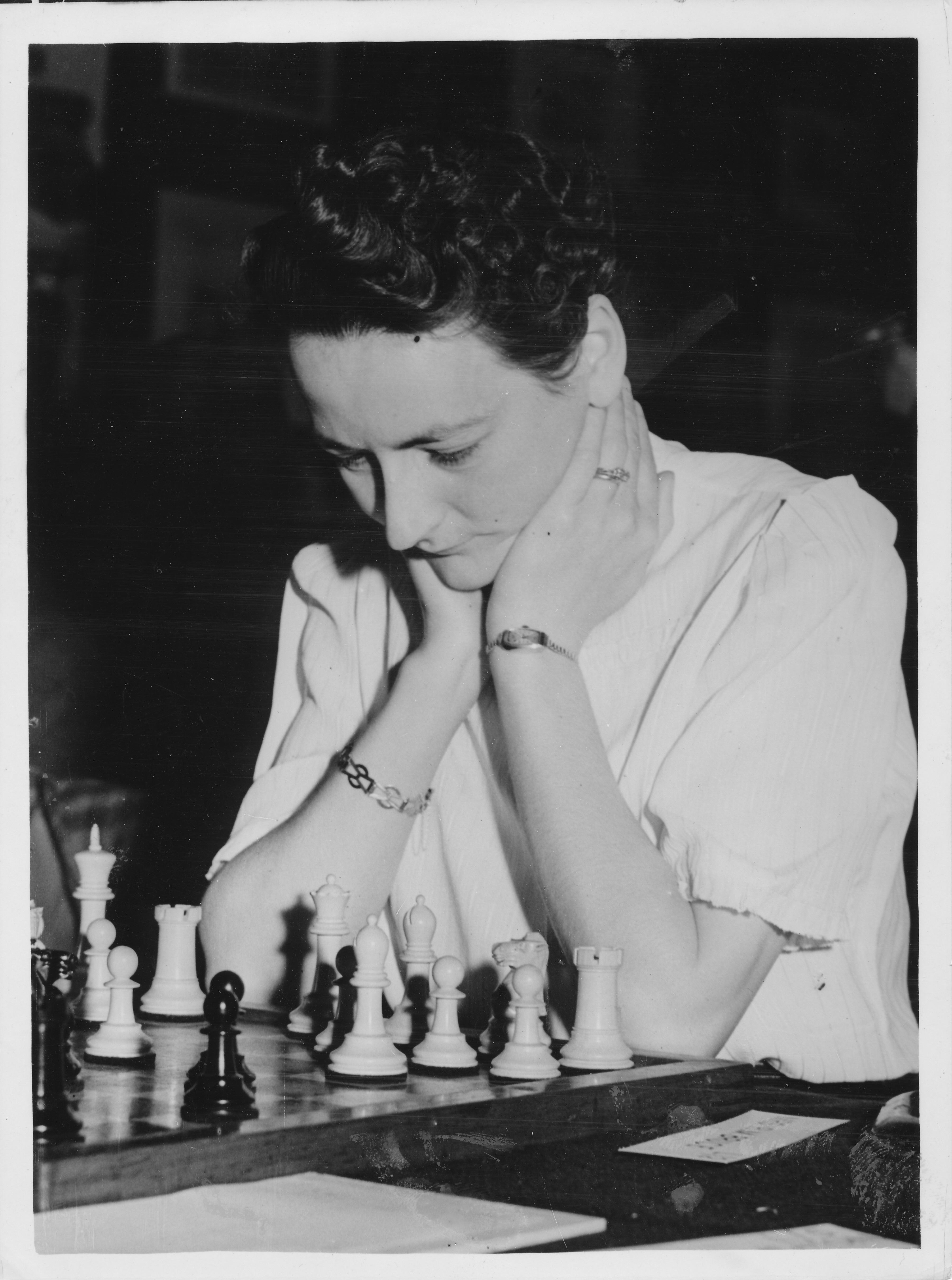
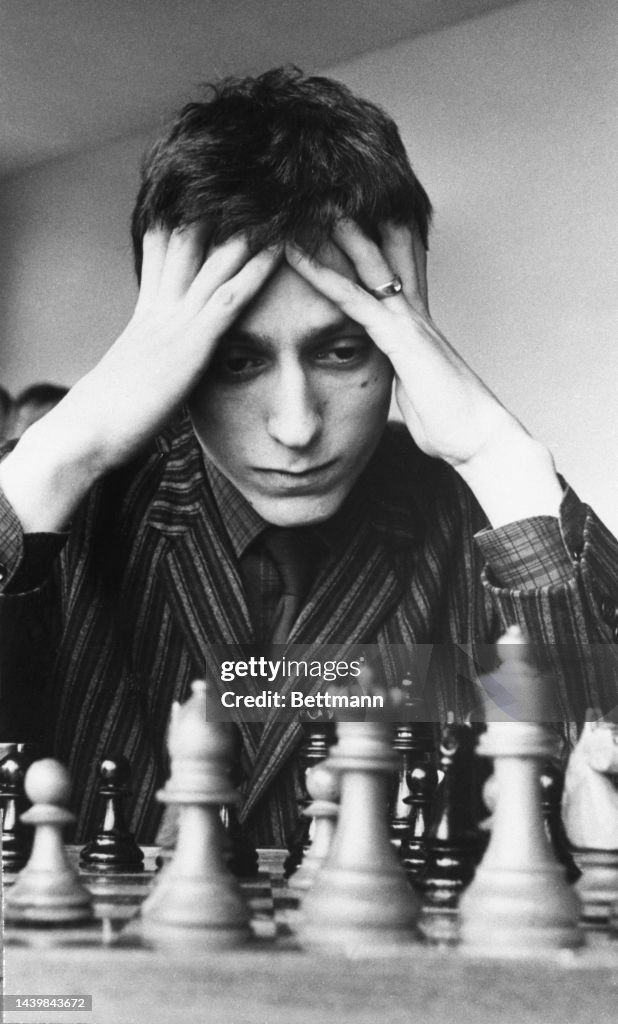
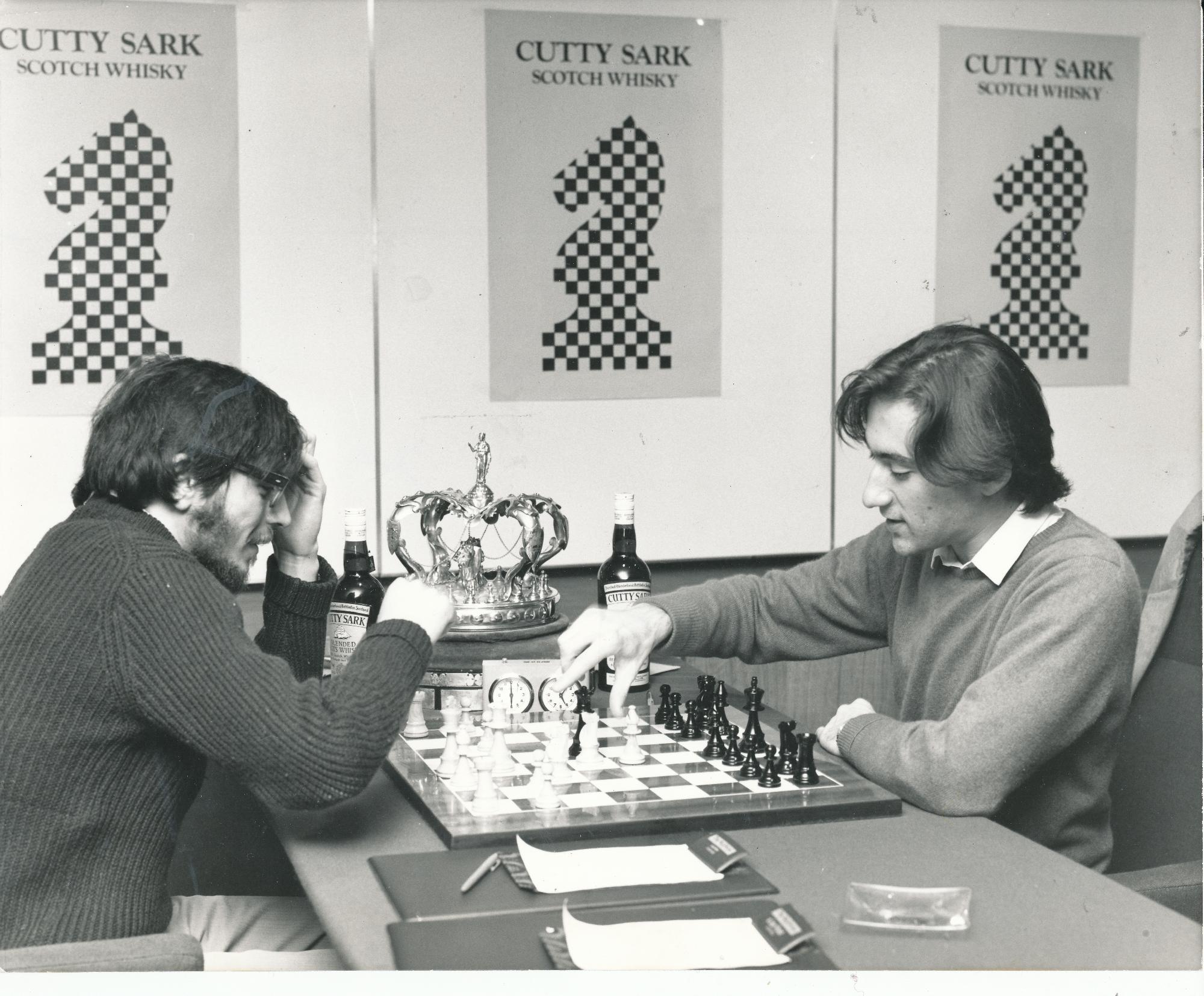
Getty Images: Before making a move, Michael Basman, 21, rests his head in his hands. Michael was the highest placed of the British entrants. (Photo by Bettmann Archive/Getty Images)
Mike attended The University of Leeds as an undergraduate reading history.
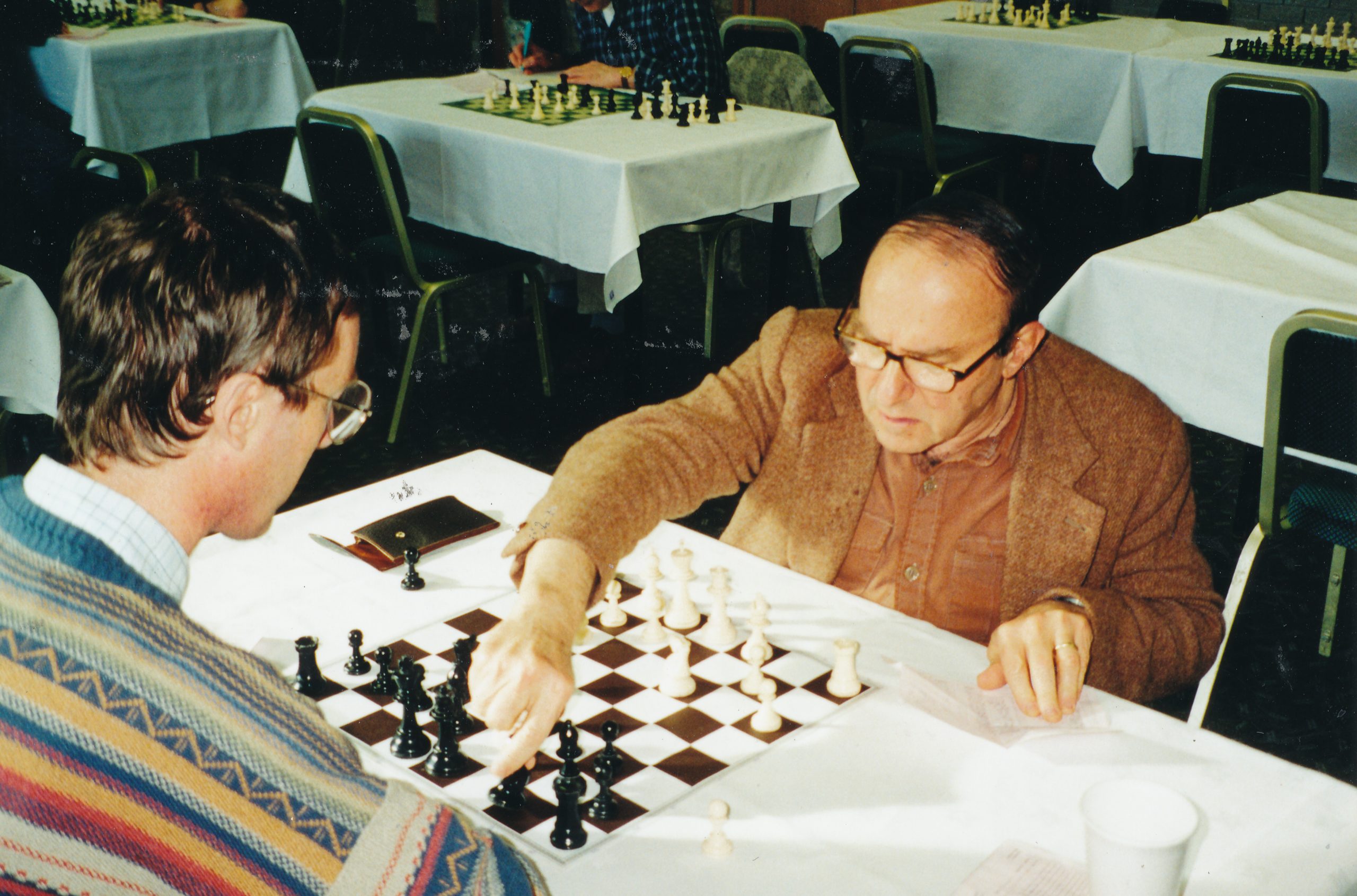
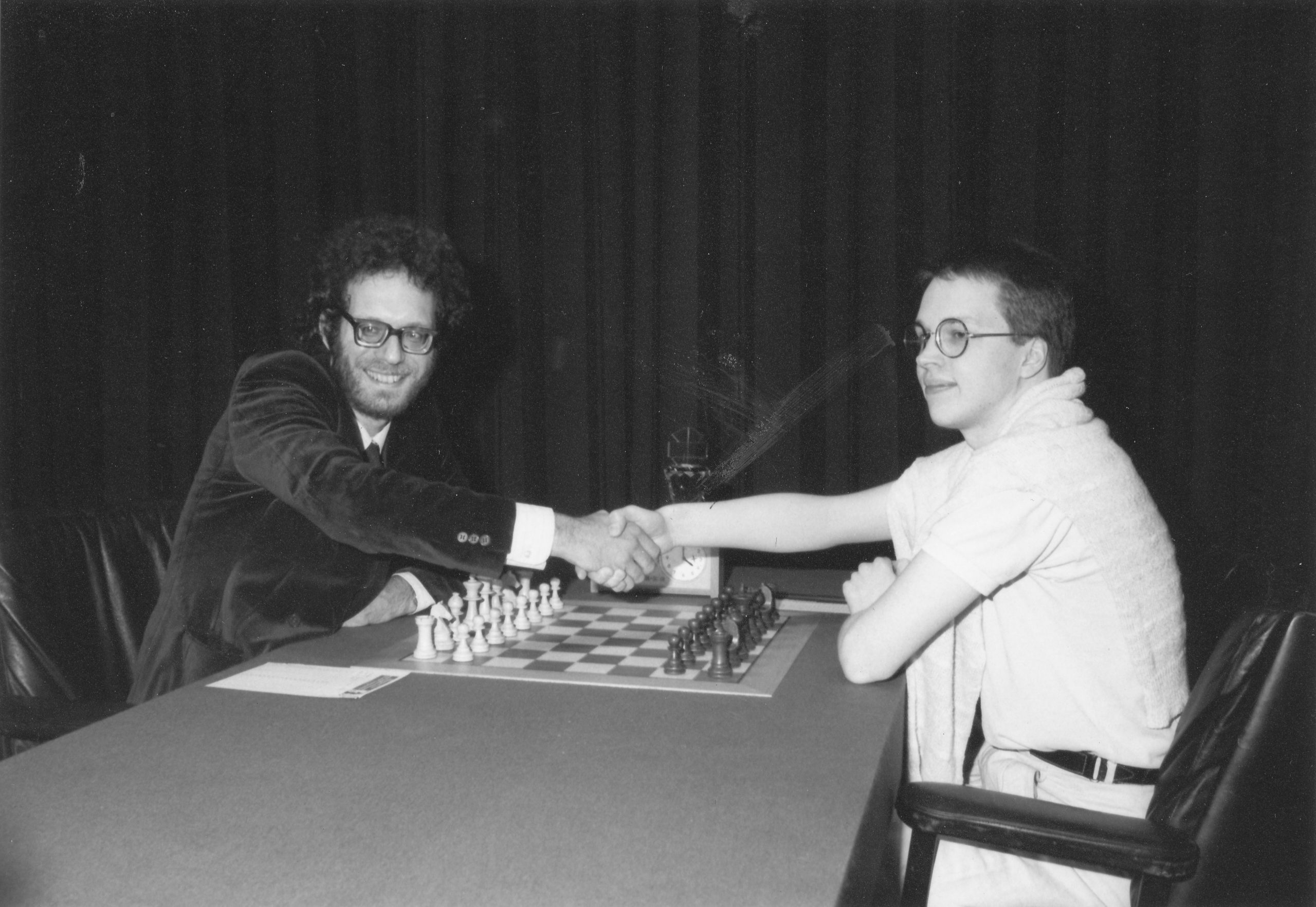
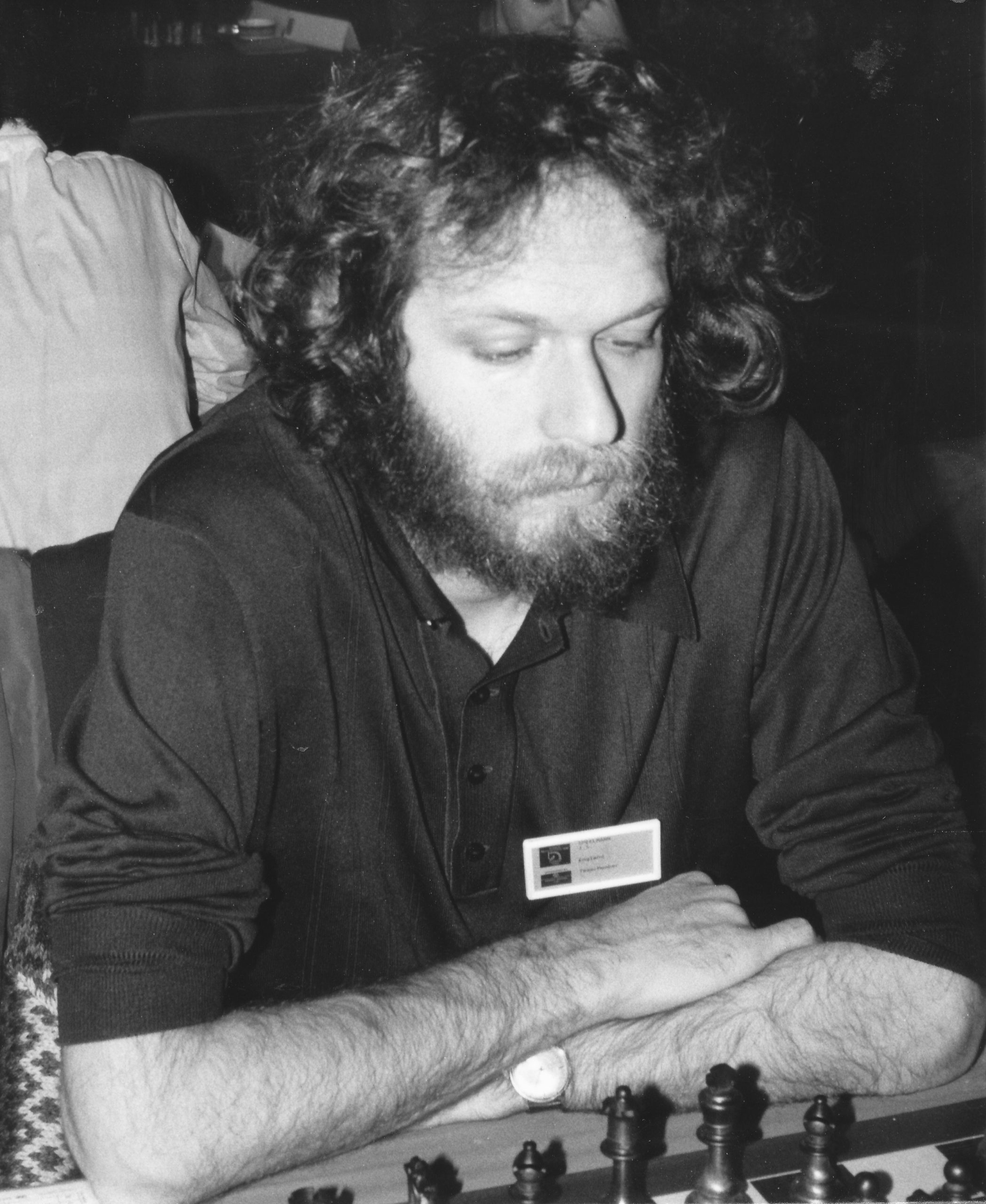
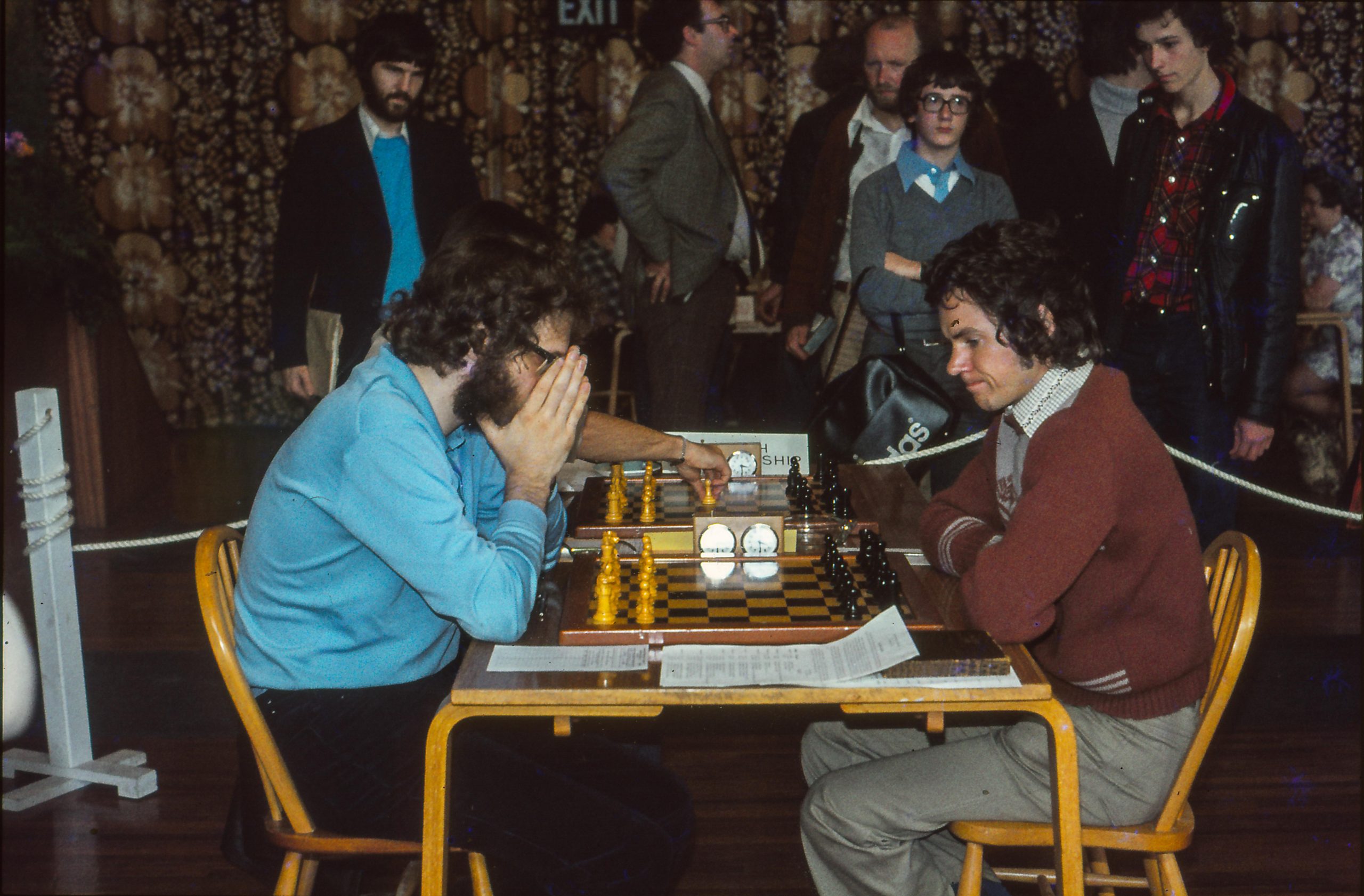
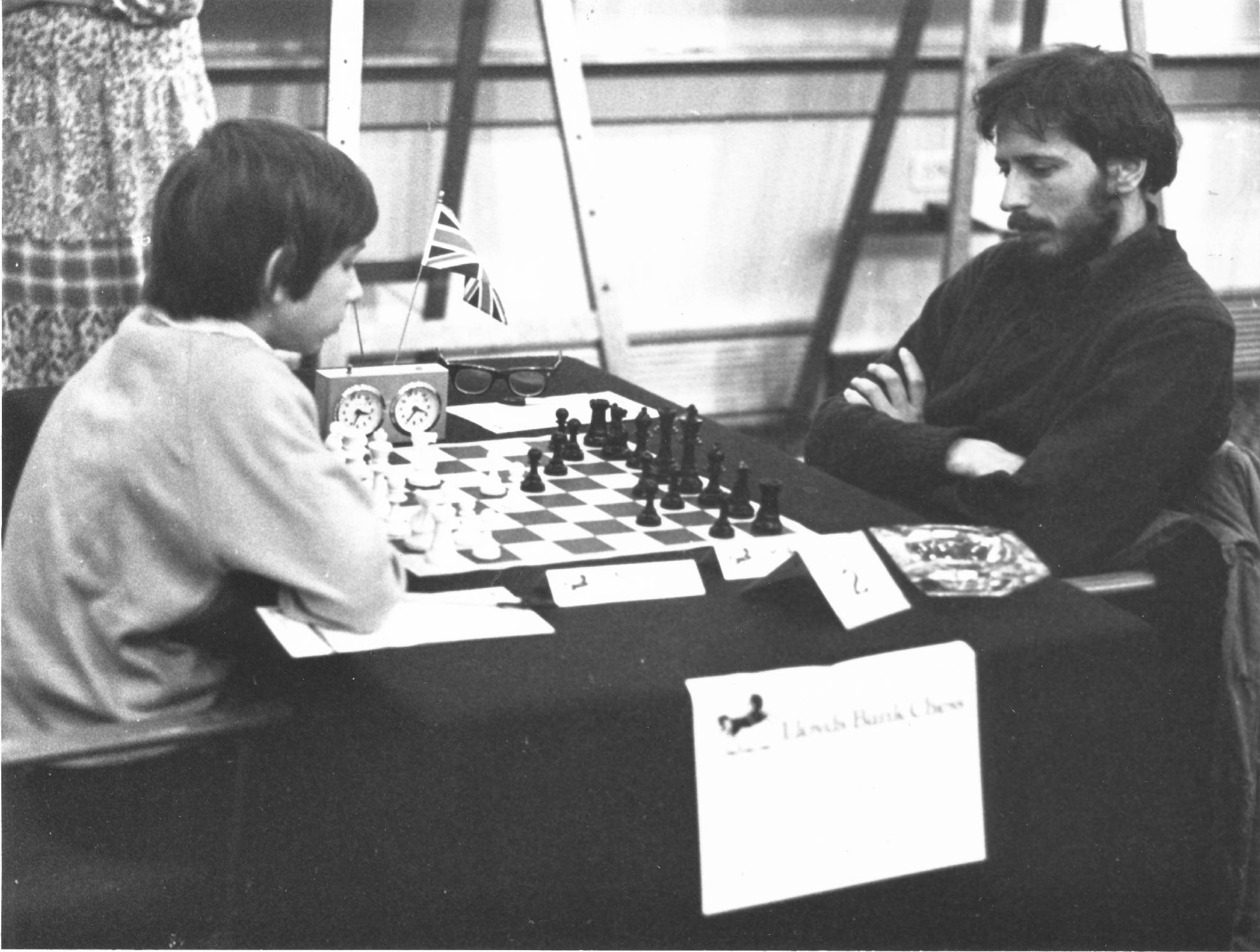
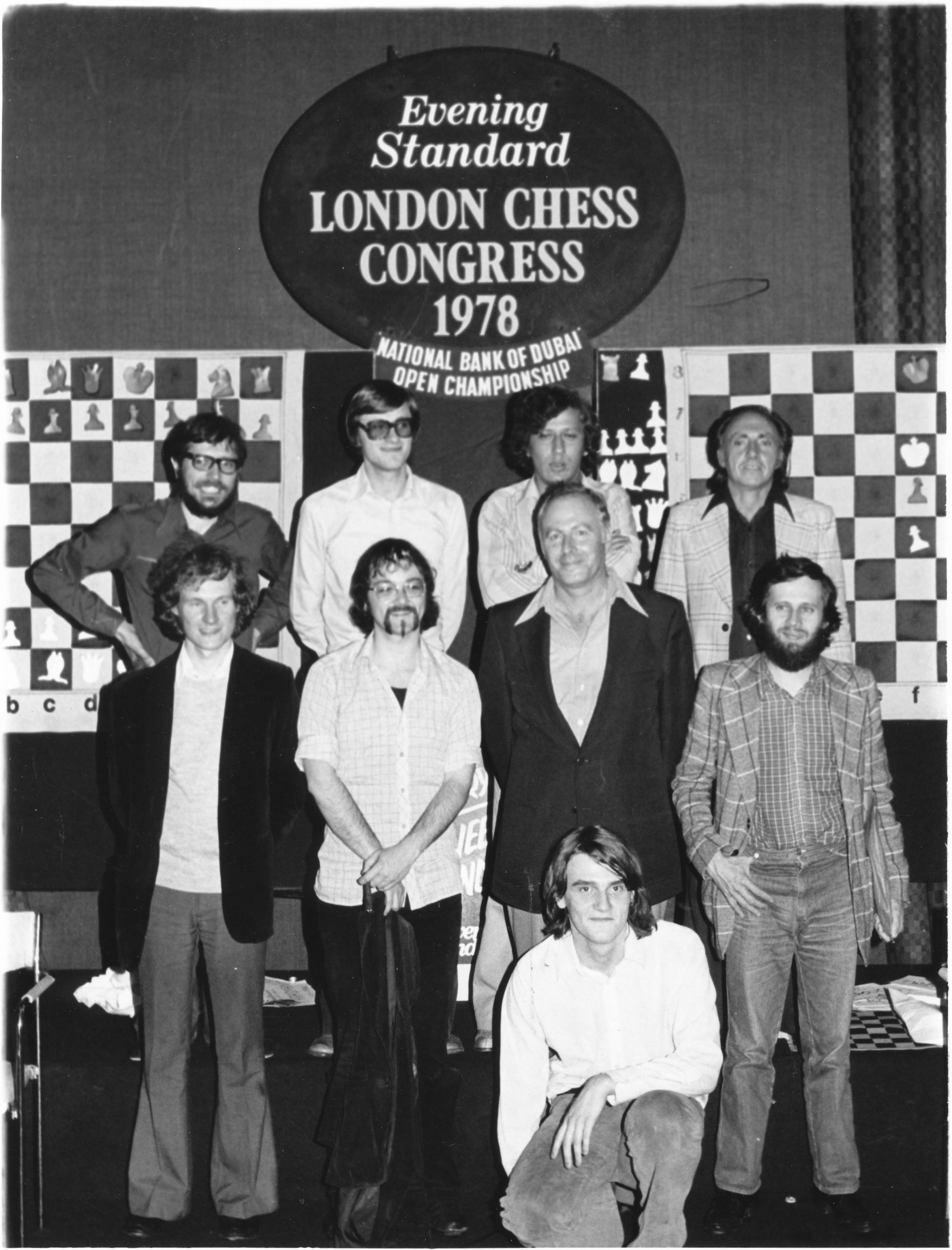
Joel Benjamin plays Mike Basman in round 2 of the 1978 Lloyds Bank Open
“Michael John Basman was born in St Pancras, London, England. He was awarded the IM title in 1980 and having dual nationality won the Erevan Championship whilst living there in the early 1970s. He was also a pioneer in the production of audio tapes for chess.
He is noted for his use of unorthodox flank openings, such as 1.g4, 1.h3, 1.e4 g5, etc. He expanded on the work of Henri Grob with his book on the topic of 1.g4, The Killer Grob.
He created the UK Chess Challenge, a tournament for juniors of all standards and ages progressing over four stages.”
These stages become well-known as the Schools Stage, The Megafinal stage, The Gigafinal Stage and the Terafinal.
Being the constant innovator Mike introduced the 3,2,1 (as opposed to 1,1/2, 0) scoring system to junior chess to reward children for playing games even if they lost. This was welcomed up and down the country.
Michael was both extremely prolific and innovative with his huge catalogue of publications.
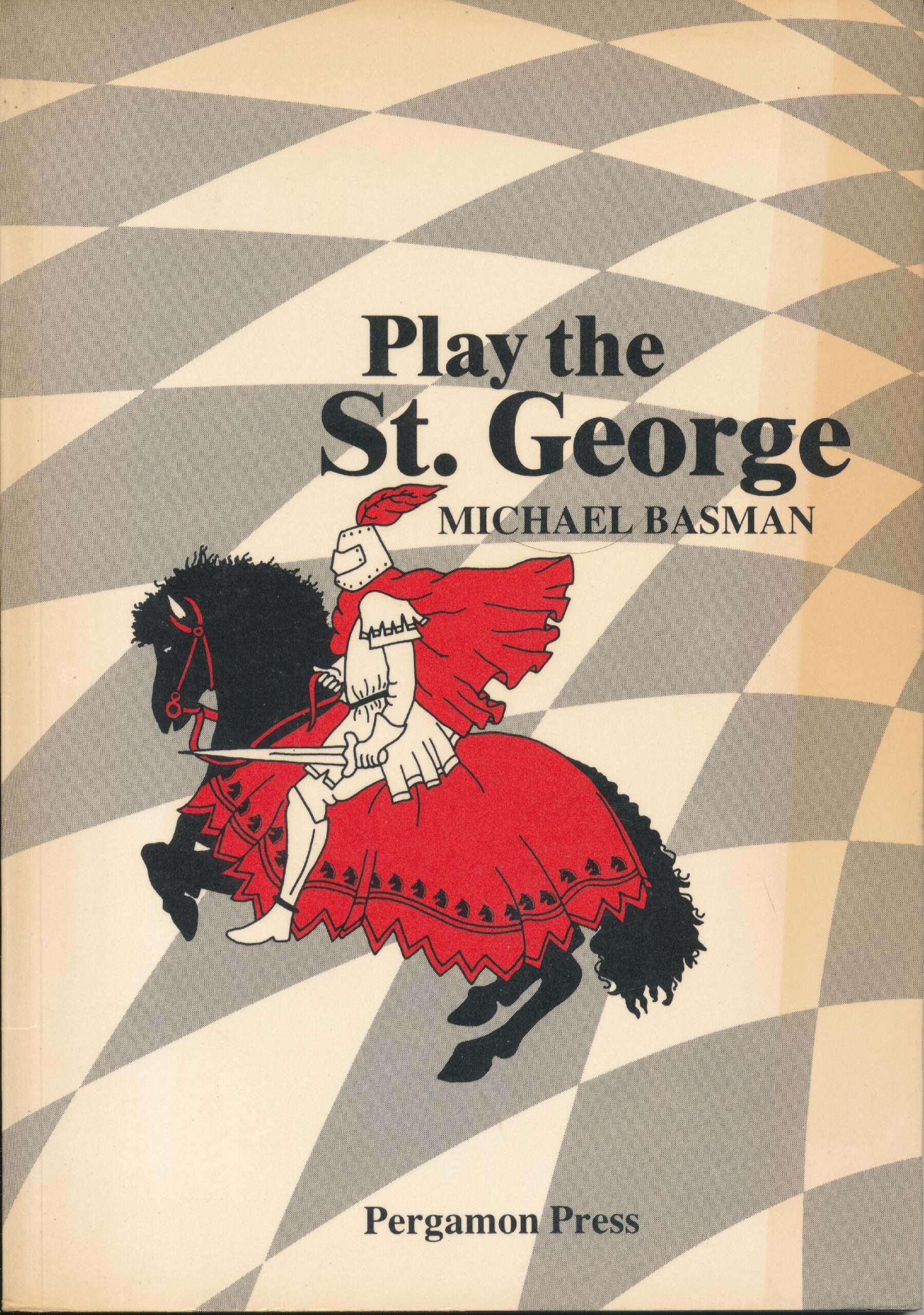
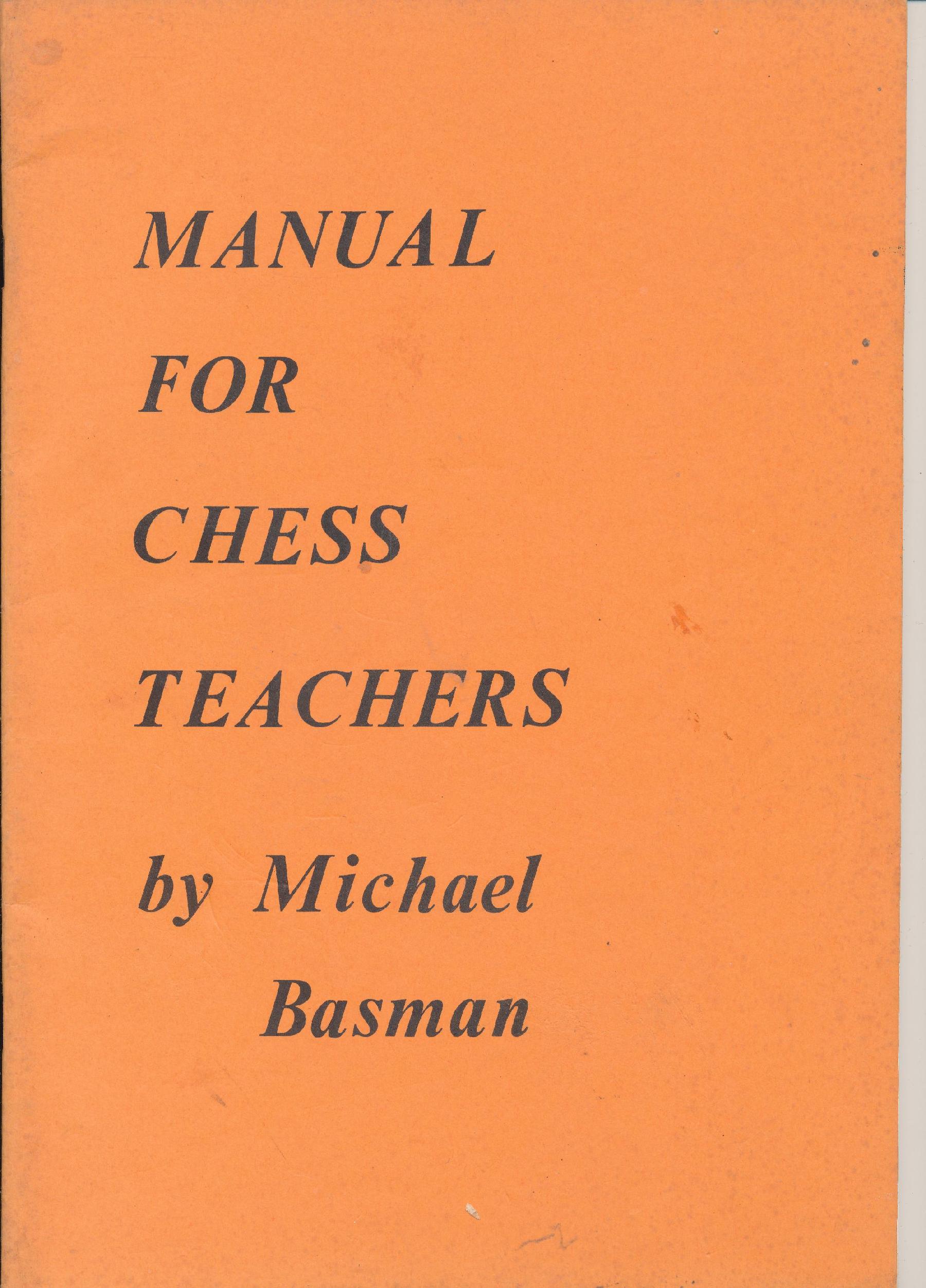
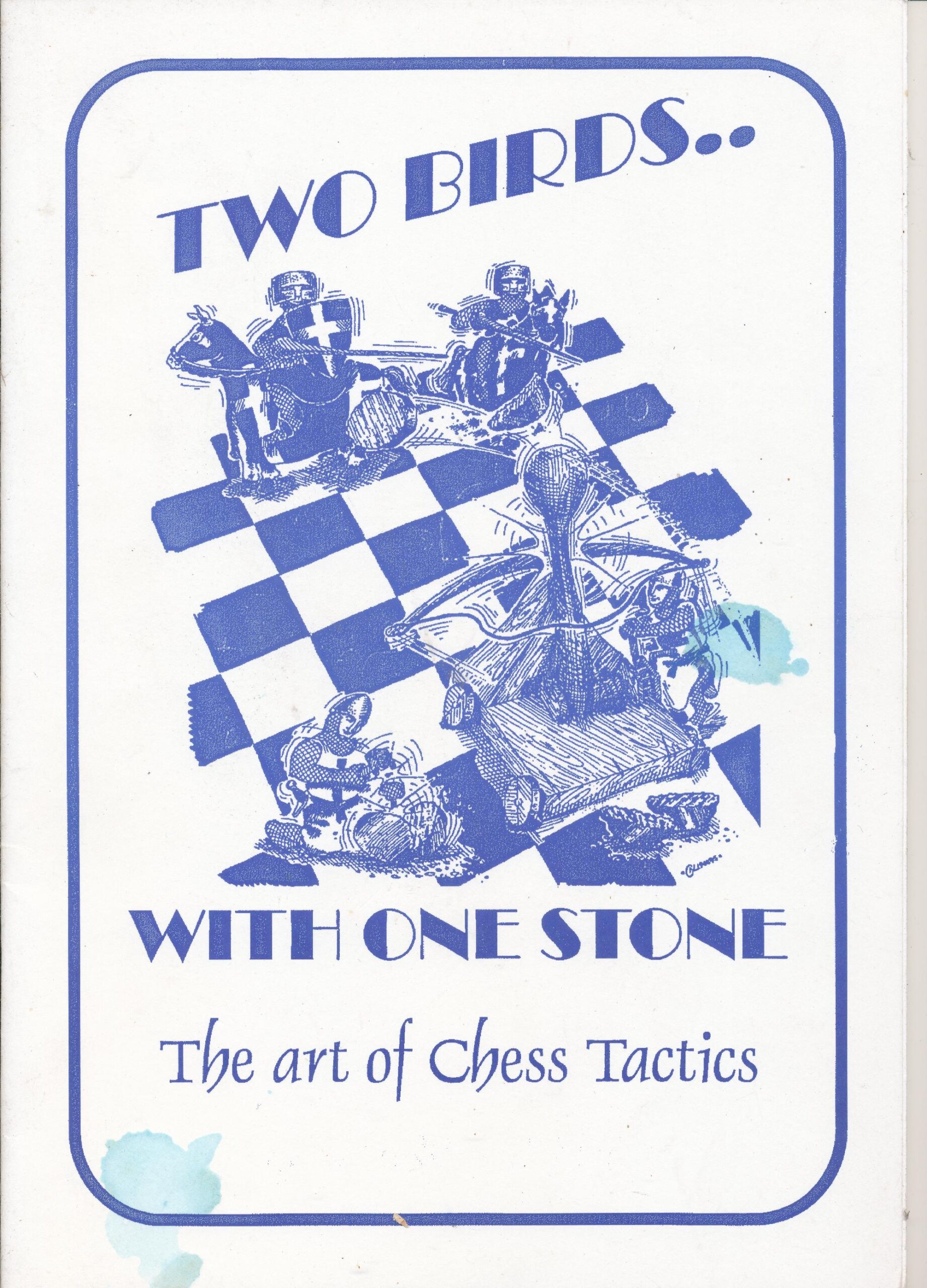
Play the St. George, Michael Basman, Pergamon Press, 1983, ISBN 0-08-029717-XThe Killer Grob, Michael Basman, Pergamon Chess, 1989, ISBN 10: 0080371310Manual for Chess Teachers, Michael Basman, Audio Chess, 198?, £5.95Two Birds.. With One Stone: The art of chess tactics, Michael Basman, Audio Chess, January 1989, £3.95
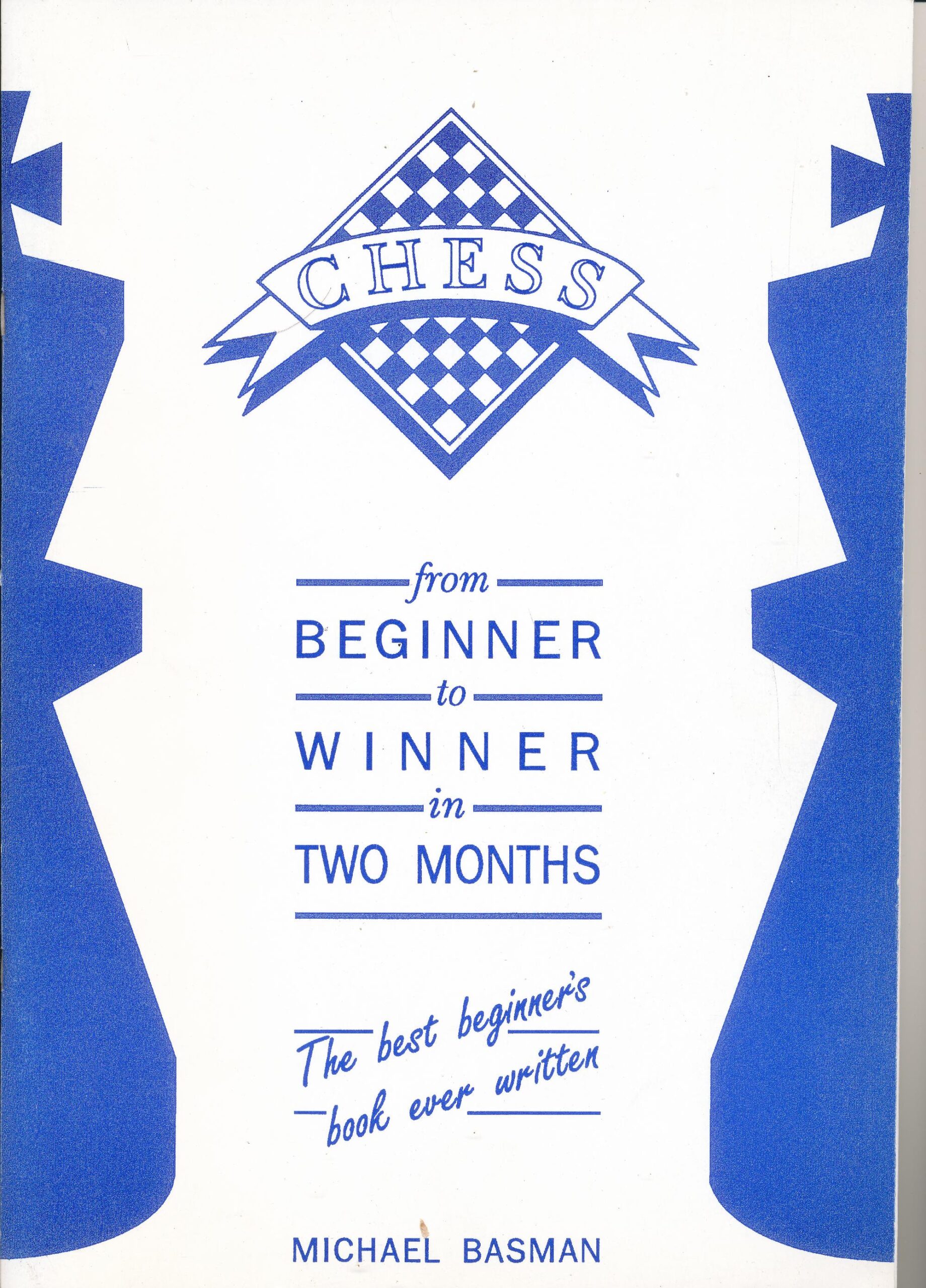
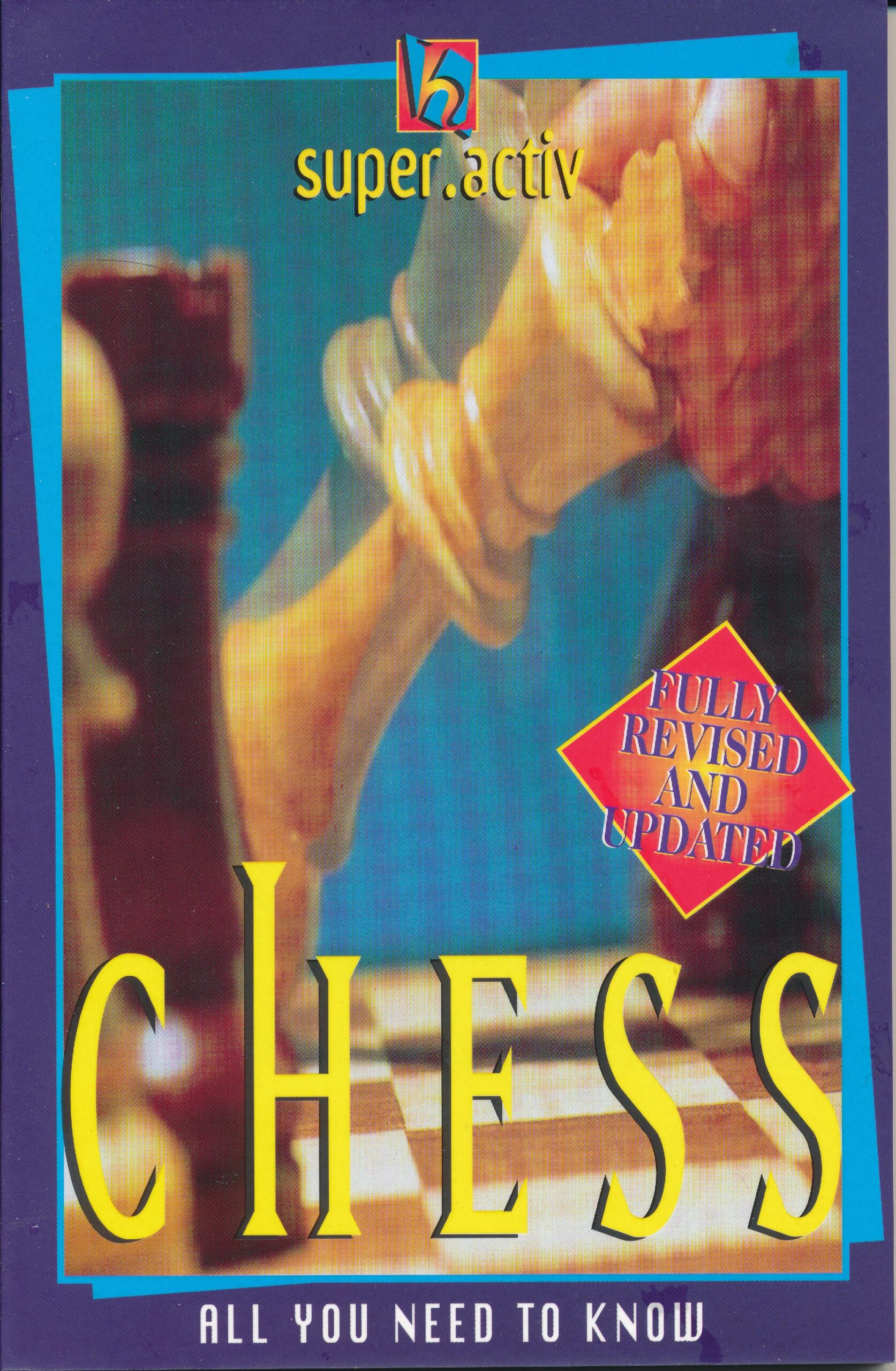
Chess from Beginner to Winner in Two Months, Michael Basman, Audio Chess, May 1990, £6.95Chess, Michael Basman, super.activ, 1999, ISBN 0 340 791 624
By this time Michael had moved away from main stream publishers and branched out on his own self-publishing (via Audio Chess) a range of teaching materials for children:
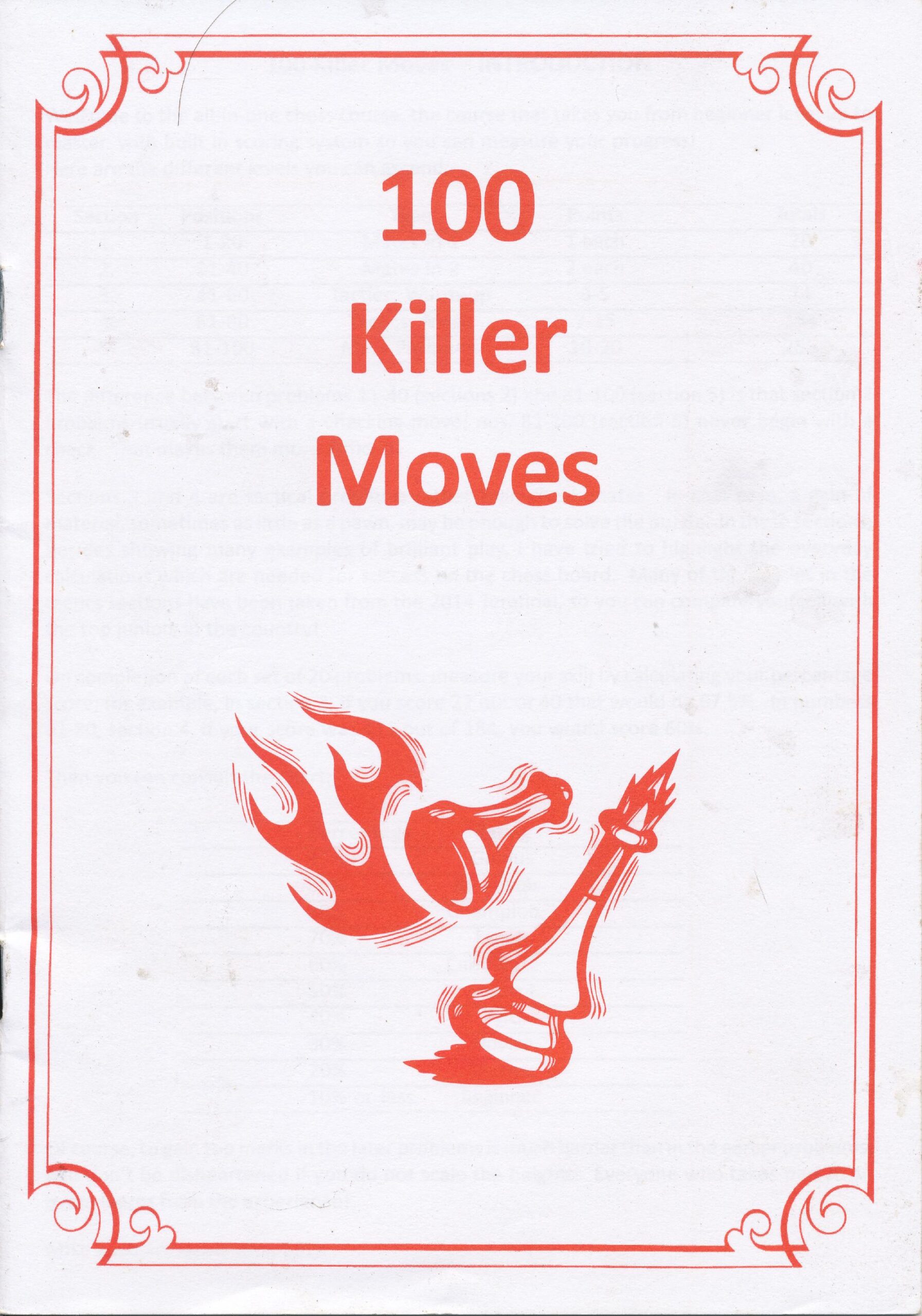
100 KIller Moves, Michael Basman, Audio Chess, November 2014, £1.95
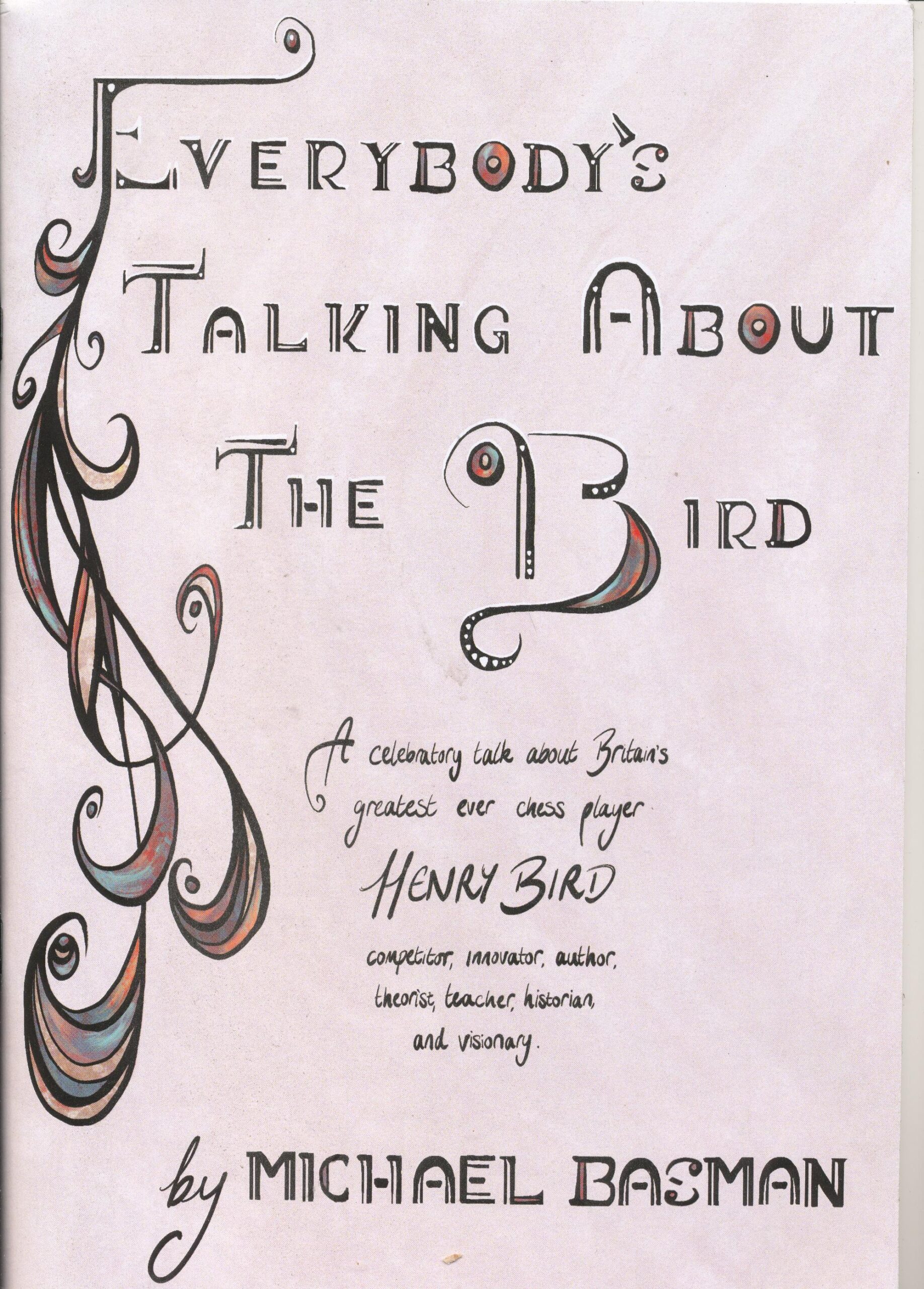
Michael’s final publication was published in April 2022 and was a record of a talk at Kingston Chess Club in 2022 about Henry Bird:
Everybody’s Talking About the Bird, Michael Basman, Audio Chess, April 2022, £4.95
We send best wishes to IM James Sherwin, a welcome long term visitor from “over the pond”
James Terry Sherwin was born on Wednesday, October 25th 1933 in New York. and attended The University of Columbia.
The Columbia College chess team of 1949–1952 after a radio match with Yale. Right to left: James Sherwin, Eliot Hearst, Carl Burger, Francis Mechner (Courtesy of the Columbia University Archives).
He became an International Master in 1958 at the age of 25 and, according to Felice, his peak FIDE rating was 2400 in 1969.
Much to his chagrin (we recommend you do not ask him about this!) James is famous for the “Sherwin slid the rook here with his pinky, as if to emphasize the cunning of this mysterious move” annotation in Game 1, “Too Little, Too Late” of My Sixty Memorable Games by Robert James Fischer (and game introductions by Larry Evans).
Since 1999 James has been a frequent entrant to English Rapidplay tournaments at Richmond and Golders Green and, in August 2019 in Torquay, aged 86, tied for first place in the Rapidplay event at the British Championships.
IM James Sherwin
James is registered with the Wiltshire County Chess Association and since 2015 has played only rapidplay games rated by the ECF. He currently has a rating of 204D.
With the white pieces James plays 1.d4, 1.Nf3 and 1.e4 in that order of preference.
As the second player he essays the Sicilian Najdorf and the Grünfeld Defence.
He has plus scores against Donald Byrne, Robert Byrne, Herbert Seidman, Sidney Bernstein, George Kramer and Raymond Weinstein (amongst others). His score with Fischer was 1.5/8 (but don’t mention it!).
“James Terry Sherwin, born in New York, became an International Master in 1958. In 1961, he was Chairman of the USCF Rules Committee. He was the Executive Vice President of GAF Corporation who was the American Chess Foundation (ACF) President from 1979 to 1990. He took 5th place in the 1953 World Junior Championship. He tied for 1st place with Alexander Kevitz in the 1954-55 Manhattan Chess club championship. He took 17th place in the Portoroz Interzonal (1958). Sherwin finished in 3rd place twice in US chess championships (1957-58 and 1958-59). He won the first Eastern Open Chess Championship, held in Washington DC, in 1960.”
Mr Sherwin, 80, met and played against the new members of Bradford & Avon Valley Youth Chess Club on their opening night at St Nicholas Hall on Tuesday. Photo courtesy of The Wiltshire Times
From Wikipedia:
“James Terry Sherwin (born October 25, 1933)[1] is an American corporate executive and International Master in chess.
Born in New York City[1] in 1933, Sherwin attended Stuyvesant High School, Columbia College (Phi Beta Kappa) and Columbia Law School. He graduated from the U.S. Coast Guard Academy Officer Candidate School in 1956 and later became a Lieutenant Commander. He is an attorney admitted to the New York and Supreme Court Bars. He joined GAF Corporation in 1960 serving in various legal and operational roles and eventually becoming its Chief Financial Officer. He was CFO at Triangle Industries from 1983 to 1984, rejoining GAF Corporation as Vice Chairman from 1985 to 1990.
IM James T Sherwin
While at GAF, in 1988, he was indicted by the US Attorney for the Southern District of New York, Rudolph Giuliani, for stock manipulation in connection with the 1986 sale of stock owned by GAF.[2] He was convicted after three trials, but the conviction was reversed on appeal[3] and dismissed with prejudice.[4] In 1991 he was appointed Executive Vice President and Chief Financial Officer of Hunter Douglas N.V., a Dutch multinational company, in which capacity he served until 1999. Since then he has been a Director and an adviser to Hunter Douglas.
IM James T Sherwin
He is an Overseer of the International Rescue Committee and member of the Association of the Bar of the City of New York. He received an Honorary Doctor of Laws Degree from the University of Bath in December, 2007.”
“In chess, Sherwin finished third and tied for third in the US Chess Championship four times and tied for fourth three times.[5] He was Intercollegiate Champion and New York State Champion in 1951 and US Speed Champion in 1956–57 and 1959–60. He earned the International Master title in 1958.[1] He played in the Portorož Interzonal in 1958, which was part of the 1960 World Championship cycle. While he finished only 17th out of 21 players, he scored (+2–2=2) against the six players who qualified from the tournament to the Candidates tournament at Bled 1959. He is a previous President of the American Chess Foundation.
Sherwin resides with his wife, Hiroko, near Bath, United Kingdom.”
BCN remembers Sir Theodore Tylor who passed away on Wednesday, October 23rd, 1968.
Theodore Henry Tylor was born on Sunday, May 13th, 1900 in Bournville, (at the time) in northern Worcestershire. Now Bournville is in the metropolitan borough of Birmingham.
His father was Henry Bedford Tylor and his mother Minnie Belle Cater were both 29 when Theo was born. He had one sister Rachel Hope who was born on 1 November 1909 in Kings Norton, Worcestershire, when Theodore Henry was 9 years old.
In the 1911 census Theo is shown as living in Worcester as a student. His father passed away on 26 February 1915 in Birmingham, Warwickshire, at the age of 44.
Theodore Henry Tylor, Courtesy of John Saunders and Britbase
In 1939 Theo was living at 2, Rawlinson Road, Oxford where he continued to live until his death.
We are grateful to John Foley writing in Floreat Domus (the Balliol College magazine) who wrote this about Tylor :
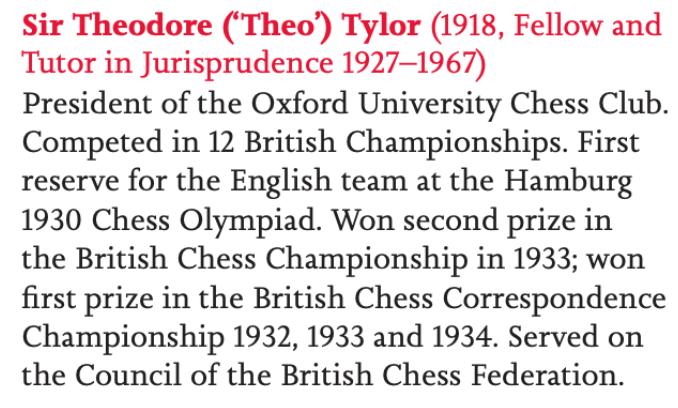
Article about TH Tylor by John Foley
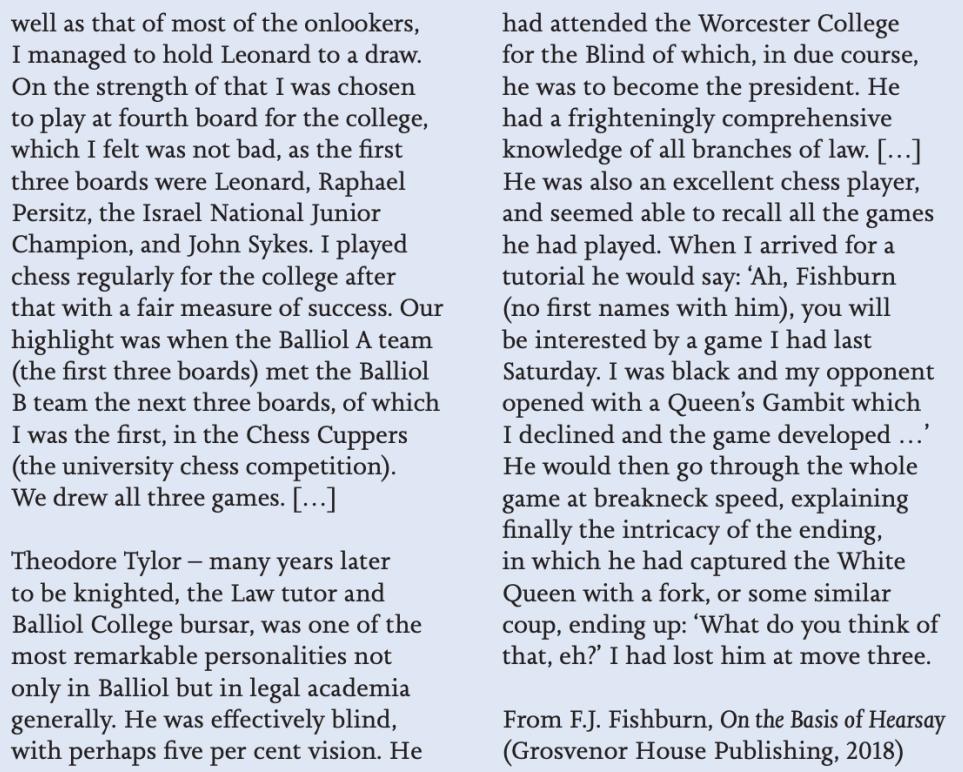
and, following this, John reproduced an item from On the Basis of of Hearsay, Grosvenor House Publishing, 2018 :
Chess in the 1950s : Fred Fishburn Remembers
From British Chess Magazine, Volume LXXXIX (1969), Number 1 (January), pp 6-7 we have the following article :
“The death of Sir Theodore H. Tylor at the age of sixty-eight was reported in The Times of October 24th. The announcement will be received with deep regret by the many chess enthusiasts who will remember him as a cheerful and extremely resourceful opponent who triumphed over the handicap of near-blindness and lived such a full and distinguished life that it earned him the admiration and respect of the world.
The Times has already done full justice to his work as Fellow and Tutor in Jurisprudence at Balliol for nearly forty years and to his service to organizations for the blind for which he was most justly knighted in 1965, but it barely mentioned that side of his life with which we chess-players were more intimately acquainted.
His education at Worcester College for the Blind naturally brought him into contact with chess and he became a very strong player. ln 1925, at the age of twenty-five, he was among the twelve players selected for the British Championship at Stratford-on-Avon and fully justified the selectors’confidence by taking fourth prize, behind Atkins, Yates, and Edmund Spencer, and ahead of Winter.
It was another four years before he became really active, but in 1929 he again played in the Championship and shared fourth prize with J. H. Morrison and W. Winter behind, Sultan Khan, H. E. Price, and R. P. Michell. He followed this with his first visit to Hastings and in the 1929-30 congress put up the best performance of his career, sharing first prize with Koltanowski, in front of Flohr, Reijifir, Rellstab, Alexander, Jackson, Noteboom, Vidmar Jnr., and Winser. This, by the way, was only a Premier Reserves!
This performance evidently impressed the selectors, for the following summer brought an invitation to play for the B.C.F. team in the Hamburg Olympiad, where he won one, drew four, and lost two games. ln the 1930-31 Hastings Congress he made the first of nine appearances in the Premier Tourney, but he never managed to maintain sufficient consistency to win honours in this exalted company and was never able to finish higher than equal sixth (in
1936-7). ln the nine tournaments he won ten tames (of which only two were against non-British opposition-Feigin and Medina) and drew thirty-three (including World Champions Alekhine and Euwe and grandmasters Fine, Flohr (three times), Keres, Sultan Khan, Tartakower, and Vidmar). ln 1934-5 he again tied with Koltanowski for first place in the Premier Reserves.
Sir Theodore Henry Tylor
ln twelve British Championships his best performance was at Hastings in 1933 where he finished second, 1/2 point behind Sultan Khan and lost only to C. H. O’D. Alexander. In nine of the twelve he was in the first six, and was four times a prize-winner. He was chosen to play for England against Holland in 1938, 1948, and 1952, and against Yugoslavia in 1951. ln these games he won four and lost four. He was selected to play against
the U.S.S.R. in 1946, but had to withdraw at the last minute.
In 1936 he was chosen as one of the four British players in the Nottingham lnternational Tournament. This caused some dissatisfaction among other disappointed aspirants, but he came ahead of Alexander, Thomas, and Winter and captured the scalps of Flohr and Tartakower. ln the same year he was fifth at Margate, where he drew with Capablanca, Lundin, and Stahlberg.
Finally, a word should be said about his work away from the board. For six years he was President of the Chess Education Society, in whose work he took a lively interest from its foundation in 1943. He was President of the Midland Counties Union from 1946-9. He played top board for Oxfordshire for many years and captained the team for a period. We mourn a great friend of chess and a fine player who was a true amateur and obviously enjoyed every minute he spent among us.”
“In spite of the handicap of partial blindness, Tylor enjoyed a successful academic career and was for nearly forty years a Fellow and tutor in jurisprudence at Balliol College, Oxford. He took up chess seriously while a schoolboy at Worcester College for the Blind and later as an undergraduate captained the Oxford University chess team.
At Hastings 1929/30, Tylor shared first prize with Koltanowski in the Premier Reserves ahead of Flohr, Reijfir, Rellstab, Alexander, Jackson, Noteboom, Vidmar Jr. and Winser. He played in the Hastings Premier event on nine occasions, but never finished in the top half. He competed in the British Championship twelve times, his best result being 2nd to Sultan Khan in 1933. He was selected for the BCF team in the Hamburg 1930 Olympiad and was British Correspondence Champion in 1933, 1934 and 1935.”
Worcester, circa 1931: Mir Sultan Khan (left) plays Theodore Tylor, while Sir George Thomas (far left) and Arthur Mackenzie (far right) spectate. Photo courtesy of Britbase.
“Sir Theodore Henry Tylor (13 May 1900 – 23 October 1968)[1] was a lawyer and international level chess player, despite being nearly blind. In 1965, he was knighted for his service to organisations for the blind. He was Fellow and Tutor in Jurisprudence at Balliol College, Oxford for almost forty years.[2]
Born in Bournville, Tylor learned to play chess at age seven. His chess skill increased while he attended Worcester College for the Blind from 1909 to 1918. He studied at Oxford University beginning in 1918, and captained the Oxford University Chess Club. Tylor received First-class Honours in Jurisprudence in 1922 and was made an honorary scholar of Balliol College. The next year, he became a Bachelor of Civil Law and a lecturer at Balliol College. Called to the Bar by the Inner Temple with a certificate of honour, he was made a Fellow at Balliol College in 1928.”
“Tylor competed in twelve British Championships, finishing fourth in his first appearance in 1925. His best result was in 1933, finishing second to Mir Sultan Khan.[2][3] He tied for first at the 1929/30 Hastings Premier Reserves alongside George Koltanowski ahead of Salo Flohr, Josef Rejfiř, Ludwig Rellstab, C.H.O’D. Alexander, Daniël Noteboom, and Milan Vidmar.[2] Tylor played in the top section, the Hastings Premier, nine times beginning in 1930/1. His best finish was 6th= in 1936/7.[3] He was first reserve for the English team at the Hamburg 1930 Chess Olympiad.
Tylor won the British Correspondence Chess Championship in 1932, 1933, and 1934.[1][2] He shared 5–6th at Margate 1936 with P. S. Milner-Barry, but he won their individual game and drew with 2nd- to 4th-place finishers José Raúl Capablanca, Gideon Ståhlberg, and Erik Lundin (Salo Flohr won). Although he finished 12th at Nottingham 1936, he had the best score of the British participants, ahead of C. H. O’D. Alexander, G. A. Thomas, and William Winter.[5] Mikhail Botvinnik noted that Tylor was using a tactile chess board that he incessantly fingered, as well as a device for counting the number of moves made.”
“Tylor was President of the Midland Counties’ Chess Union from 1947 to 1950, but his work for the university and for the welfare of the blind limited the time he had to devote to chess. Tylor also enjoyed bridge.[3] He died in Oxford on 23 October 1968.”
BCN remembers Philip Walsingham Sergeant who passed away on Monday, October 20th 1952.
PWS was born in Kensington on Saturday, January 27th, 1872 to Lewis Sergeant and Emma Louisa Sergeant (née Robertson) and was baptised at All Saints Church, Notting Hill. According to PWS’s baptism record Lewis was an author.
According to PWS in A Century of British Chess :
“When I was seven years of age – about the period, by the way, in which my father began to teach me Greek – he began also to initiate me into chess. Not that he designed it as a consolatory set-off to my application to Greek; for he loved the Classics well, though, going up to Cambridge with small classical exhibition, he had turned to Mathematics, and therein took his degree. ”
According to the 1881 census PWS (aged 9) lived with his parents and numerous siblings : Dorothy (aged 7), Winifred (6), Hilda (5), Bernard (2), John (his grandfather aged 76) and Mary (his grandmother aged 75). They had staff, Elizabeth Fraser and Sarah Martin. They lived at 10, Addison Road, North, Kensington.
According to “Joseph Foster. Oxford Men and Their Colleges, 1880-1892. 2 vols. Oxford, England: James Parker and Co, 1893″ :
PWS attended St. Paul’s School and then Trinity College, Oxford to read Classics where he attained Honour Moderations.
and here is the record from the above publication :
Entry for Philip Walsingham Sergeant in Joseph Foster. Oxford Men and Their Colleges, 1880-1892. 2 vols. Oxford, England: James Parker and Co, 1893
We do not know if PWS played in the Varsity matches of 1892 – 1895 : Britbase does not (yet) include player details for these matches.
PWS married Minnie Boundford (born 27th February 1889) in 1909 in Hampstead and they lived at 5, Dukes Avenue, Chiswick where PWS was listed as an author and Minnie as someone who carried out “unpaid domestic duties”. Minnie was 17 years younger than PWS. Minnie’s father was a joiner and a carpenter.
They had two daughters Margaret (born 1910) and Kathleen (born 1911).
In October 1946 Minnie and PWS remarried. Presumably this was rather unusual in that day and age.
According to The Oxford Companion to Chess (OUP, 2nd edition, 1996) by Hooper and Whyld :
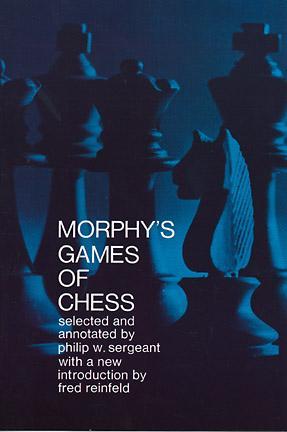
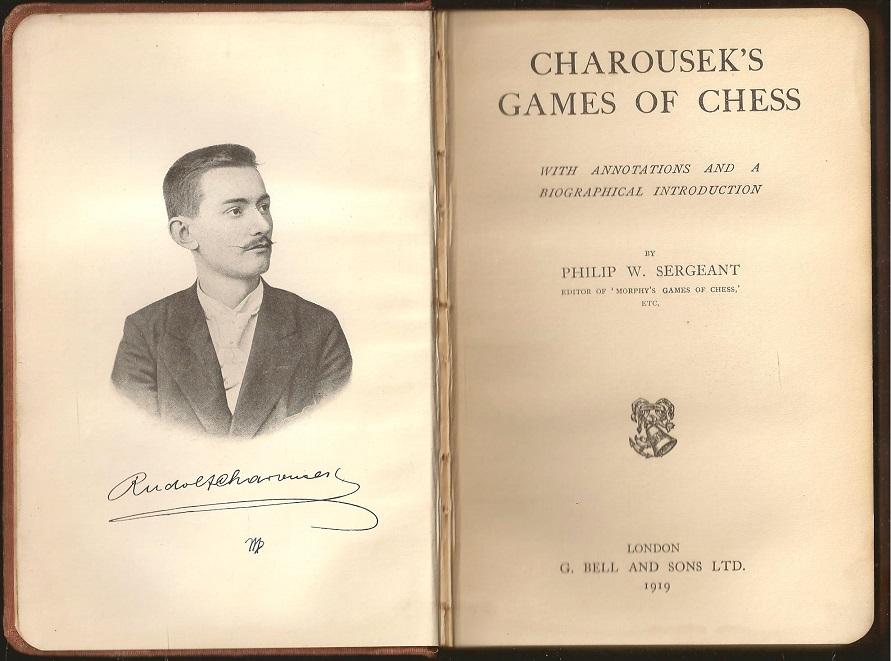
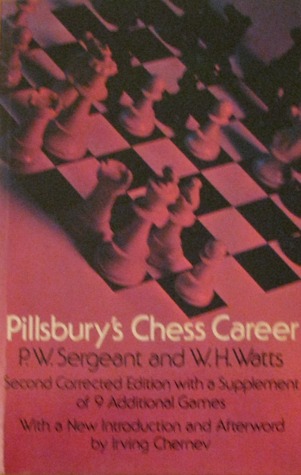
PWS was an English author of biographical games collections for Charousek, Morphy and Pillsbury as well as other works of importance such as A Century of British Chess (1943) and Championship Chess (1938).
From The Encyclopedia of Chess (BT Batsford, 1977) by Harry Golombek :
“A professional writer on chess and popular historical subjects. Without any pretentions to mastership, he represented Oxford University in the years 1892 – 5 and assisted RC Griffith in preparing three editions of Modern Chess Openings.
In chess he dealt with a number of important subjects : Morphy’s Games of Chess, London, 1916; Charousek’s Games of Chess, London, 1919; Pillsbury’s Chess Career (in collaboration with WH Watts), London, 1923; Championship Chess, London, 1938.
All these are lucidly and carefully written but suffer from the defect that, being neither a master player nor a professional annotator, he was not competent to deal with the annotational part of the work. Probably his best book on chess was A Century of British Chess, London, 1934.
From British Chess Magazine, Volume LXX11 (72), Number 11 (November), page 324 we have this rather brief obituary (presumably written by Brian Reilly):
“We regret to have to report the death, at the age of eighty-one of Philip W. Sergeant, the author of A Century of British Chess, which we imagine is in most chess libraries. He was the author of several well-known historical books – but we are only concerned here with his chess activities, which included representing Oxford University 1892-5; helping RC Griffith with two editions of Modern Chess Openings; playing for Middlesex, winning the chess championship of the authors’ club for several year, and latterly as an honoured member; and occasionally obtaining the championship of the Guildford Chess Club. Our sympathy with his widow and two daughters is sincere.”
”
“Philip Walsingham Sergeant (27 January 1872, Notting Hill, London[1] – 20 October 1952)[2] was a British professional writer on chess and popular historical subjects.[3][4] He collaborated on the fifth (1933), sixth (1939), and seventh (1946) editions of Modern Chess Openings, an important reference work on the chess openings. He also wrote biographical game collections of Paul Morphy (Morphy’s Games of Chess (1916) and Morphy Gleanings), Rudolf Charousek (Charousek’s Games of Chess (1919)), and Harry Nelson Pillsbury (Pillsbury’s Chess Career, with W. H. Watts, 1922), and other important books such as A Century of British Chess (1934) and Championship Chess (1938).”
Harry Golombek writes that, “Without any pretensions to mastership, he represented Oxford University in the years 1892-5”.[3] Golombek considers A Century of British Chess probably Sergeant’s best chess book, but opines that although Sergeant’s chess books are lucidly written, they suffer from the defect that, as a non-master, he was not competent to deal with the annotational aspect of his work.
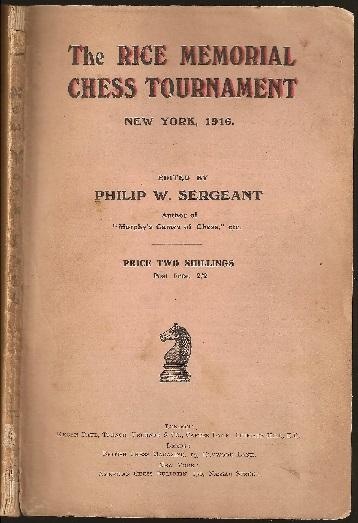
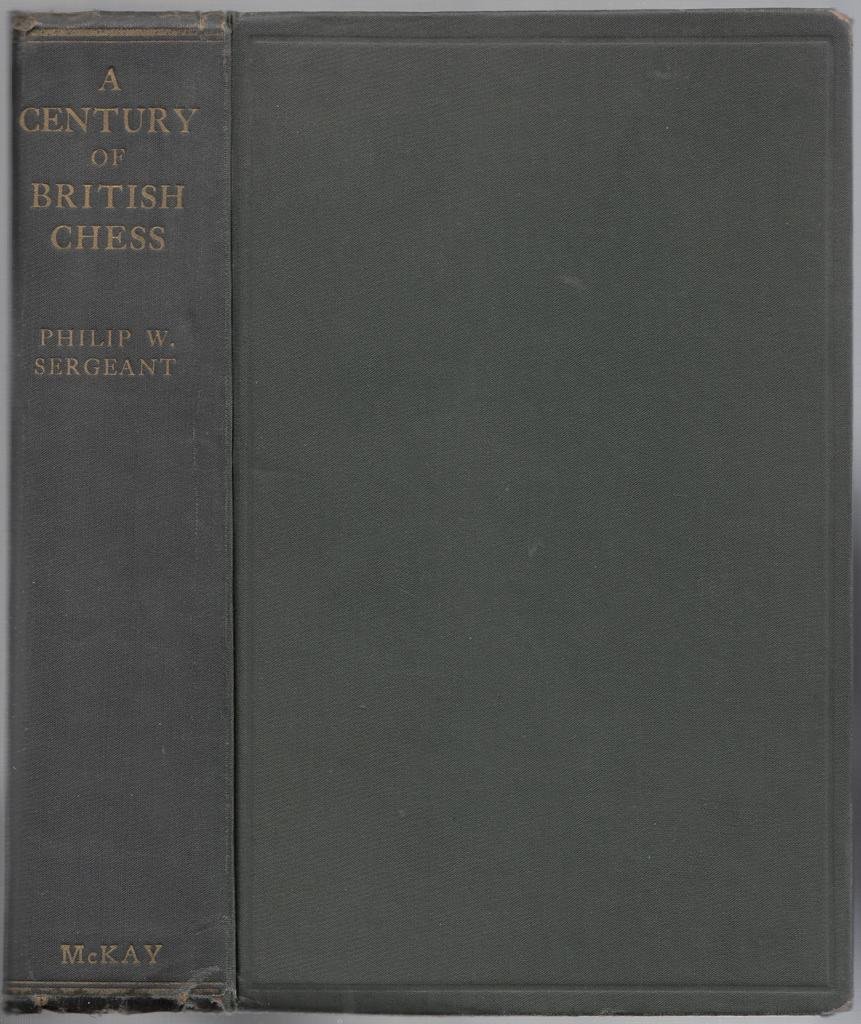
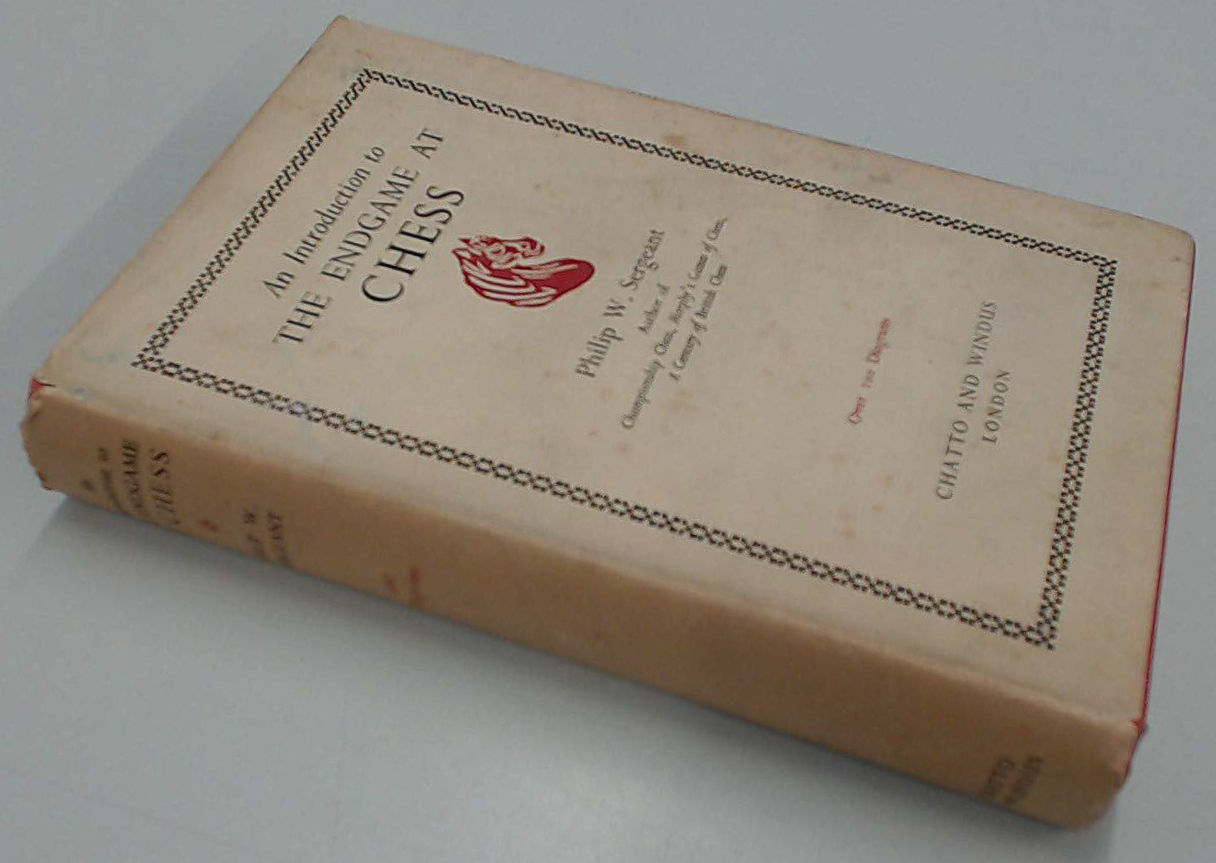
Philip Walsingham SergeantCharousek’s Games of ChessThe Rice Memorial Chess Tournament, 1916Pillsbury’s Chess Career, London, 1923A Century of British Chess, London, 1934An Introduction to the Endgame at Chess
We offer best wishes to IM Simon John Bradley Knott on his birthday
Simon was born on Sunday, October 19th 1958 in Lambeth, London to Simon Harold John Arthur Knott and Josephine Whowell.
Simon attended Trinity College, Cambridge.
He became a FIDE Master in 1990 and an International Master in 2001. According to Felice and Megabase 2020 his peak FIDE rating was 2401 in October 2002 at the age of 43.
Simon was Southern Counties (SCCU) champion in the 1995-96 and 2001-02 seasons.
Simon plays for Hertford and Barbican in the Four Nations Chess League.
As white Simon plays the Queen’s Gambit via a 1.Nf3 or 1.c4 move order. There are zero 1.e4 games!
As the second player he plays the French Winawer and the Grünfeld Defence.
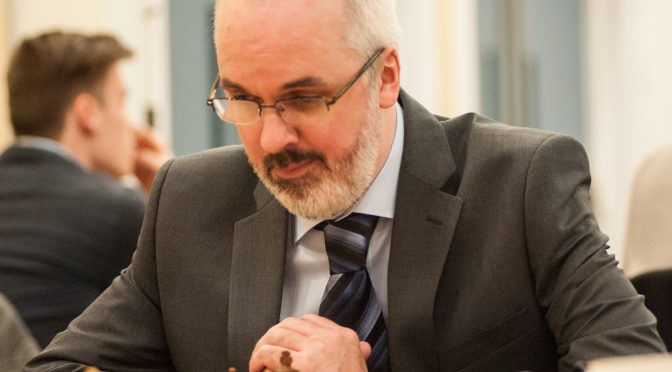
John K Shaw was born on Wednesday, October 16th, 1968 in Irvine, North Ayrshire, Scotland.
On this day Americans Tommie Smith (gold 19.83 WR) and John Carlos (bronze) famously give the Black Power salute on the 200m medal podium during the Mexico City Olympics to protest racism and injustice against African-Americans.
He became a FIDE Master in 1994 at the age of 26. Five years later in 1999 he became an International Master and finally a Grandmaster in 2006 at the age of 38.
He won the Scottish Championship in 1995 (with IM Steve Mannion and GM Colin McNab), outright in 1998 and in 2000 with AJ Norris.
Not that many years previously (1988) John had a rating of 1700 at the age of 19 and therefore he falls into that rather rare category of GMs who were not strong players as juniors.
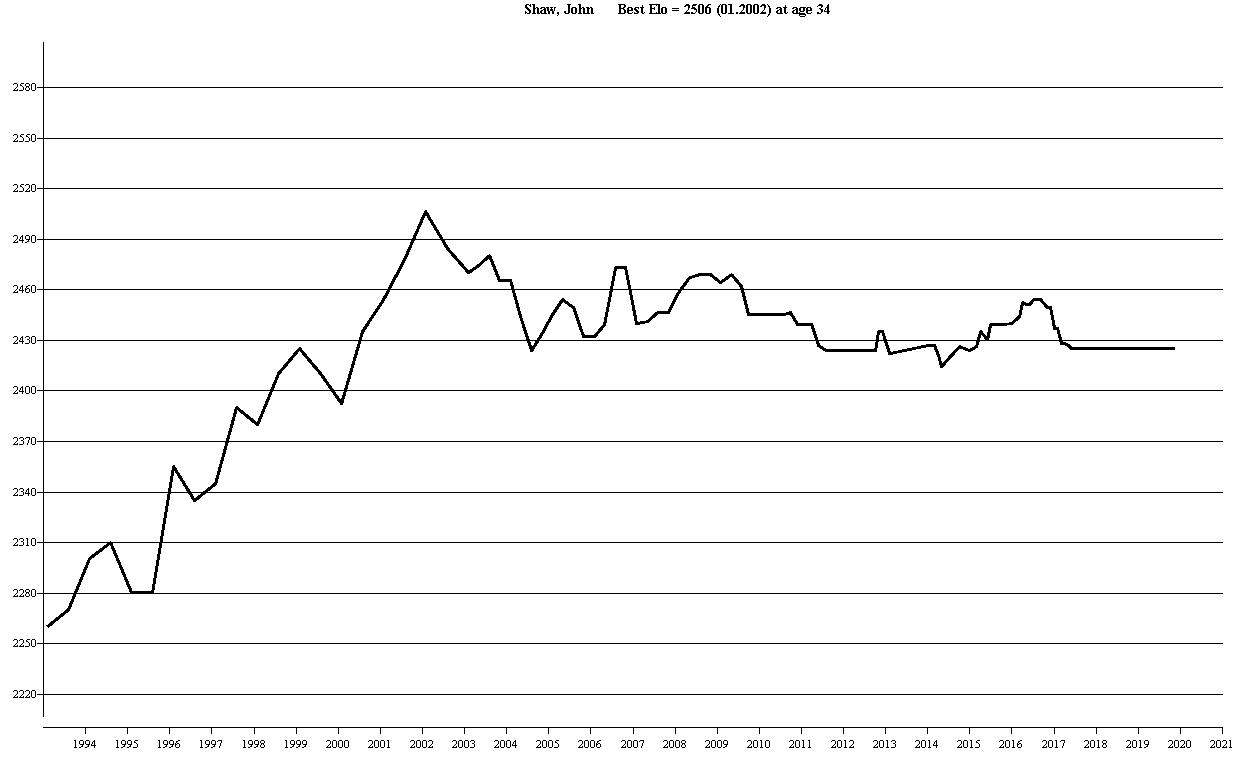
According to Felice and Megabase 2020 his peak FIDE rating was 2506 in January of 2002.
FIDE Rating profile for GM John Shaw
John’s FIDE federation is Scotland and is currently ranked fifth in that country.
He acquired his three GM norms at Gibraltar 2003, Calvia Olympiad 2004 and 4NCL Season 2005/6.
According to ChessBase (in 2005) :
“IM John Shaw has written two books for Everyman Chess and co-edited Experts vs. the Sicilian. He has represented Scotland on many occasions, recently in the Olympiad in Calvià, where he obtained his second GM-norm. As John has once had 2500 in Elo, it is his hope that he will complete his Grandmaster title in 2005 with a third GM-norm.
Together with Jacob, John constitutes two thirds of the new chess publisher Quality Chess Europe which has published Experts vs. the Sicilian by ten different authors and Learn from the Legends – Chess Champions at their Best by Romanian GM Mihail Marin.”
John plays / has played for 4NCL Alba and his peak ECF grading was 240B in July 2009.
With the white pieces almost exclusively plays 1.e4 and the Ruy Lopez, Exchange Variation.
As the second player John has a wide repertoire versus 1.e4 essaying the Sicilian La Bourdonnais (Löwenthal) and against 1.d4 the Slav is the weapon of choice.
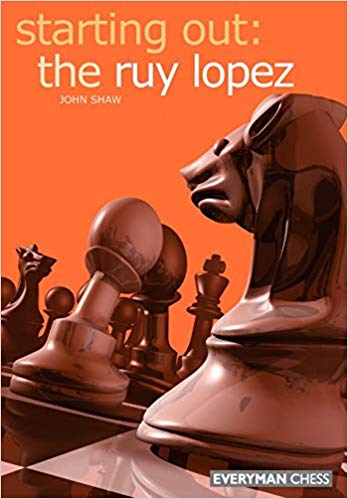
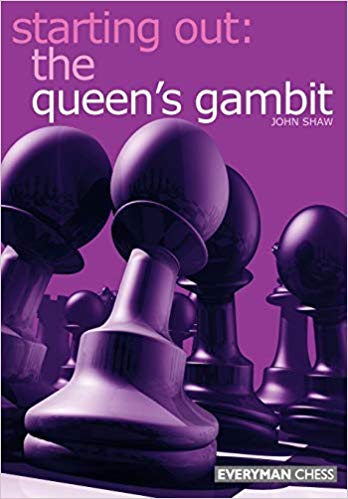
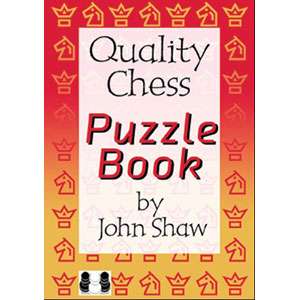
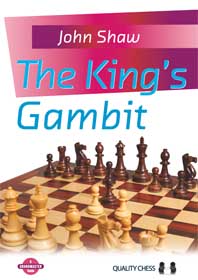
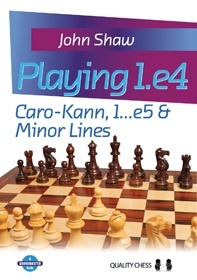
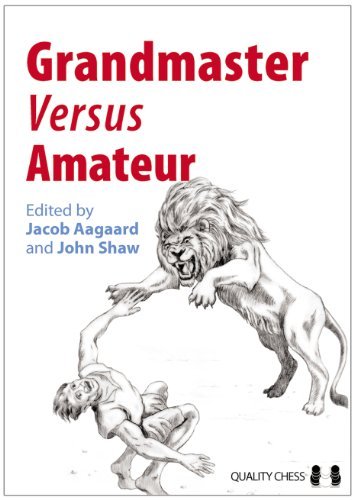
A writer of chess books, John is the Chief Editor of the publishing house Quality Chess and has written the following (amongst others) :
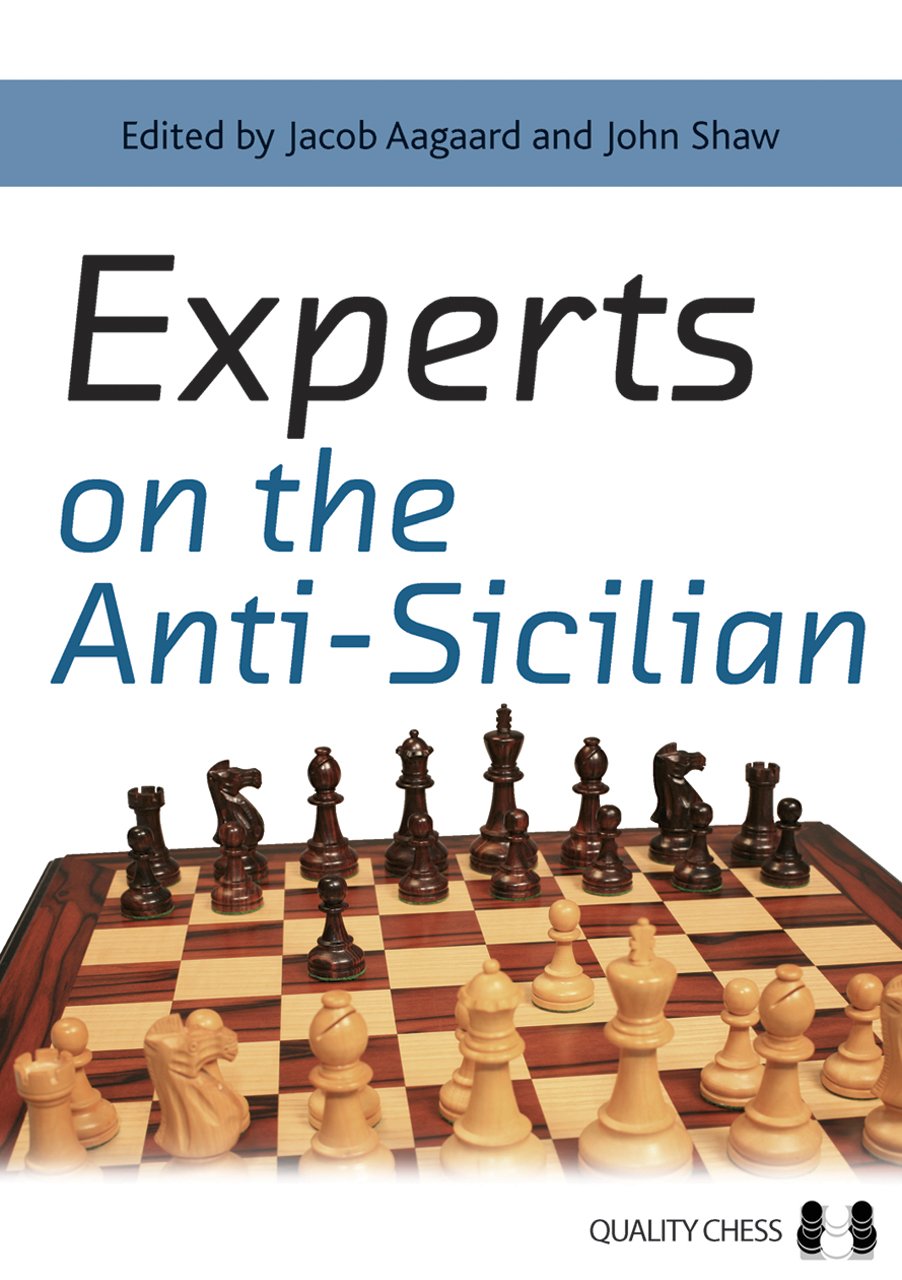
starting out : the ruy lopezstarting out : the queen’s gambitQuality Chess Puzzle BookThe King’s GambitPlaying 1.e4Grandmaster versus Amateur by John ShawExperts on the Anti-Sicilian (Grandmaster Repertoire Series)
Charles Masson Fox was born on Friday, November 9th 1866 in Falmouth, Cornwall. his father, Howard, was 29 and his mother, Olivia Blanche Orme, was 22. He had one brother and two sisters.
His sister Olivia Lloyd was born on 5 February 1868 in Falmouth, Cornwall, when Charles Masson was 1 year old. His sister Stella was born on 11 December 1876 in Falmouth, Cornwall, when Charles Masson was 10 years old. In 1881 he was living in Sherborne, Dorset. In 1901 he was once more living in Falmouth and his profession was that of a timber merchant. His brother Howard Orme died on 7 June 1921 in Falmouth, Cornwall. His father Howard passed away on 15 November 1922 in Cornwall. His mother Olivia Blanche passed away on 12 March 1930 in Falmouth, Cornwall, at the age of 85.
Sadly, neither Hooper & Whyld, Sunnucks or Golombek mention Fox in their works.
“Charles Masson Fox (9 November 1866 – 11 October 1935) was a Cornish businessman who achieved international prominence in the world of chess problems and a place in the gay history of Edwardian England.
Masson Fox was born into a Quaker family (although he was not related to the Quakers’ founder George Fox) and was a cousin of the fraudulent sinologist Sir Edmund Backhouse, 2nd Baronet. Living throughout his life in the Cornish seaside town of Falmouth, Fox in the early decades of his life was a senior partner of his family’s timber firm, Fox Stanton & Company, and was also on the Board of Messrs G C Fox & Company, a long-established firm of shipping agents.
C.M.Fox’s gravestone at Budock Quaker Burial Ground
Fox is described by chess historian Thomas Rayner Dawson (1889–1951) as “a friendly man, kind, mellow, lovable, bringing peace and comfort and serene joy with him”. He was also a discreet but active homosexual. In 1909 he visited Venice with his friend James Cockerton, meeting the writer Frederick Rolfe and becoming the reluctant recipient of Rolfe’s famous Venice Letters, in which the gay subculture of Venice is vividly described.
In 1912–13 Fox was blackmailed by a woman who accused him of seducing her 16-year-old son. Eventually Fox reported the matter to the police and the woman was sent to prison for five years and her son for one year, with hard labour.[1] However, Fox was profoundly affected by the publicity surrounding the case, which was reported in detail in the local press. The predictable result of his courageous action was the destruction of his reputation, and the compromise of his business and social life in Falmouth.
Although he continued to live in Cornwall, the focus of his social life shifted to London, and in the last two decades of his life, Fox became prominent in the world of chess. He was elected President of the Cornwall Chess Association, played a prominent part in the development of the British Chess Problem Society, and is still renowned as one of the greatest ever exponents of fairy chess (chess problems with variations in the rules).”
From The Problemist Fairy Chess Supplement, 1933 :
What is the shortest game
ending in this position?
Charles Masson Fox
Richard James has written a fascinating Minor Pieces article about Charles which you may find here
We wish GM Jonathan Speelman all the best on his 70th birthday.
Jonathan Simon Speelman was born on Tuesday, October 2nd, 1956 in Marylebone, London. His mother’s maiden name was Freeman. In March 2002 Jon and Lindsey Thomas were married in Camden, Greater London. They have a non-chess playing son, Lawrence who studied Ancient Languages at The University of Chicago.
Jonathan attended St. Paul’s School, London and then Worcester College, Oxford and read mathematics.
He became an International Master in 1978 (England’s tenth) and a Grandmaster in 1980 (England’s fifth) and achieved a peak FIDE rating of 2645 at the age of 32 in July 1988.
Jon is a Life Member of King’s Head Chess Club and has helped them organise a number of tournaments including the NatWest Young Masters where he has adjudicated the winner of the Best Game Prize.
Currently, Jon plays for Wood Green in Four Nations Chess League and in the London League and maintains an ECF grade of 245.
Jon is the chess correspondent for The Observer and The Independent.
With the white pieces Jon prefers 1.Nf3 and against 1…Nf6 to follow with c4 and d4. Interestingly, if black plays 1…d5 then Jon plays an early king-side fianchetto.
As the second player Jon prefers the Smyslov Caro-Kann, the Nimzo-Indian and Queen’s Indian defences.
His record against contemporary players is impressive:
Nigel Short: +5
Murray Chandler: +4
Jonathan Mestel: +4
John Nunn: +3
James Plaskett: +4
Mark Hebden: +7
Tony Miles: +1
Tony Kosten: +3
Daniel King: +2
Jon Speelman and Nigel Short at the start of their 1989 Candidates match. Jon won 3.5 – 1.5
From British Chess (Pergamon Press, 1983) by Botterill, Levy, Rice and Richardson :
“Having been asked to contribute an article on myself to this book I have decided to concentrate almost exclusively on my ‘relationship with chess’, but first quickly summarize my life.
JS
Born on 2nd October 1956 I went to a ‘Nursery School’ whose name I forget. Then to Arnold House School followed by St. Paul’s School. I had a ‘Year off’ from January to October, 1976, when I went up to Worcester College, Oxford, where I studied mathematics. In 1977 I left Oxford with a 2nd degree. Since then I have been a professional chess player.
I was taught chess at the age of 6 by my cousin on Boxing Day, 1962. Then as now, I was an inquisitive person and the idea of a ‘complicated and difficult game’ interested me. Sadly my first game of chess ended in checkmate in four moves; but I persevered and soon became more competent.
JS at the London based Philips & Drew Kings tournament
I have always seen life to some in terms of barriers. There are things which one can do easily and which one finds difficult or almost impossible. For any given task the transition from one state to the other is not as smooth. One builds up energy and finally is able to succeed for the first time. After that the task becomes successively easier: Partly because one is aware that one can succeed.
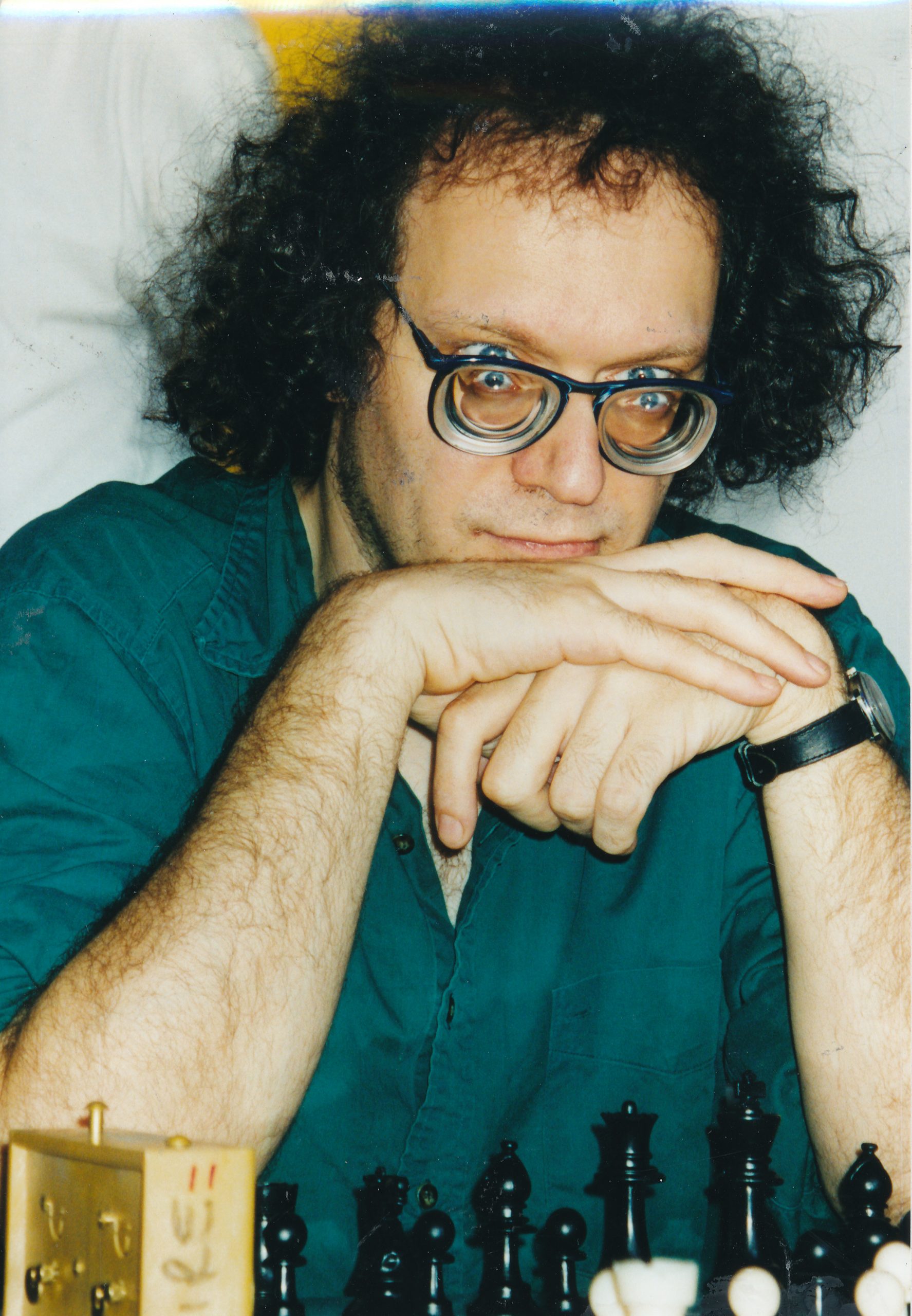
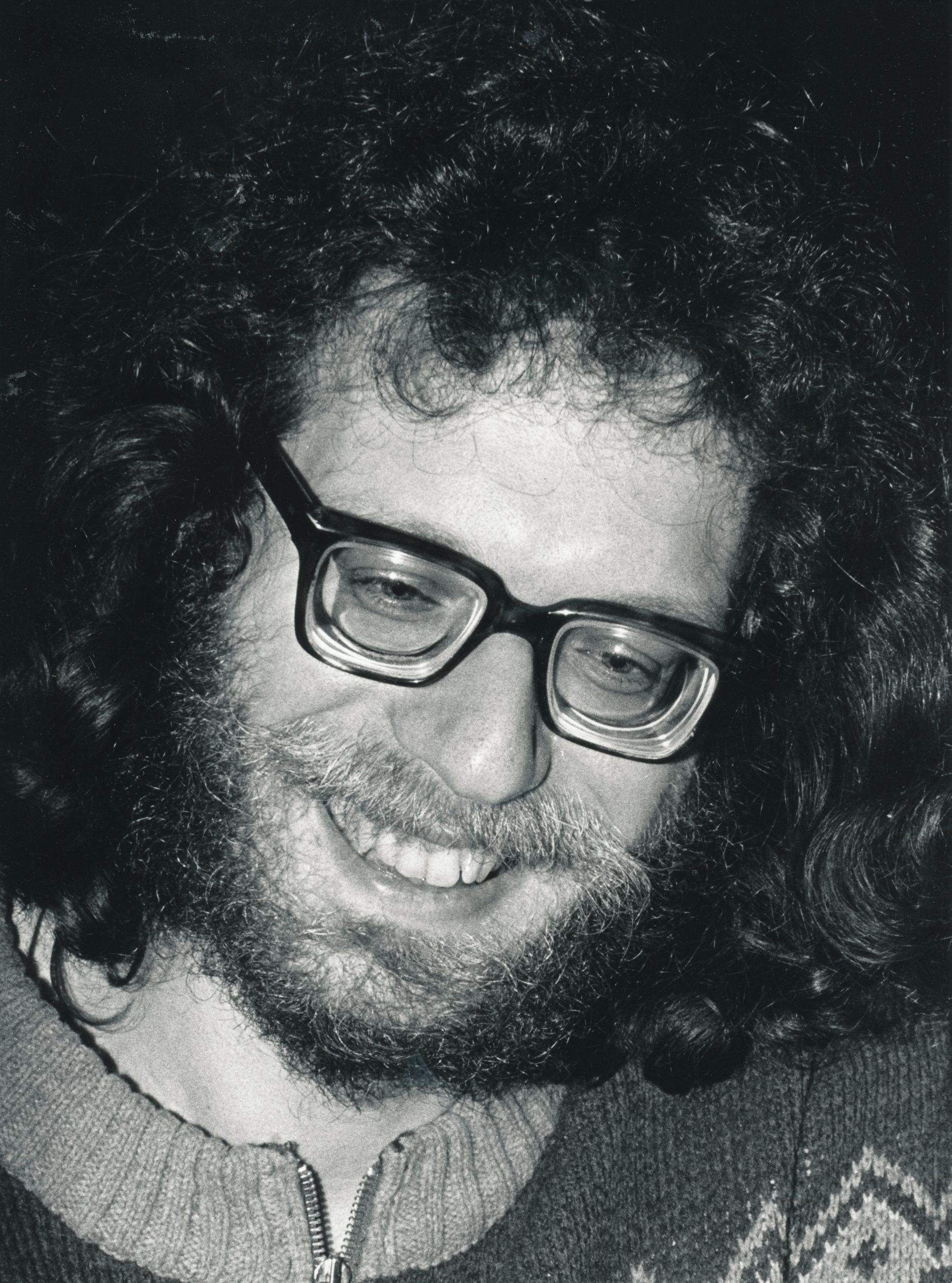
Jonathan Speelman without glasses
ln order to illustrate my chess career to date, I shall therefore pick out examples of barriers which I managed to break through.
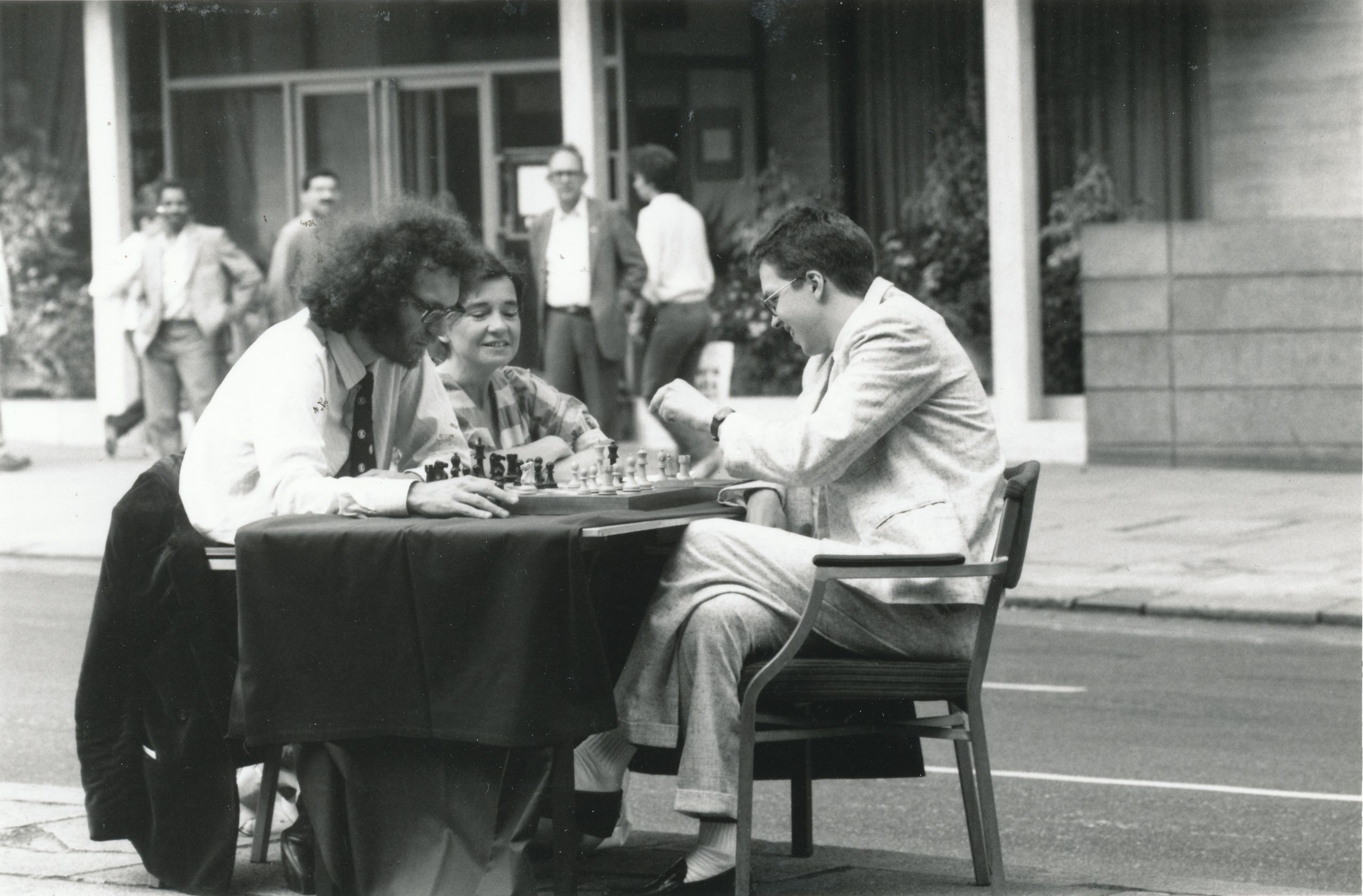
Jonathan was an early follower of fashion
Until a few Years ago there were few titled players in Great Britain. But recently, thanks largely to a change of emphasis in organisation, several players have broken through to obtain international titles. This is not only because British players have become stronger – which they undoubtedly have – but also because they have received opportunities which were previously denied them.
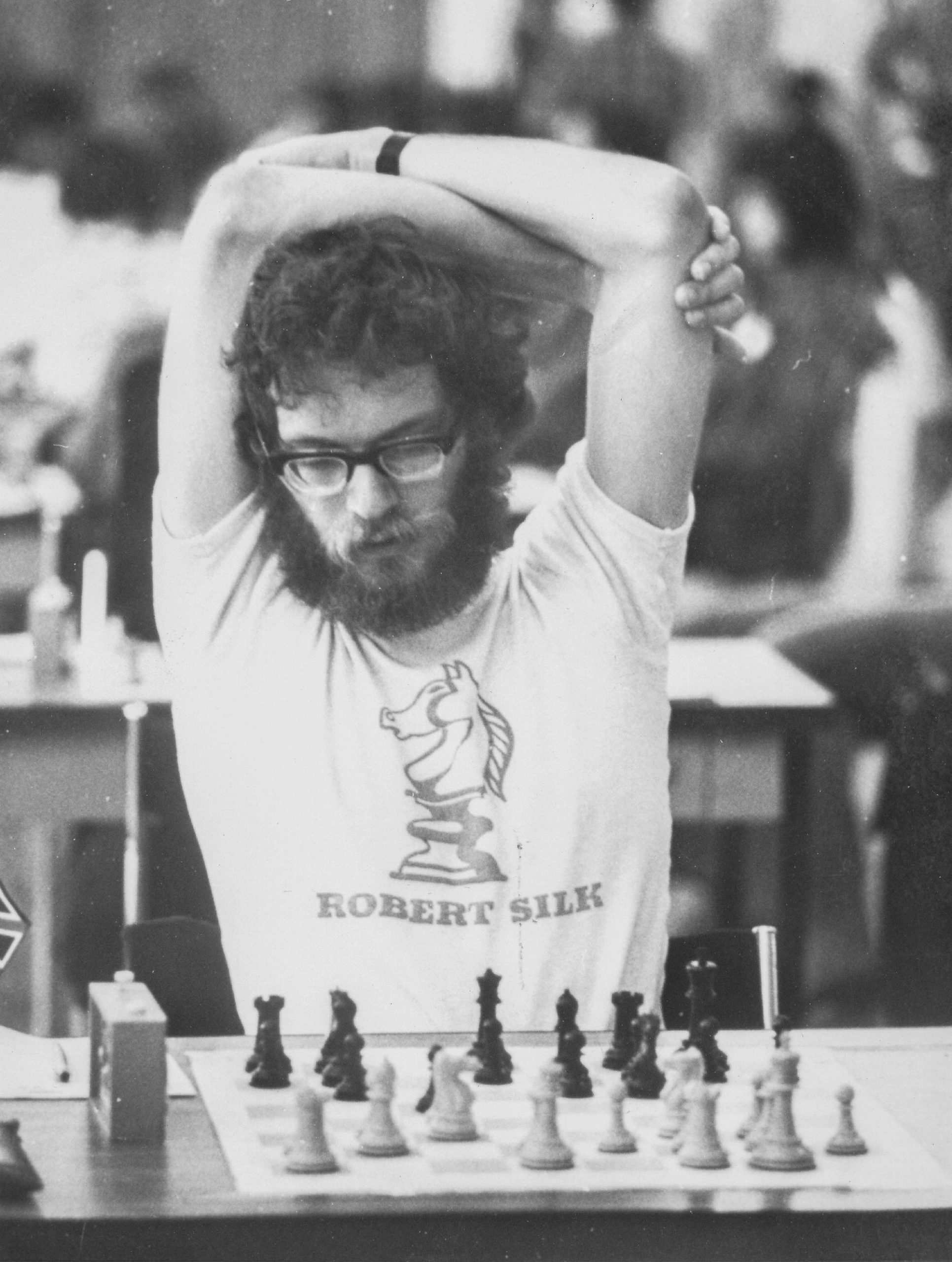
JS at the London Robert Silk Fellowship invitational tournament
I first started seriously to contemplate becoming an international master in 1977. Previously, I had of course aspired to this but without really investigating the mechanics of obtaining norms. In August, 1977 England sent a team to the World Student Team Championships in Mexico City. We came third: a year later we were to win the event (though on that occasion it was a World Under 26 Team Championship). On our return there was an invitation tournament in London: the ‘Lloyds Bank Silver Jubilee’. Although I was rather tired after Mexico I decided to play and to my surprise, I obtained an IM norm with a round to spare. It all seemed rather easy. I drew with six strong players including GM Torre and four IM’s and beat three weaker ones.
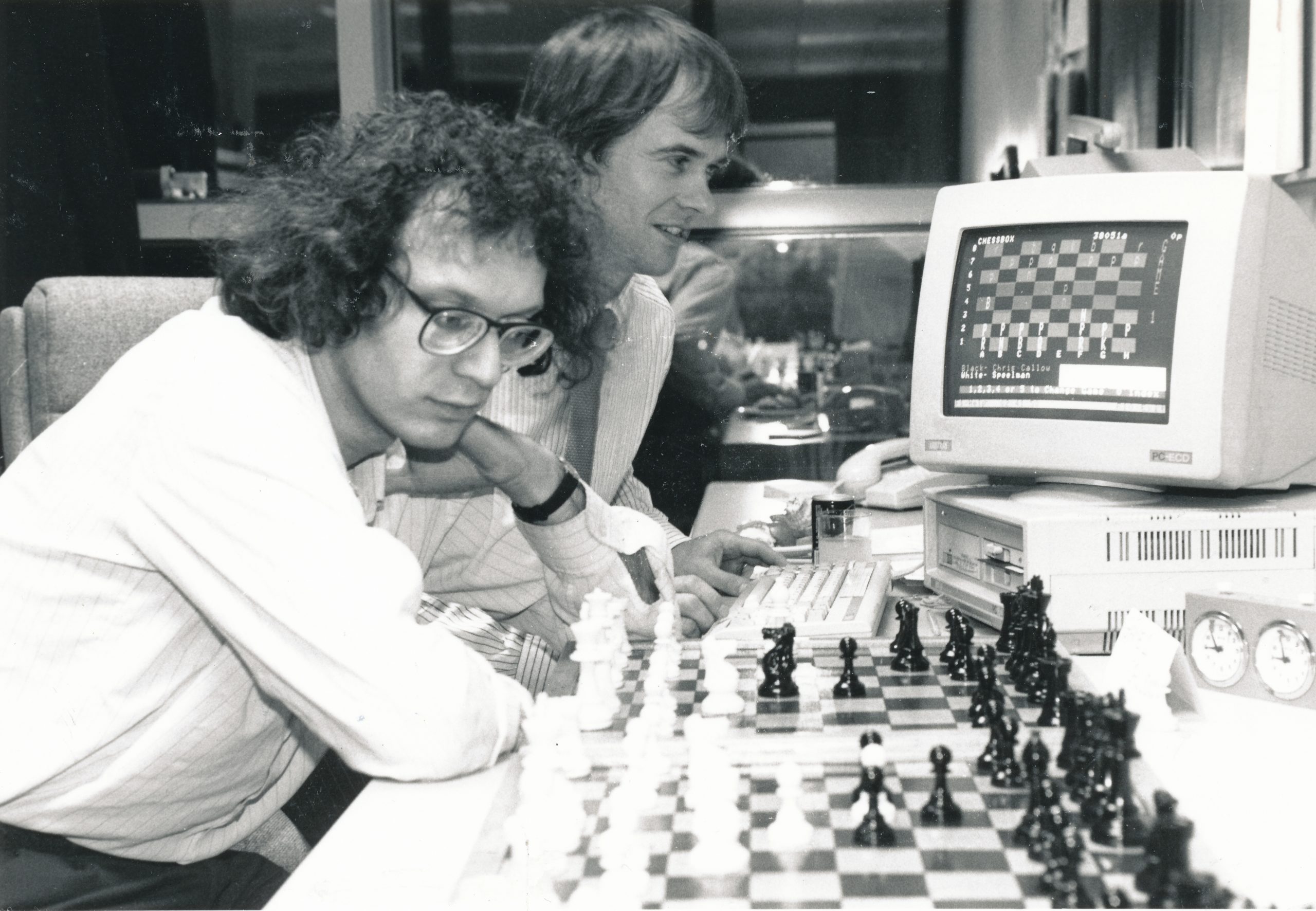
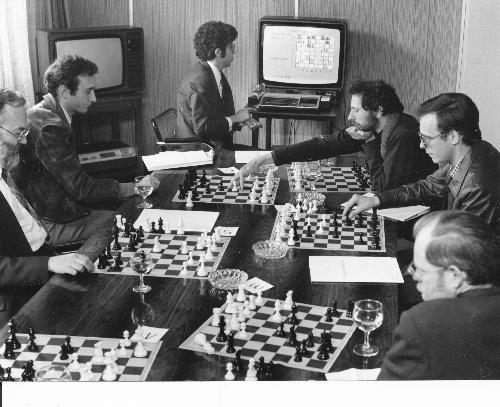
Grandmaster Uses PressTel Chessbox to Play Long Distance Chess. Jonathan Speelman the UK Grandmaster is pictured here deciding his next move in a computer chess game against five simultaneous opponents. Players exchanged moves online via the ChessBox club on PressTel, BTs videotex service.
In December, 1977 I played for the first time in the Annual Grandmaster Tournament at Hastings. I was very pleased to ‘shut up shop’, abandoning any pretensions to an exciting style to score one win, one loss and – wait for it – twelve draws; but 7/14 was sufficient for another international master norm.
These two events left me with twenty three games of norm, one less than the required minimum. Early in 1978 I played in a tournament in London but failed to get my final leg. It was in April that year that I had my next chance at the famous Lone Pine Tournament in California. I have already stressed the importance of barriers. It was in round one of the Lone Pine tournament that I broke through another important one – that of beating a grandmaster.
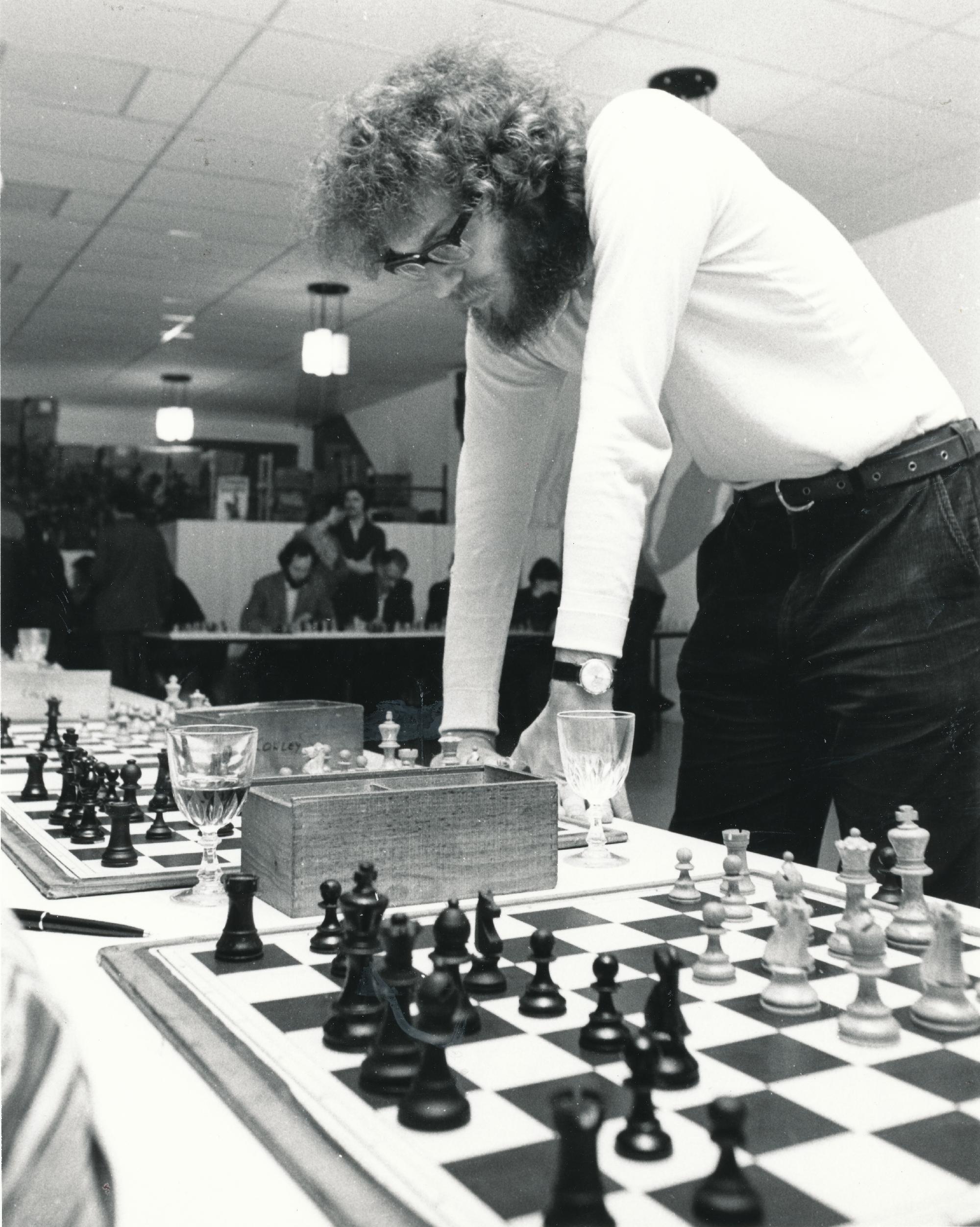
JS was a frequent giver of simultaneous displays
Nowadays (and here I hear myself sounding like an old man!) the strongest young players (under twenty-six) beat international masters quite regularly and indeed grandmasters from time to time. ‘In my day’ this was not so much the case. Titled foreign players could still come over to pillage weekend tournaments; and succeed much of the time! When one of them lost to homegrown talent it was news.
IM Jonathan Speelman vs IM Simon Webb at the 1978 British Championships in Ayr, Courtesy of John Upham
I first started to play regularly against grandmasters in my first Hastings tournament, which I mentioned previously. Of course, I had played grandmasters before, but at Hastings seven of the fourteen games were against them. I scored there six draws and a loss to the tournament winner, Dzindzihashvili.
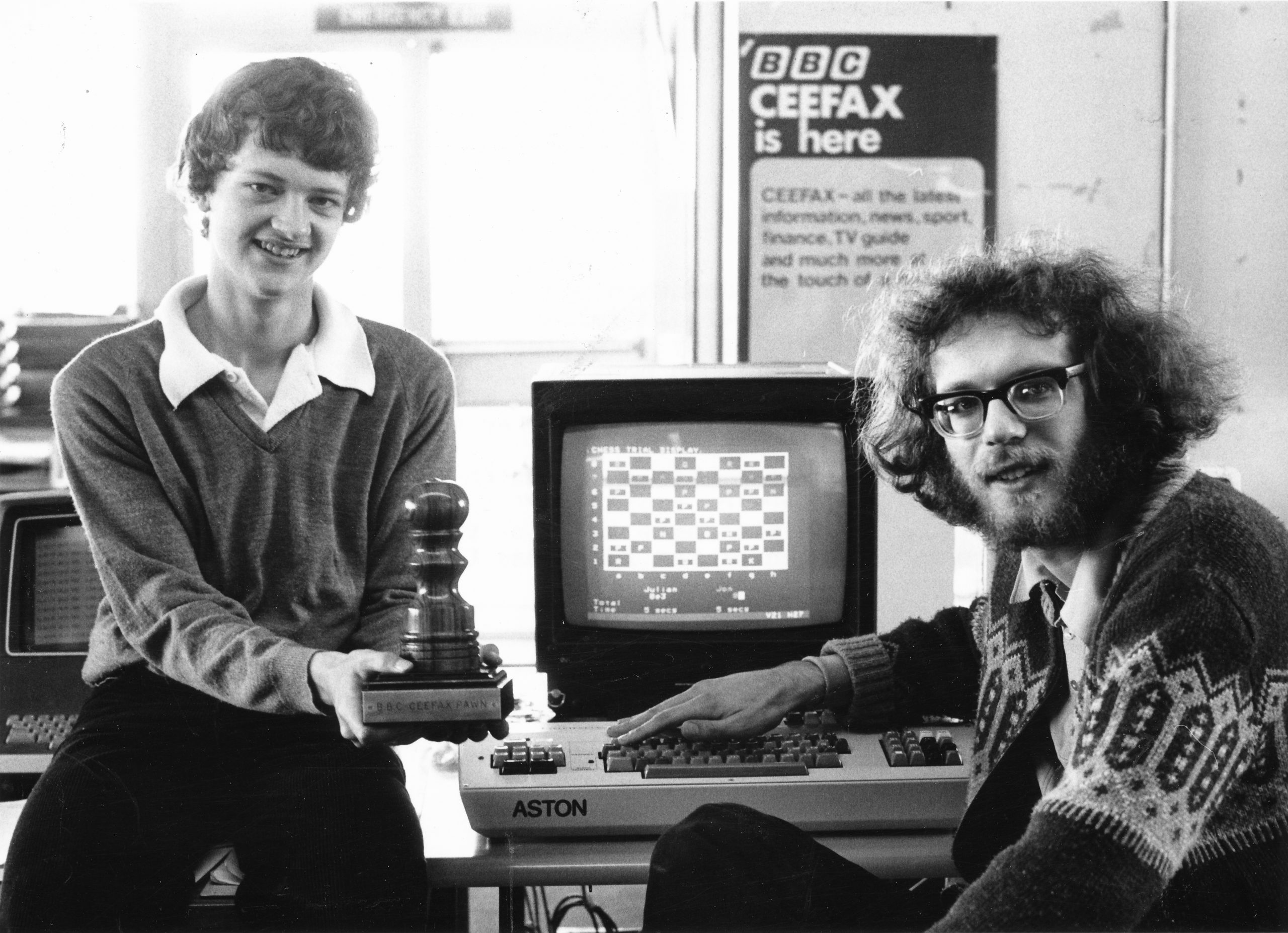
Julian Hodgson and Jonathan Speelman prepare to play each other at their own home via CEEEFAX. This was organised by Peter Andrews of BBC Chess Club and was the first match of its kind.
In round one of Lone pine I was White against Bent Larsen of Denmark. Given that one is going to beat a strong grandmaster (l hadn’t even beaten a weak one) then White against Larsen is quite a good chance. Although he is an extremely strong player, Larsen loses quite a lot of games to much weaker opponents and wins an enormous number against them as well, with not many draws. I was fortunate in obtaining a nice position from the opening and won a good game. That is one of the games I have chosen.
JS receives one of many awards
After beating Larsen the rest of the tournament was rather an anti-climax for me. I drew some games, then lost in successive rounds to Browne and Biyiasas. Needing a win to reach fifty per cent the chance of my final norm, I clawed my way to victory in a dreadful game against a young American P. Whitehead. Two short draws in the final two rounds brought me the title.
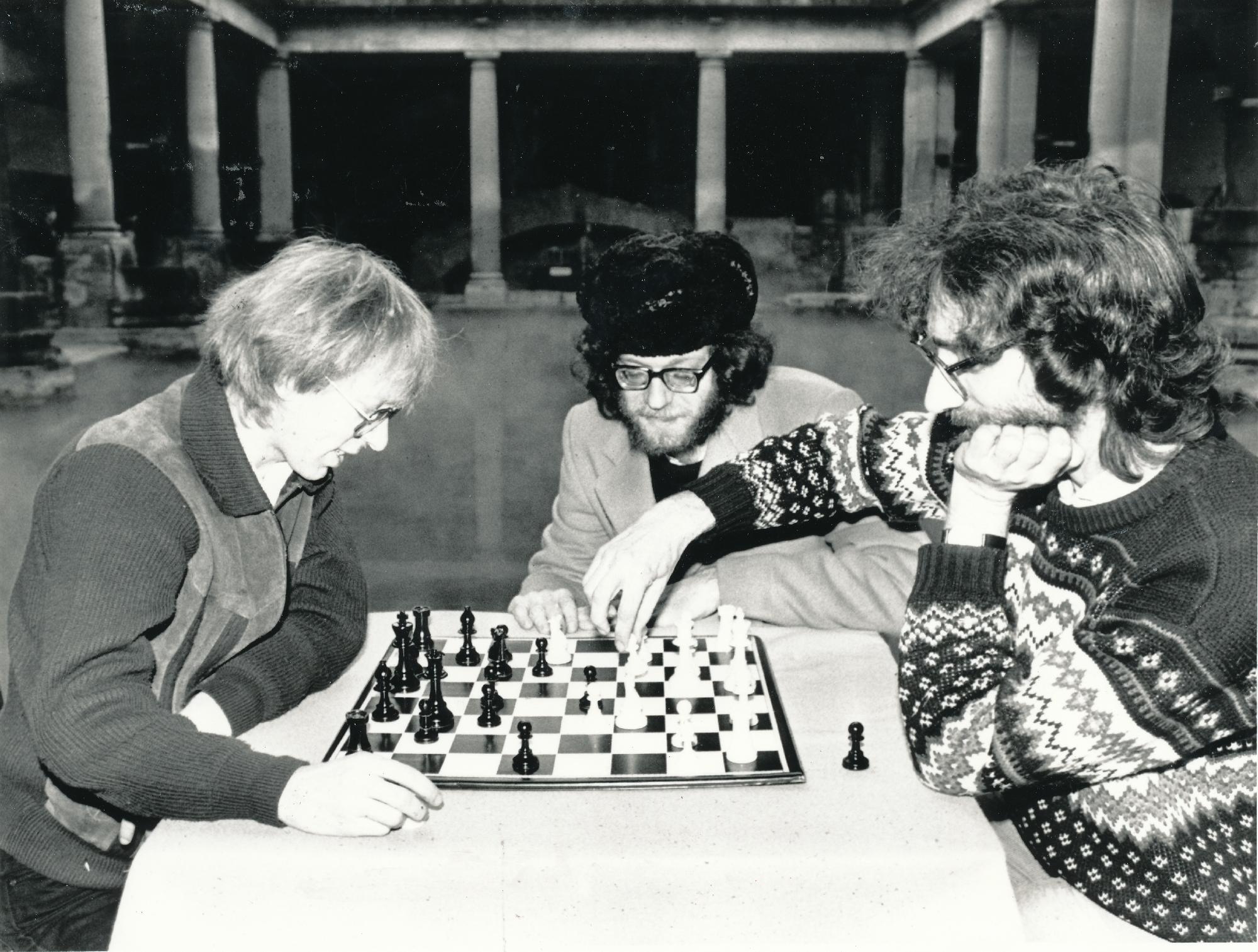
At the Praxis British Zonal in February 1987 here at the roman baths. Murray Chandler, Jonathan Speelman, and Jonathan Mestel
Some years ago the British Championship really was the Championship of Britain. But in the early seventies there was a decline as several of the strongest players did not enter. In the last two years the decline has been halted and then reversed by the sponsorship of stockbrokers Grievson Grant. In 1979 two of our four Grandmasters, Miles and Nunn, competed in the British Championship at Chester and there were no fewer than six International Masters; indeed Nigel Short succeeded in obtaining his first IM norm there.
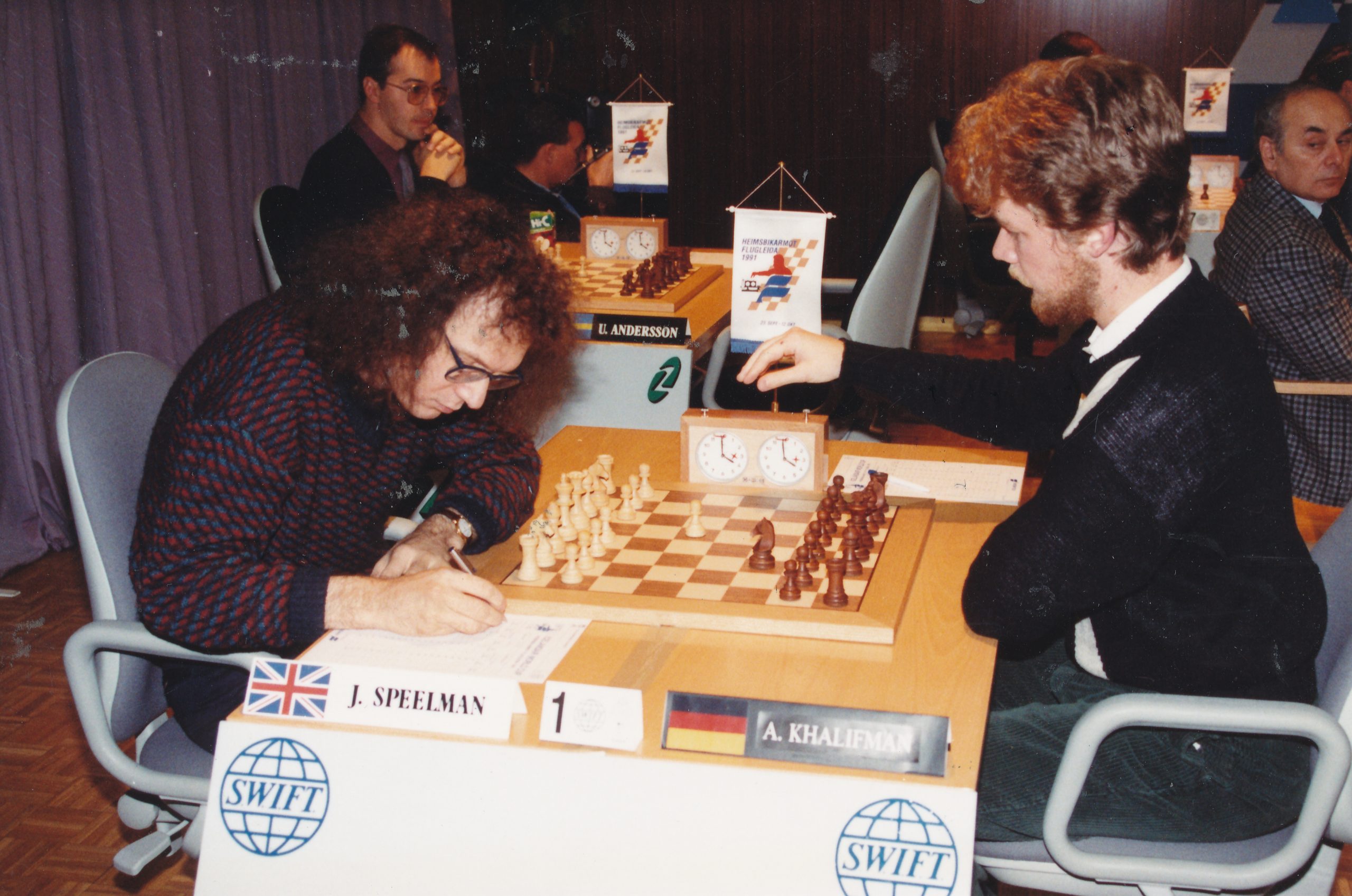
JS plays Alexander Khalifman during the SWIFT World Cup in Reykjavik, 1991. The game was drawn
I first competed in the British Championship at Brighton in 1972. After a good start, beating Michael Basman in the first round and drawing with Craig Pritchett in the second, I lost to Haygarth in round three. Thereafter, I found it incredibly difficult to win games. My old British Chess Magazine reminds me that I succeeded in winning in round nine, but that was the only one after round one. I finished with 4.5/11.
JS, Jana Bellin and Nigel Short in a publicity shoot outside Simpsons in the Strand
A year later at Eastbourne I was still finding it hard to win games. Again I finished with 4.5/11. By Clacton, 1974 I had improved. A loss in the last round to the eventual winner Botterill left me a point behind the seven (!) who had to play off for the title.
I competed at Morecambe, 1975 and Portsmouth, 1976, missing only Brighton, 1977 when the students team was in Mexico. By Ayr, 1978 I was probably one of the favourites along with Jonathan Mestel, who ran away with the tournament in Portsmouth,
1976, George Botterill, the defending champion, and some others.
Jonathan shows off his all seeing four eyes
In fact I won at Ayr. I played quite well throughout. ln the last round half a point ahead of Mestel I played a quick draw with Webb but was lucky when Mestel could only draw with Clarke. Of course winning the British was a big breakthrough for me. But I feel that the most important psychological change came in 1974 when I started to discover that it is possible to win games in the British Championship.
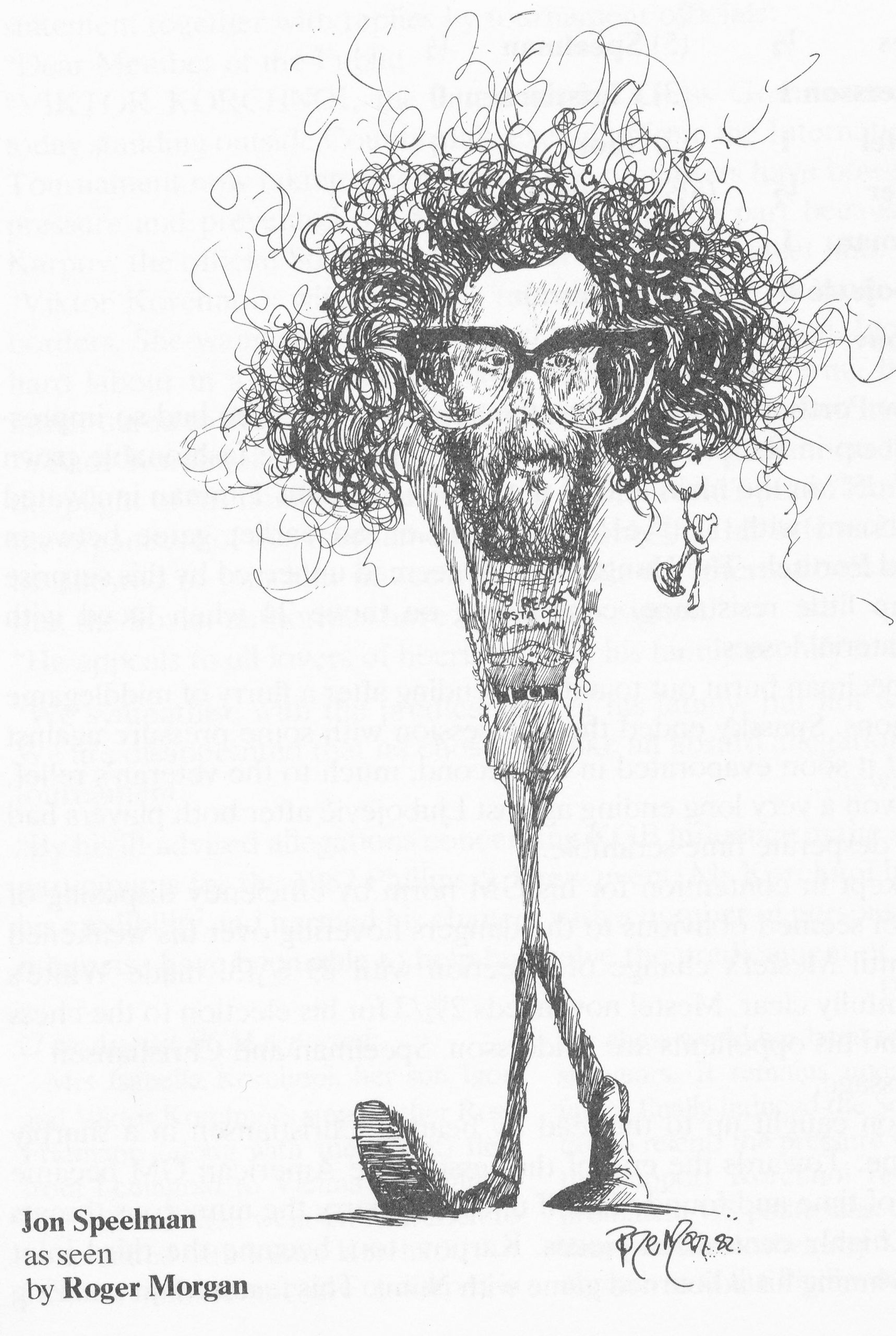
Jonathan Simon Speelman (02-x-1956) as imagined by Roger Morgan, 1982
Since late 1978 I have made no dramatic breakthrough but have, I believe, almost imperceptibly made the change from a ‘medium’ to a ‘strong’ international master.
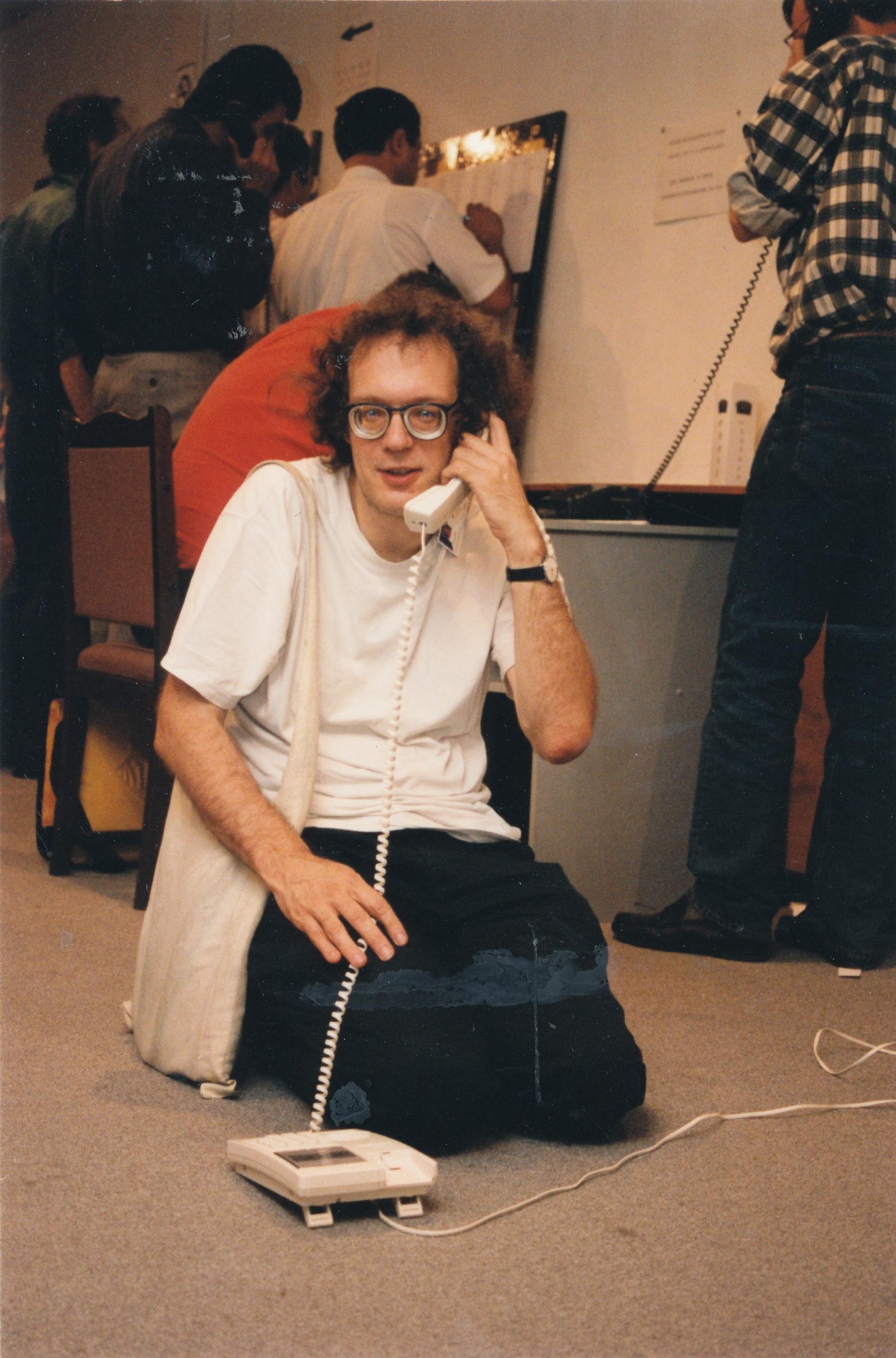
Jonathan Speelman telephones good news
I’ve selected three games to go with this article. The one with Larsen I’ve already mentioned. Mihaljcisin-Speelman I like as a game in which I played very actively as Black.
The game against Biyiasis is a good ‘rough and tumble’ not free from errors of course – but wouldn’t that be boring?
To find out more about JSs chess career we suggest you read his autobiography :
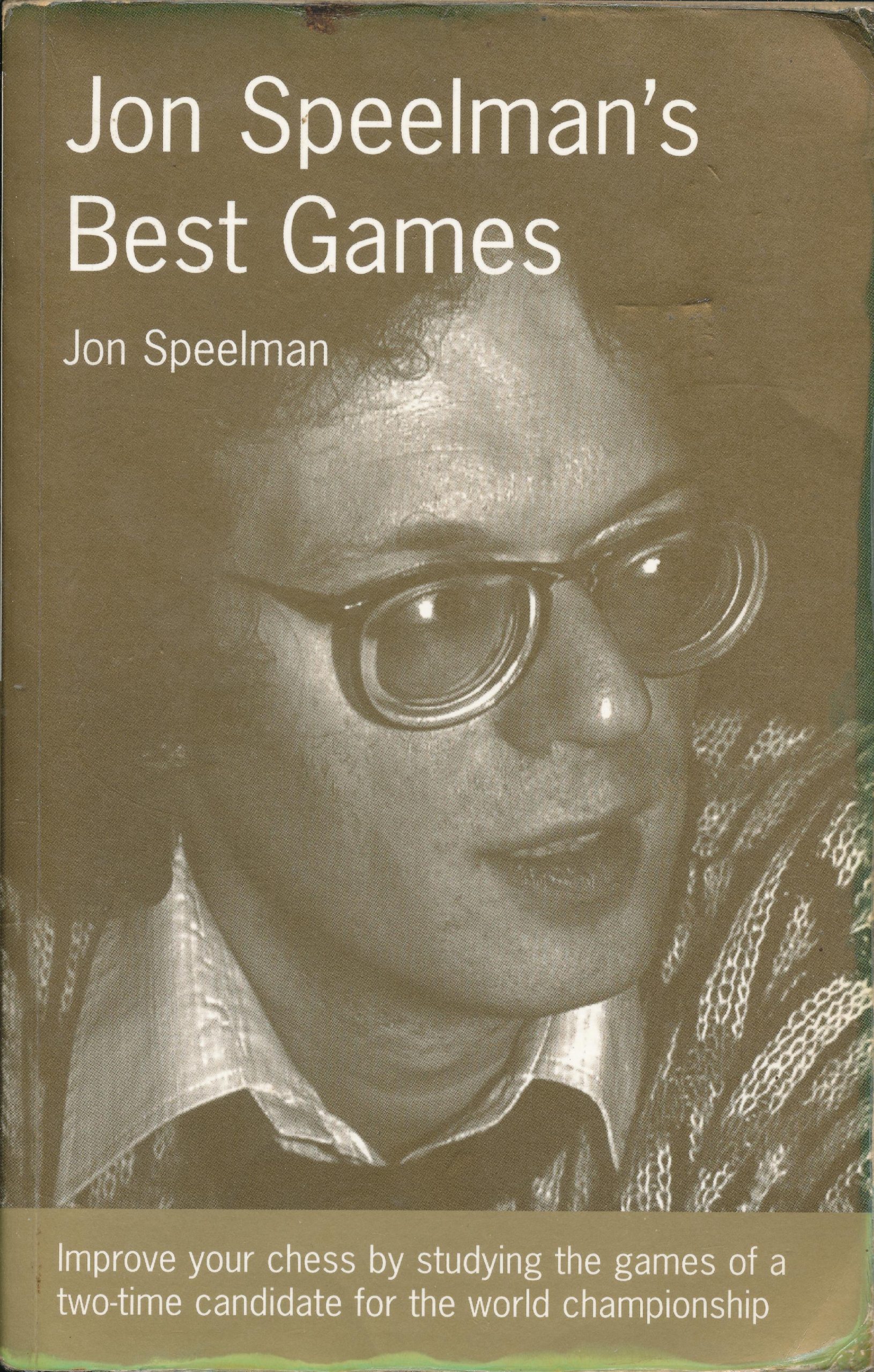
Speelman, Jon (1997). Jon Speelman’s Best Games. B.T. Batsford (London, England). 240 pages. ISBN 978-0-7134-6477-1.
which contains many heavily annotated games.
From The Oxford Companion to Chess (OUP, 1984) by Hooper & Whyld :
“British Champion in 1978, Speelman played at Mexico City later that year in the English team that won (ahead of the USSR) the world’s first youth teams (under-26) championship.
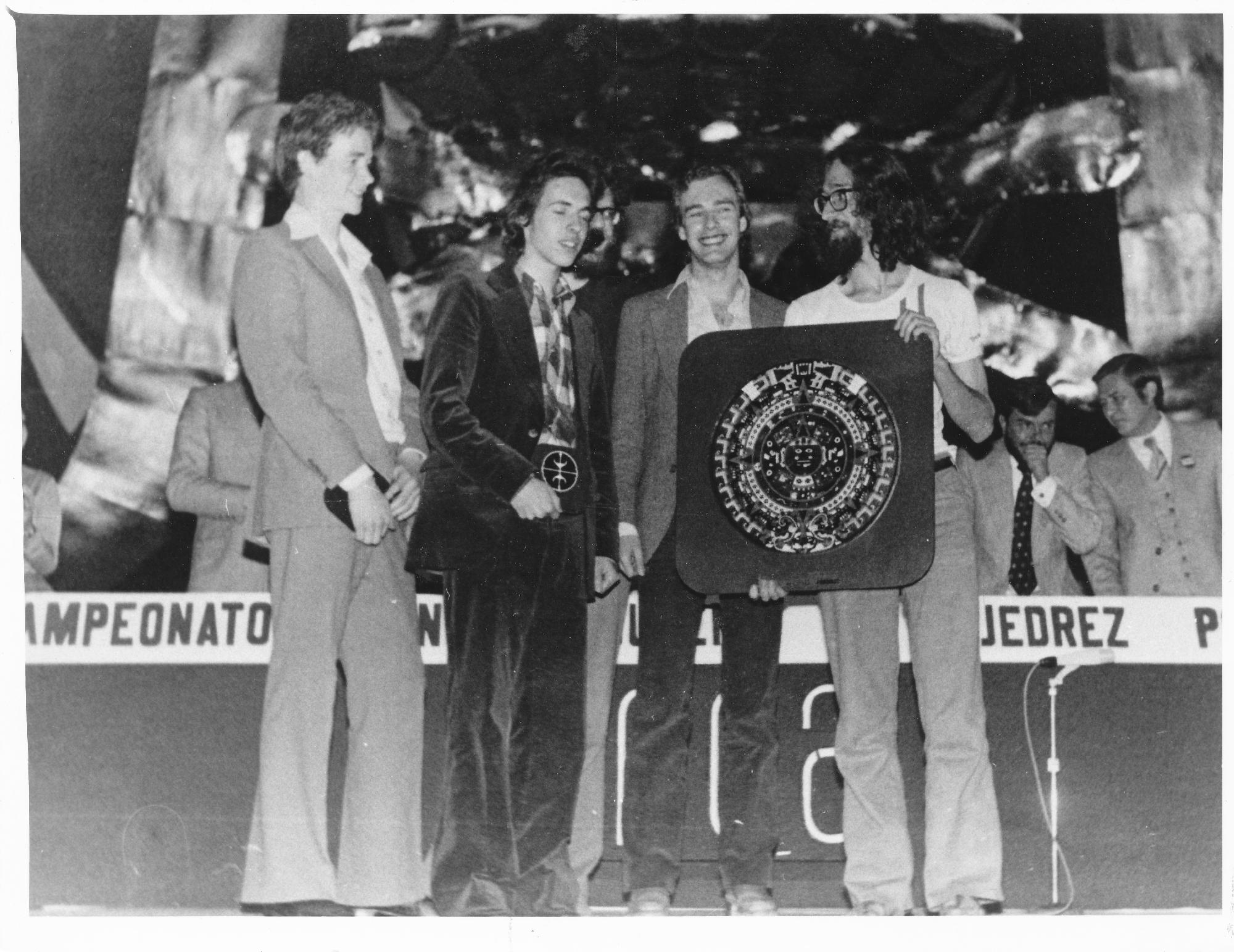
(from l-r) Jonathan Kinlay, Shaun Taulbut, Jonathan Speelman, David Goodman and Jonathan Mestel accepting 1st prize at the 1978 World U26 Student Olympiad in Mexico City
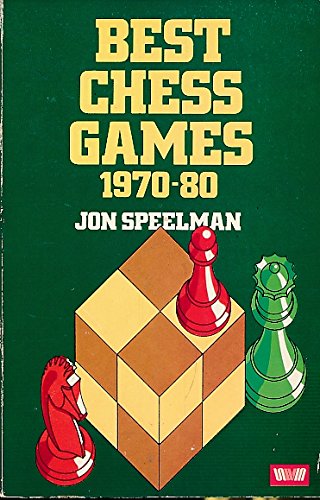
Two good performances in 1980, as score of +5=5-3 to share fourth place in the category 13 London tournament and a second place (+6=7) at Maribor, brought him the title of International Grandmaster (1980). His subsequent achievements include : Dortmund 1981, first (+5=6) equal with Ftacnik and Kuzmin; Hastings 1981-2, second equal with Smyslov after Kupreichik; and London 1982, category 14, +2=10-1 to share fourth place. An excellent analyst, Speelman has written several books, among them Best Chess Games 1970-1980 (1982).”
GM Jonathan Speelman
From Wikipedia :
A winner of the British Chess Championship in 1978, 1985 and 1986, Speelman has been a regular member of the English team for the Chess Olympiad, an international biennial chess tournament organised by FIDE, the World Chess Federation.
In 1989, he beat Kasparov in a televised speed tournament, and then went on to win the event.
In the April 2007 FIDE list, Speelman had an Elo rating of 2518, making him England’s twelfth-highest-rated active player.
He qualified for two Candidates Tournaments:
In the 1989–1990 cycle, Speelman qualified by placing third in the 1987 interzonal tournament held in Subotica, Yugoslavia. After beating Yasser Seirawan in his first round 4–1, and Nigel Short in the second round 3½–1½, he lost to Jan Timman at the semi-final stage 4½–3½.
In the following 1990–93 championship cycle, he lost 5½–4½ in the first round to Short, the eventual challenger for Garry Kasparov’s crown.
Speelman’s highest ranking in the FIDE Elo rating list was fourth in the world, in January 1989.
Jonathan Speelman in happy mood
Writing
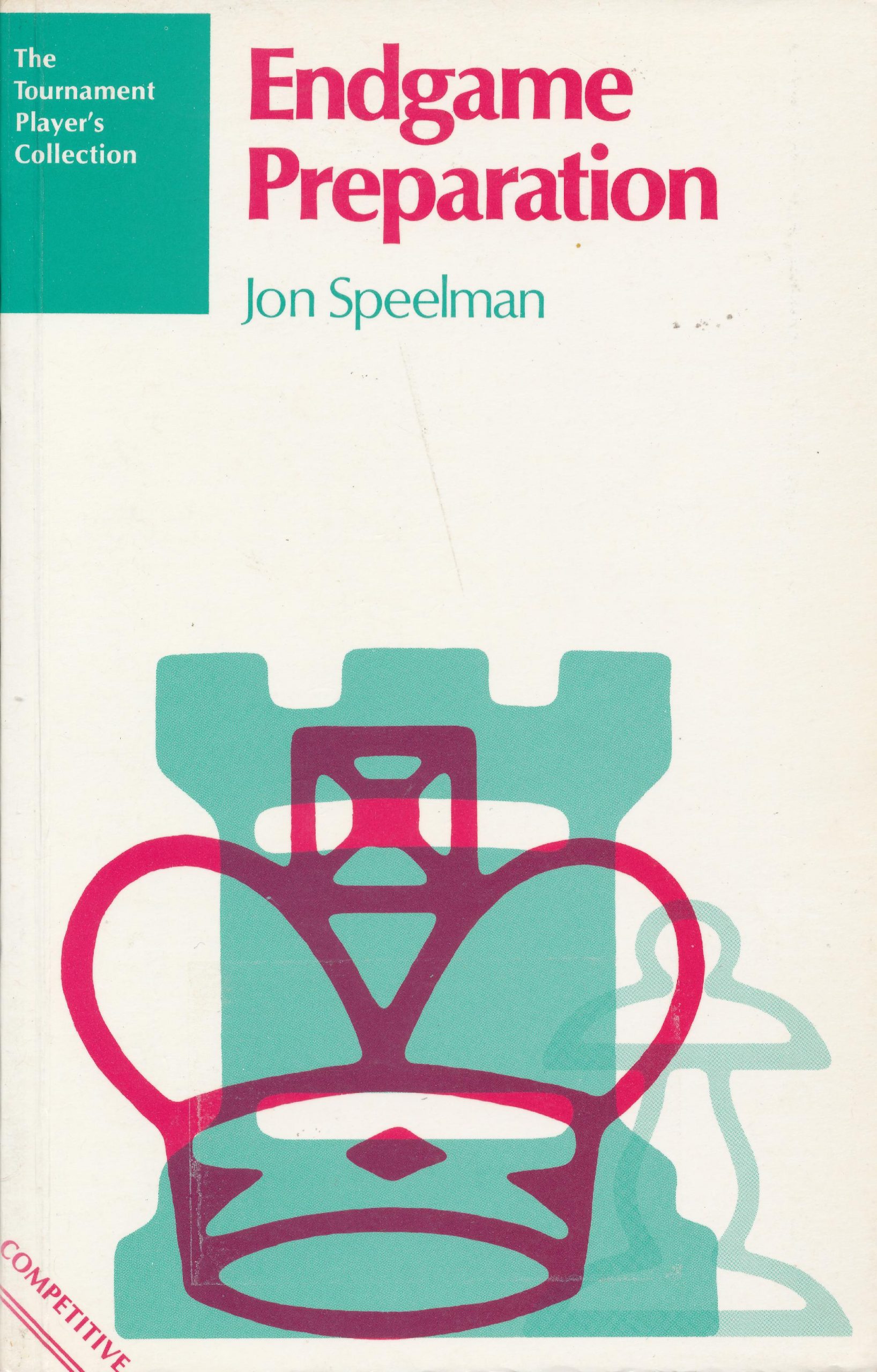
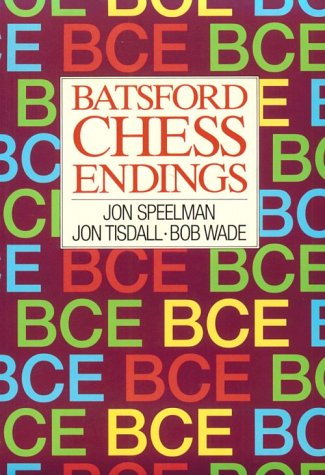
He has written a number of books on chess, including several on the endgame, among them Analysing the Endgame (1981), Endgame Preparation (1981) and Batsford Chess Endings (co-author, 1993).
Among his other books are Best Games 1970–1980 (1982), an analysis of nearly fifty of the best games by top players from that decade, and Jon Speelman’s Best Games (1997). Today he is primarily a chess journalist and commentator, being the chess correspondent for The Observer and The Independent and sometimes providing commentary for games on the Internet Chess Club.
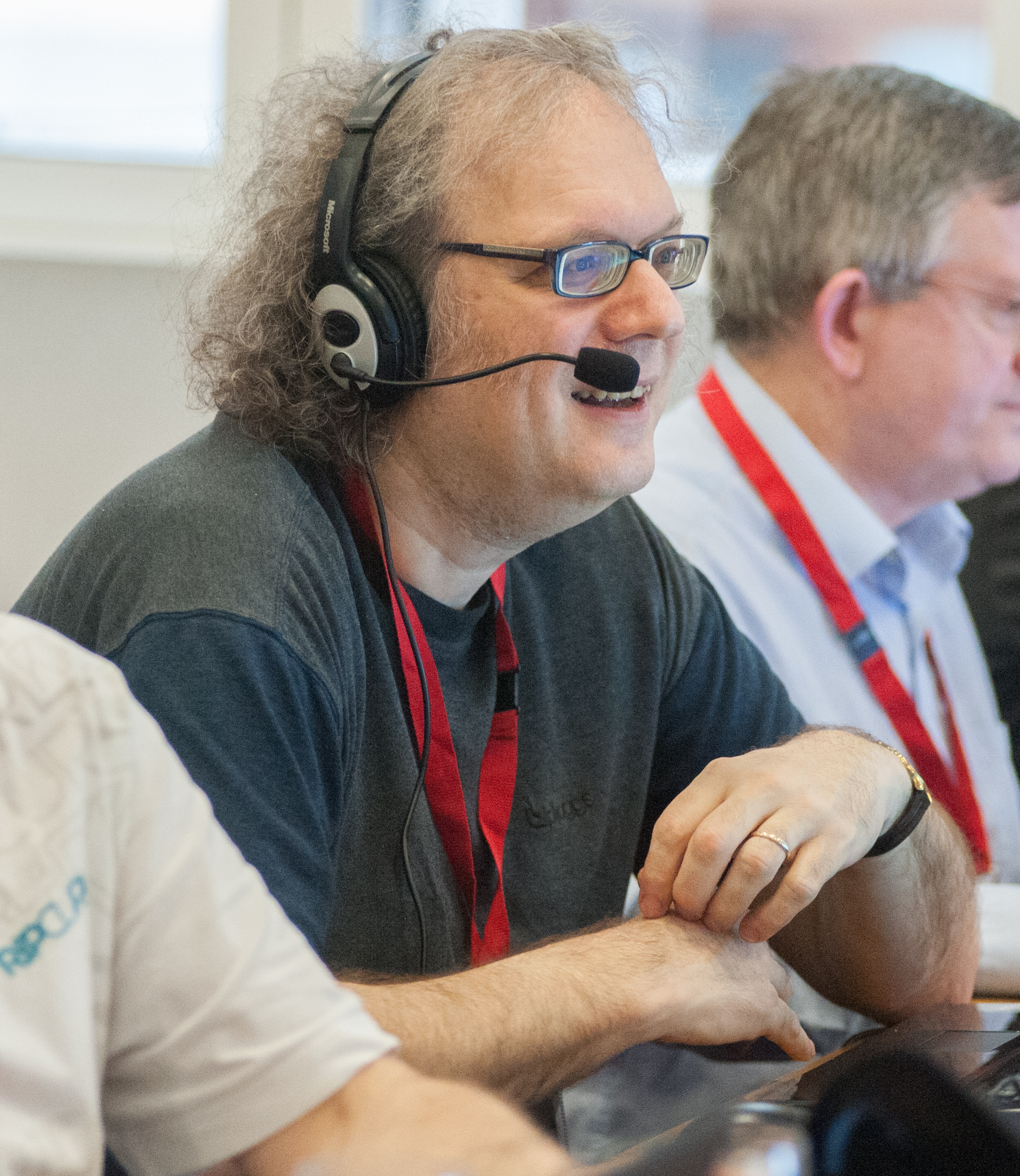
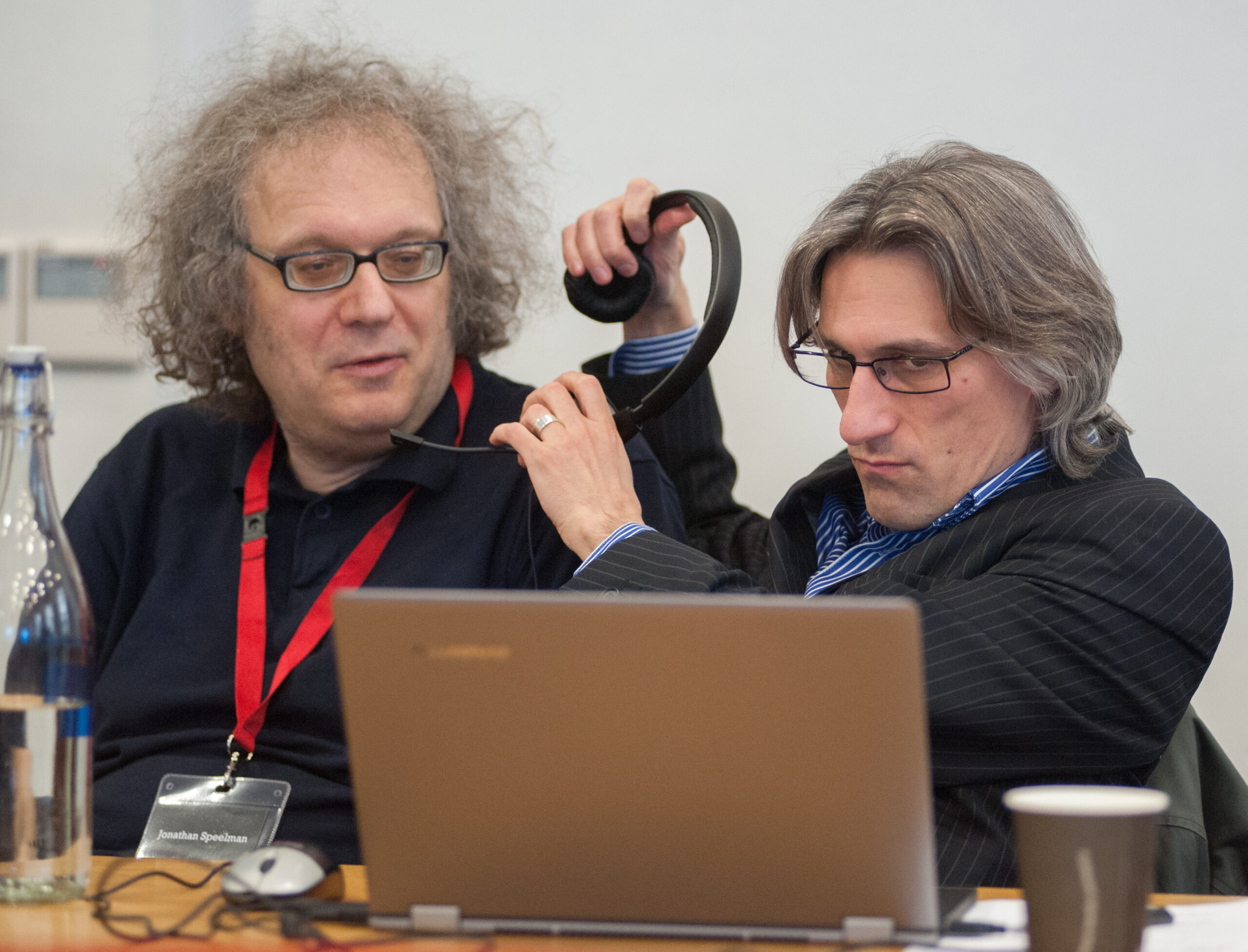
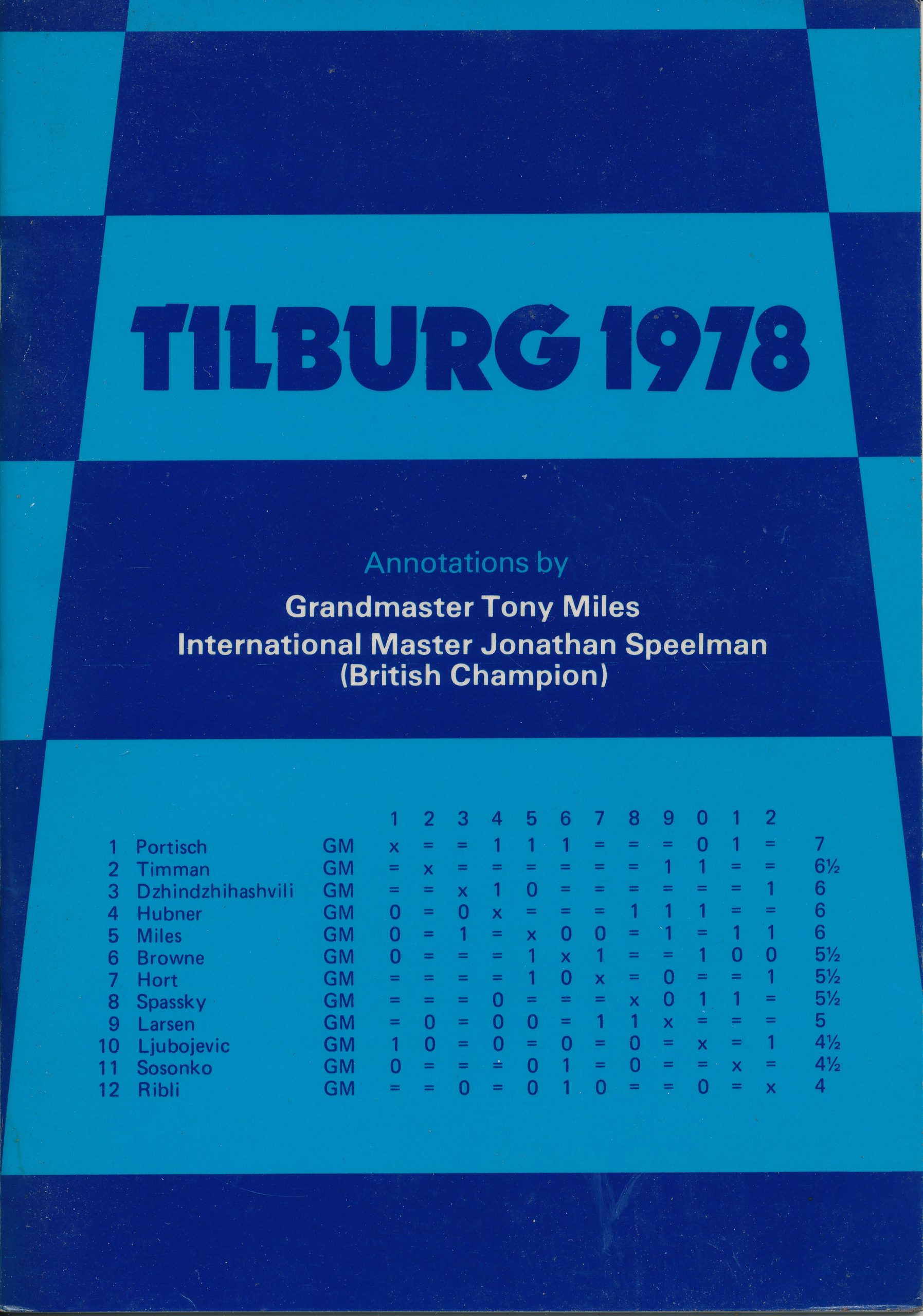
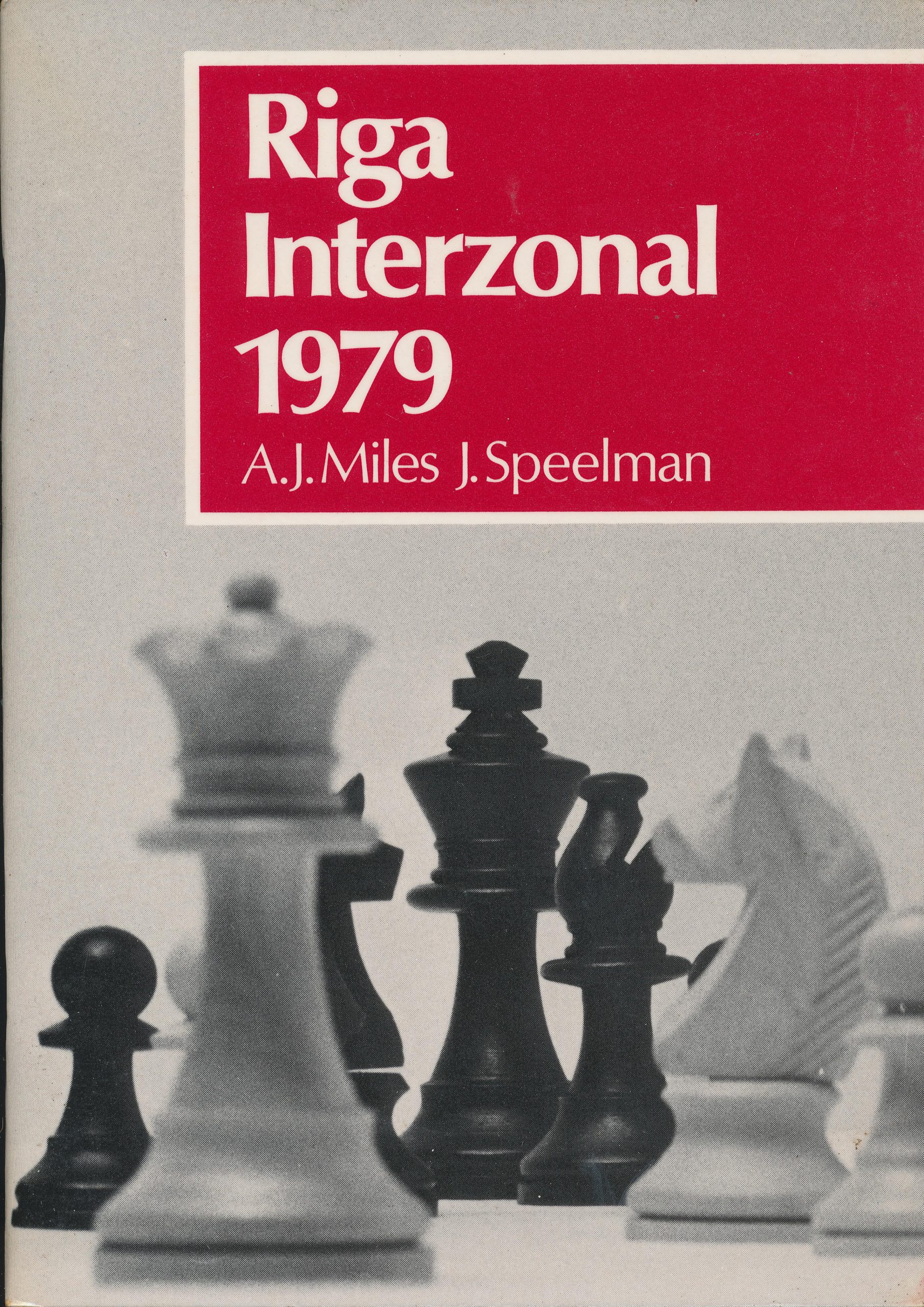
Jonathan Speelman and Daniel King share headphones at the 2013 FIDE Candidates event in LondonTilburg 1978, Tony Miles & Jonathan Speelman, Master Chess Publications, 1978Riga Interzonal 1979, AJ Miles & J Speelman, Batsford, 1979, ISBN 0 7134 3429 5
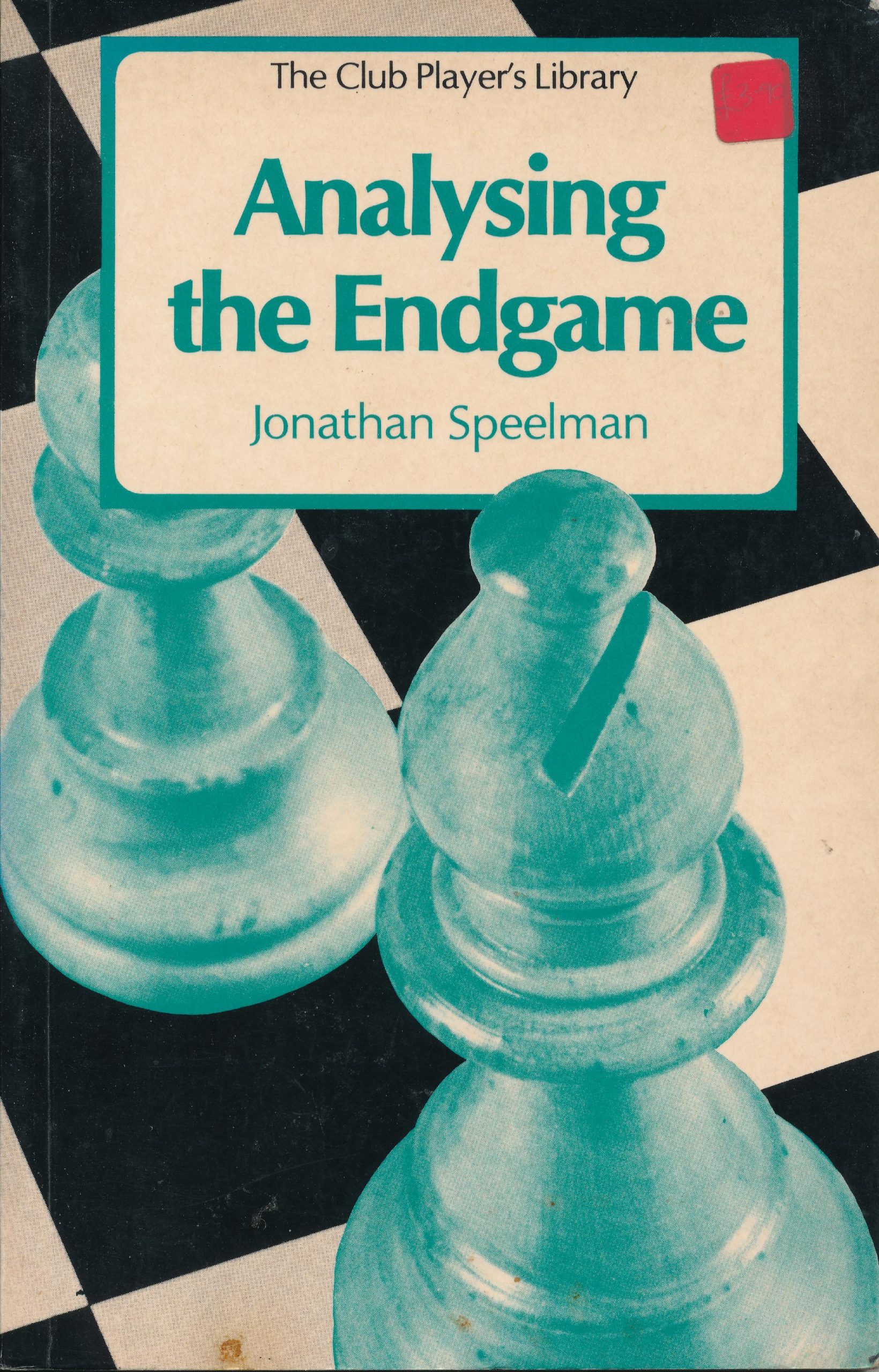
Speelman, Jonathan (1981). Analysing the Endgame. Batsford (London, England). 142 pages. ISBN 978-0-7134-1909-2.
Speelman, Jonathan (1981). Analysing the Endgame. Batsford (London, England). 142 pages. ISBN 978-0-7134-1909-2.
Speelman, Jonathan (1981). Endgame Preparation. B.T. Batsford (London, England). 177 pages. ISBN 978-0-7134-4000-3.
Speelman, Jonathan (1981). Endgame Preparation. B.T. Batsford (London, England). 177 pages. ISBN 978-0-7134-4000-3.
Speelman, Jon (1982). Best Chess Games, 1970-80. Allen & Unwin (London, England; Boston, Massachusetts). 328 pages. ISBN 978-0-04-794015-6.
Speelman, Jon (1982). Best Chess Games, 1970-80. Allen & Unwin (London, England; Boston, Massachusetts). 328 pages. ISBN 978-0-04-794015-6.
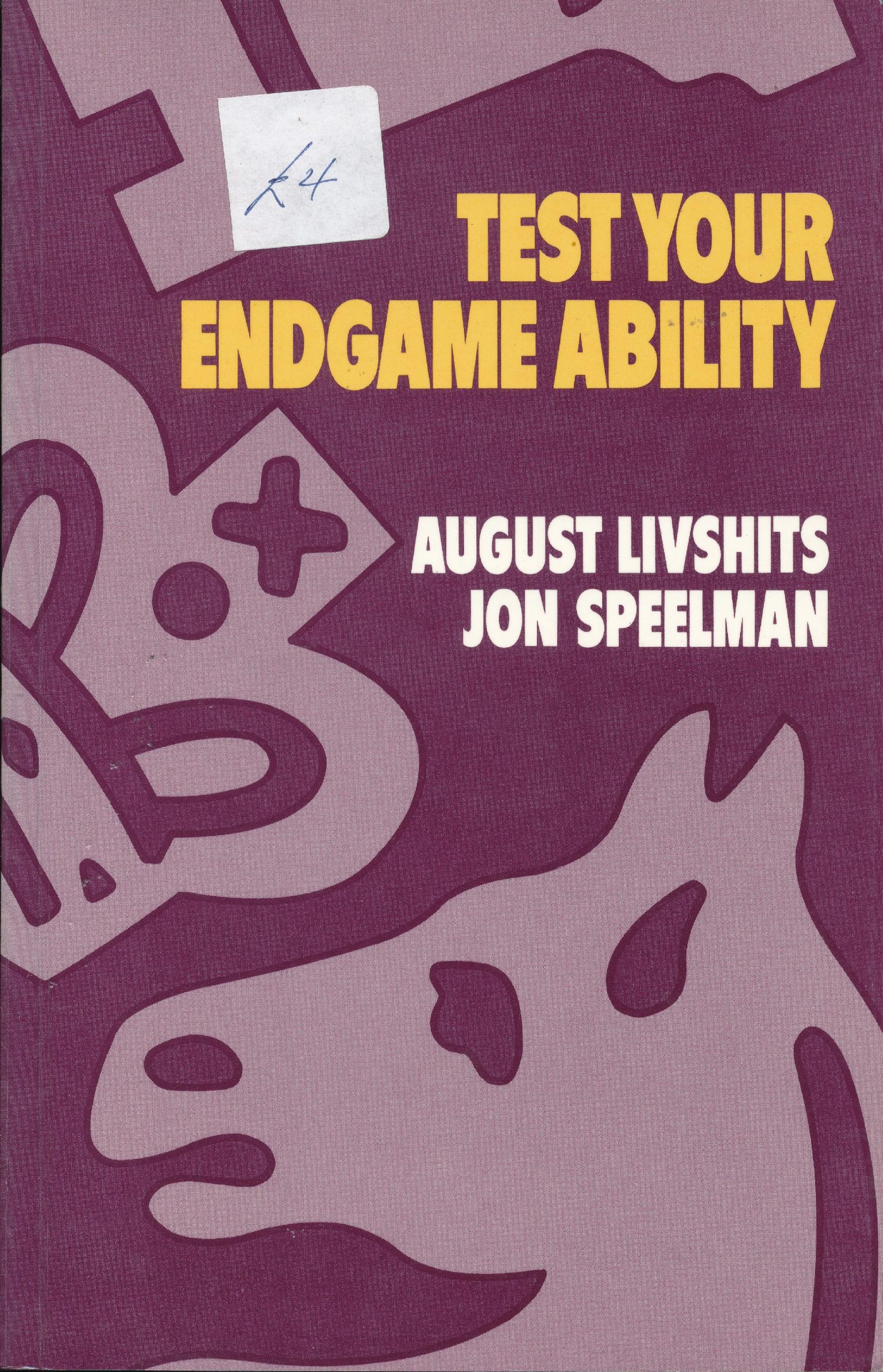
Speelman, Jon; Livshits, August (1988). Test Your Endgame Ability. BT Batsford (London, England). 201 pages. ISBN 0-7134-5567-5
Speelman, Jon; Livshits, August (1988). Test Your Endgame Ability. BT Batsford (London, England). 201 pages. ISBN 0-7134-5567-5
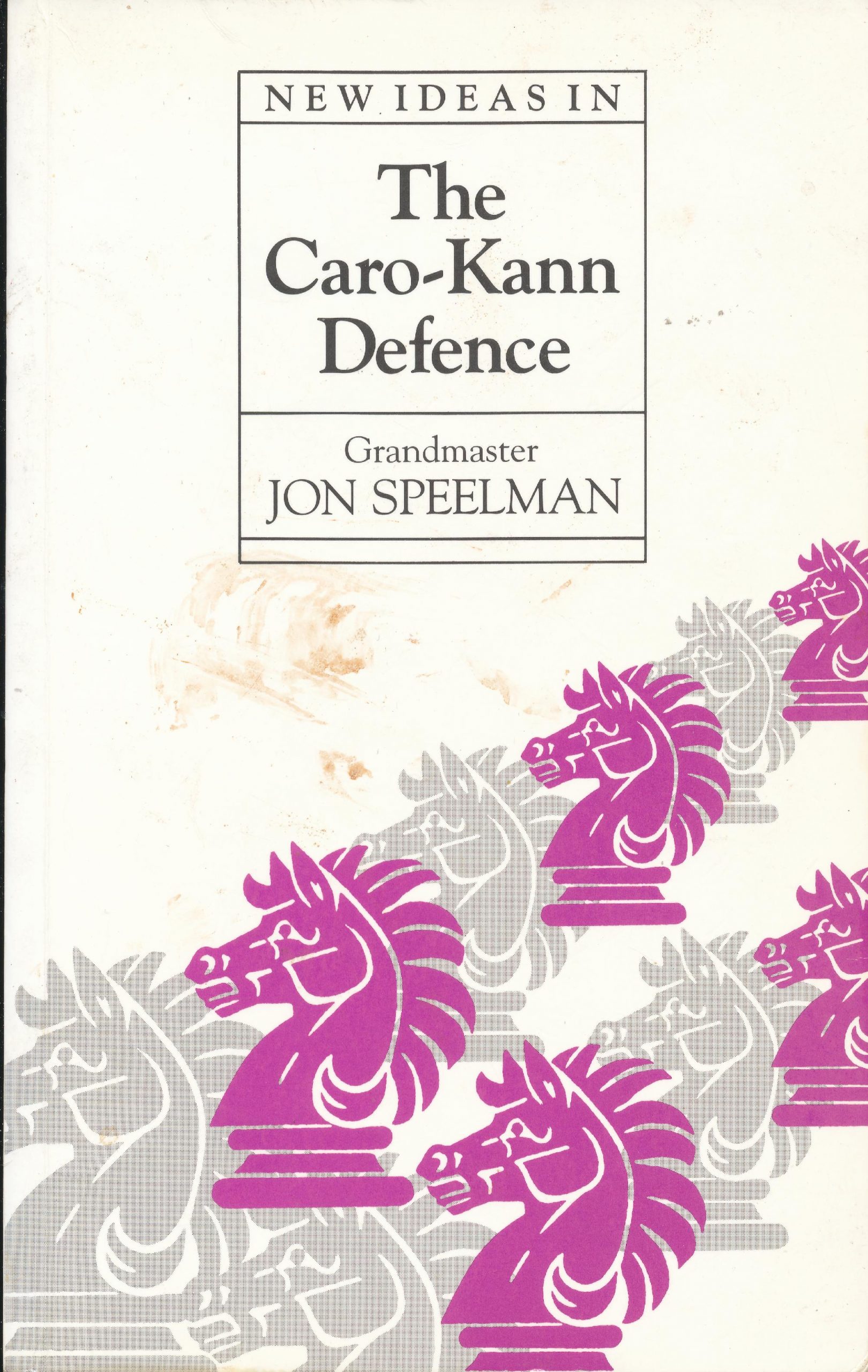
Speelman, Jon (1992). New Ideas in the Caro-Kann Defence. BT Batsford (London, England). 155 pages. ISBN 0-7134-6915-3.
Speelman, Jon (1992). New Ideas in the Caro-Kann Defence. BT Batsford (London, England). 155 pages. ISBN 0-7134-6915-3.
Speelman, Jonathan; Tisdall, Jon; Wade, Bob. (1993). Batsford Chess Endings. B.T. Batsford (London, England). 448 pages. ISBN 978-0-7134-4420-9.
Speelman, Jonathan; Tisdall, Jon; Wade, Bob. (1993). Batsford Chess Endings. B.T. Batsford (London, England). 448 pages. ISBN 978-0-7134-4420-9.
Speelman, Jon (1997). Jon Speelman’s Best Games. B.T. Batsford (London, England). 240 pages. ISBN 978-0-7134-6477-1.
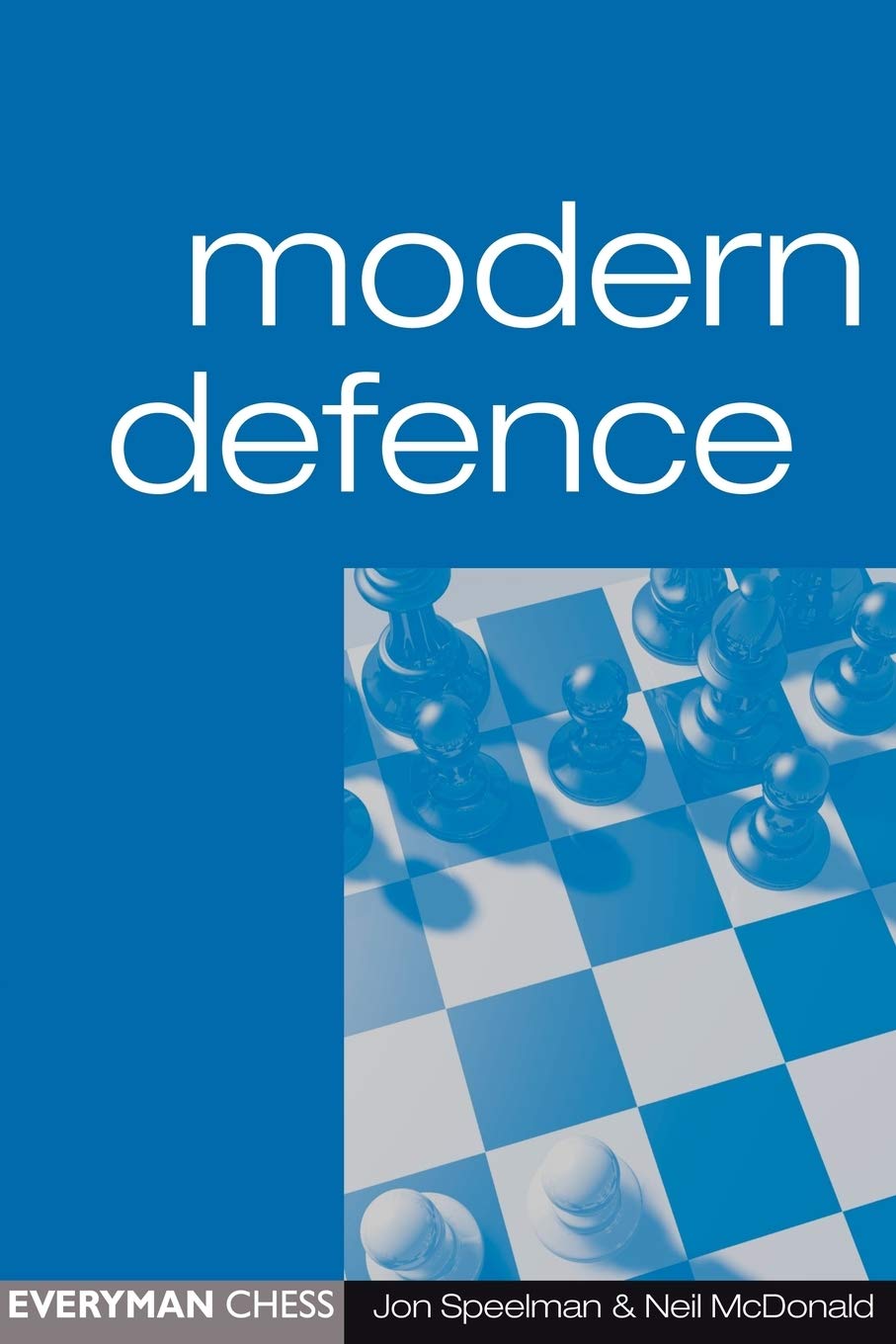
Modern Defence. Everyman, 2000
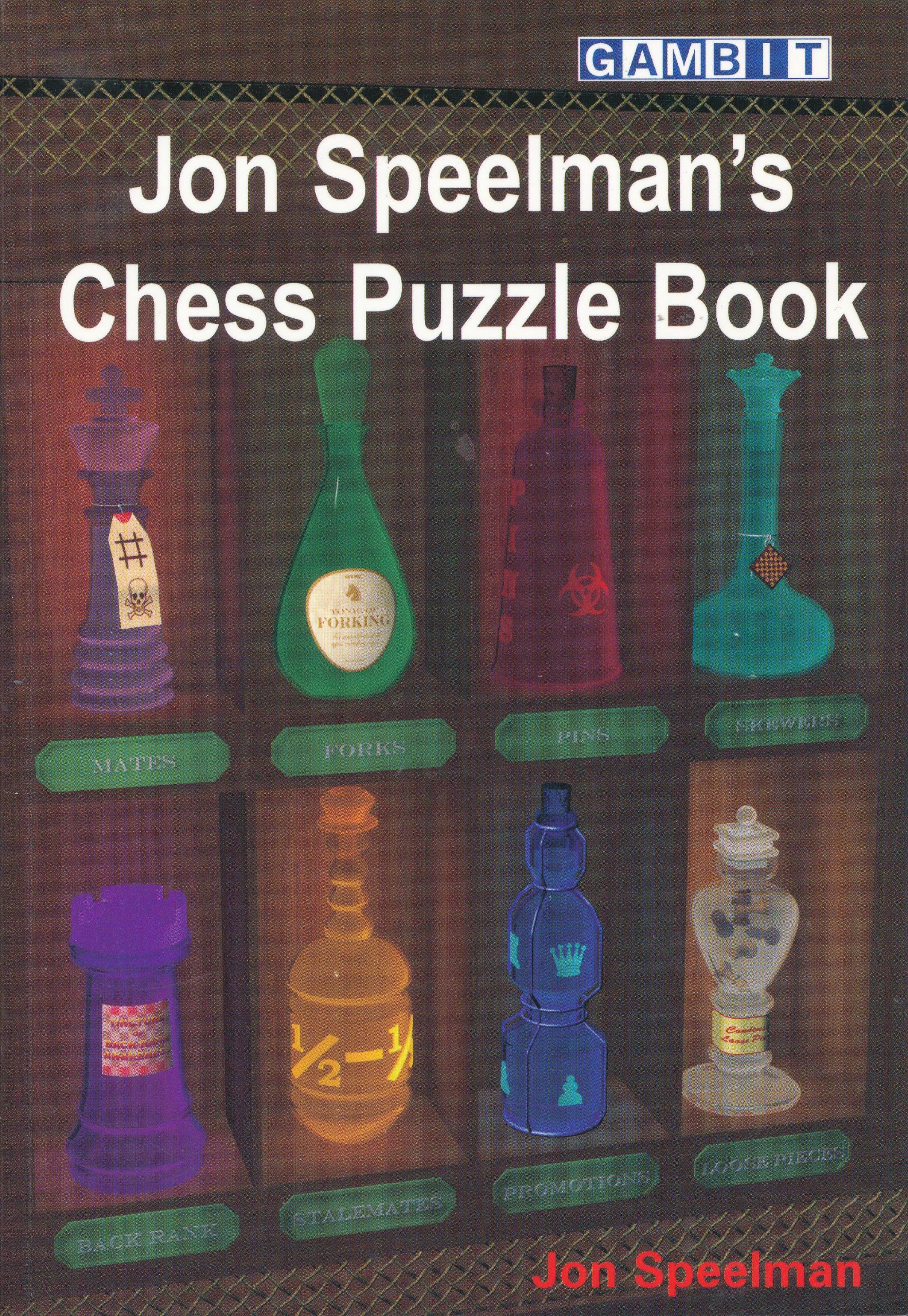
Speelman, Jon (2008). Jon Speelman’s Chess Puzzle Book. Gambit Publications Ltd. 143 pages. ISBN 978-1-904600-96-1.
Speelman, Jon (2008). Jon Speelman’s Chess Puzzle Book. Gambit Publications Ltd. 143 pages. ISBN 978-1-904600-96-1.Jonathan Speelman
In 2026 the BBC released a edition of the 1975 Master Game previously thought to be lost:
We remember WIM Eileen Betsy Tranmer who passed away on September 26th, 1983.
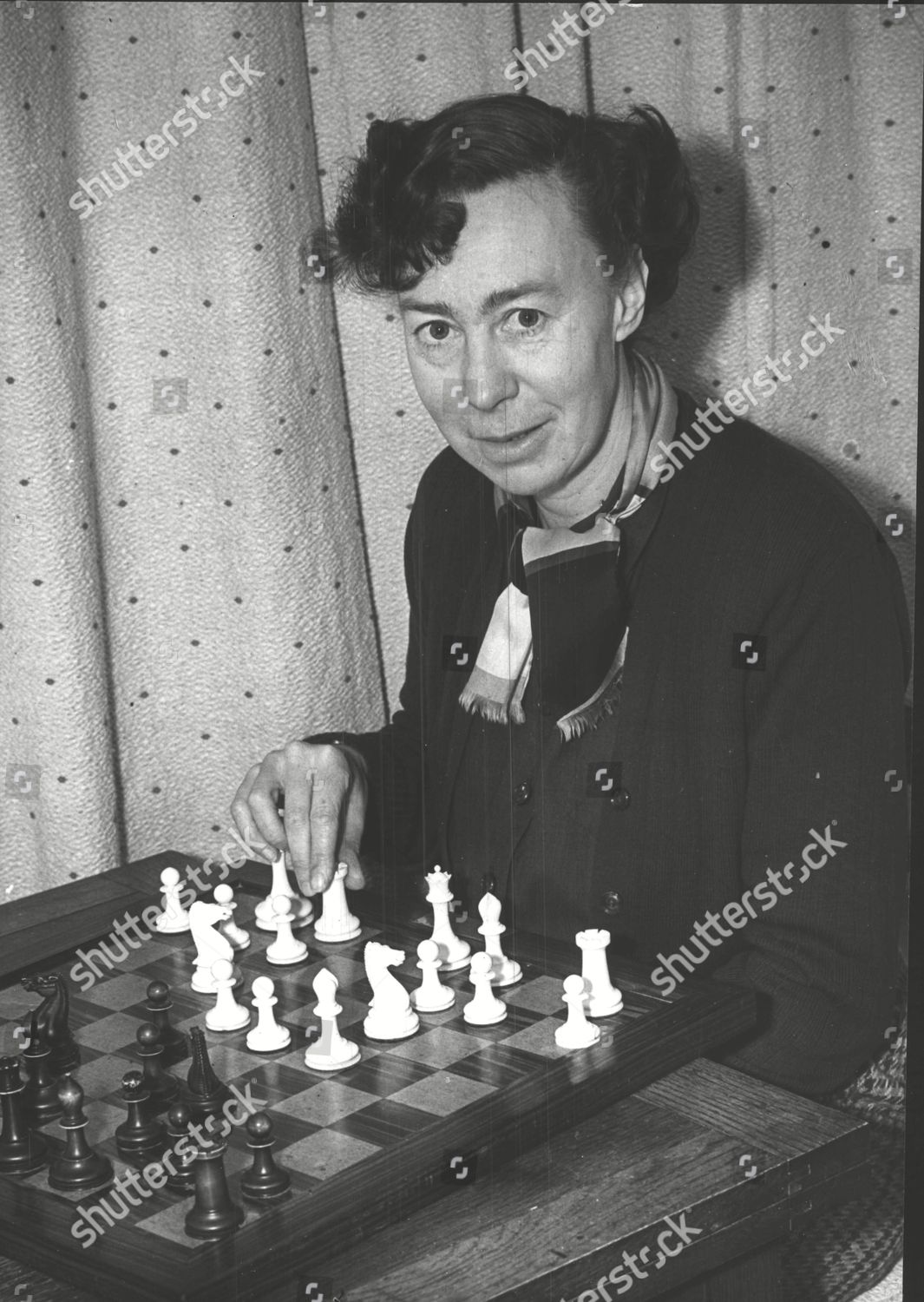
Eileen Tranmer
She was the first English woman to be awarded by FIDE the Woman’s International Master title in 1950.
“From The Anglo-Soviet Radio Chess Match by Klein and Winter :
Miss E. Tranmer was born in Scarborough, North Yorkshire in 1910, and learned chess at the age of six. She did not take it up seriously, however, until 1936. Under the tuition of W. Winter she has made notable progress, and her performances include a second prize in the British Correspondence Championship 1944, as well as first prize in one of the subsidiary tournaments at Hastings, 1945.
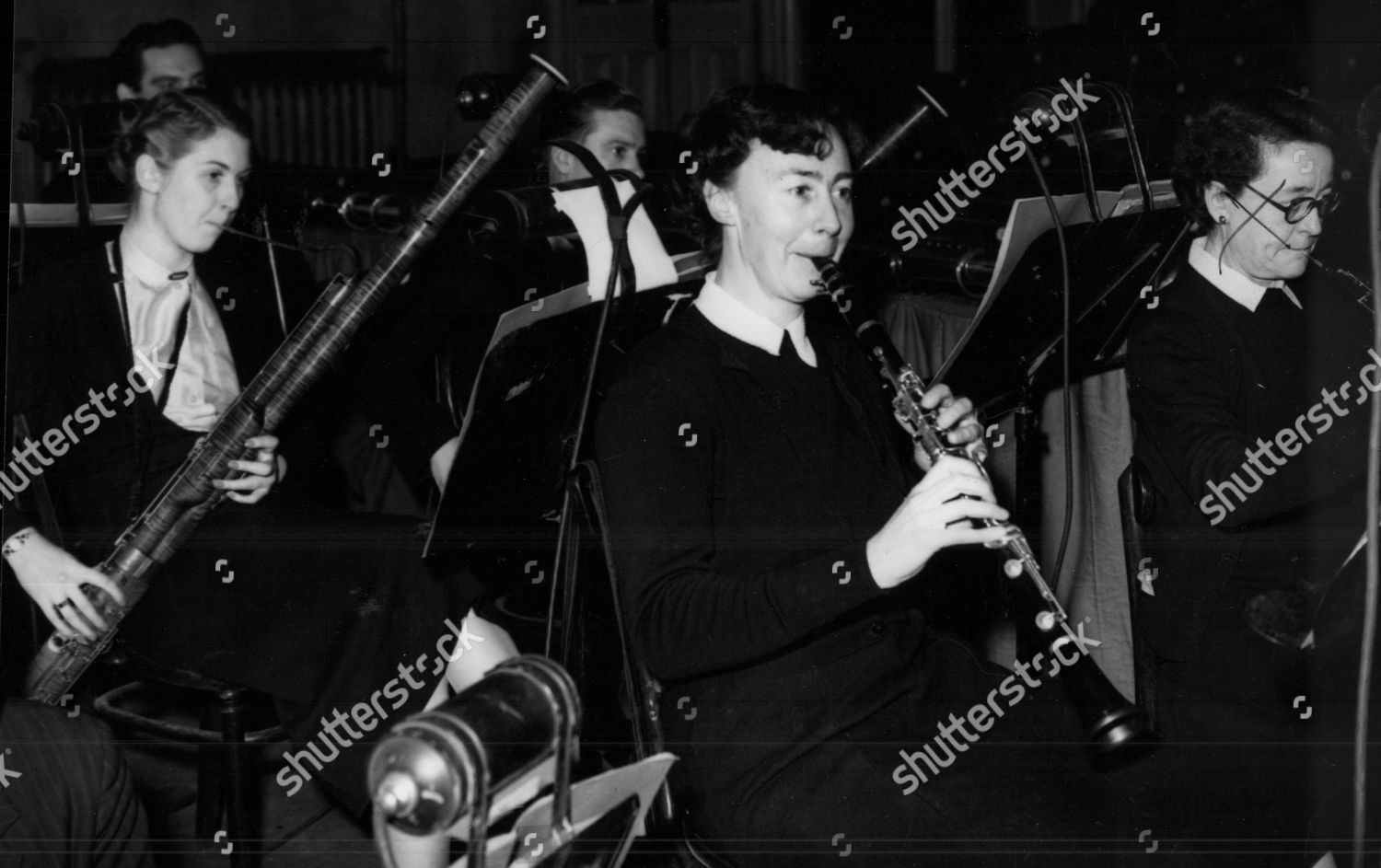
By profession Miss Tranmer is a musician and has played principal clarinet in the Scottish and Sadler’s Wells Orchestras.”
From British Chess Magazine, Volume CIII (103, 1983), Number 11 (November), page 482-83 (presumably written by Bernard Cafferty) :
“Eileen Tranmer died in hospital at Ticehurst on September 26th after a long illness. Born in Scarborough, May 5th 1910, she was a professional clarinet player and played in a number of prominent British orchestras till forced to retire by deafness.
Mandatory Credit: Photo by ANL/Shutterstock (3880870a) Miss Eileen Tranmer The British Women’s Chess Champion Pictured Here Playing A Clarinet In The Orchestra While Appearing At The Theatre Royal Glasgow.
One of the leading British players in the two decades after the war, Eileen won the British Ladies Championship in 1947, 1949 (with a 100% score), 1953 and 1961, and played in the British Championship at Buxton, 1950. Her international record was sparse, as was the case with nearly all English players of that period. Nevertheless, she made her mark in the 1949-50 first post-war Women’s World Championship where she finished 5-7th in a field of 16, beating Bykova, again, and finished 7th in the field of 16.
37th Hastings International Chess Congress, 1962. USA Ladies champion Lisa Lane (L) playing against British Champion Eileen Tranmer
We are grateful to WCM Dinah Norman for sending us these memories :
“Eileen Tranmer was one of the best English chess lady players of her generation.
I only played her once at Oxford in an International Ladies Tournament held between 24 July and 1 August 1971. Eileen totally outplayed me and I lost the game.
Eileen was a member of Acton Chess Club where there were three active lady players at that time. They were Jean Rogers, Olive Chataway and Eileen. Eileen lived in Acton then.
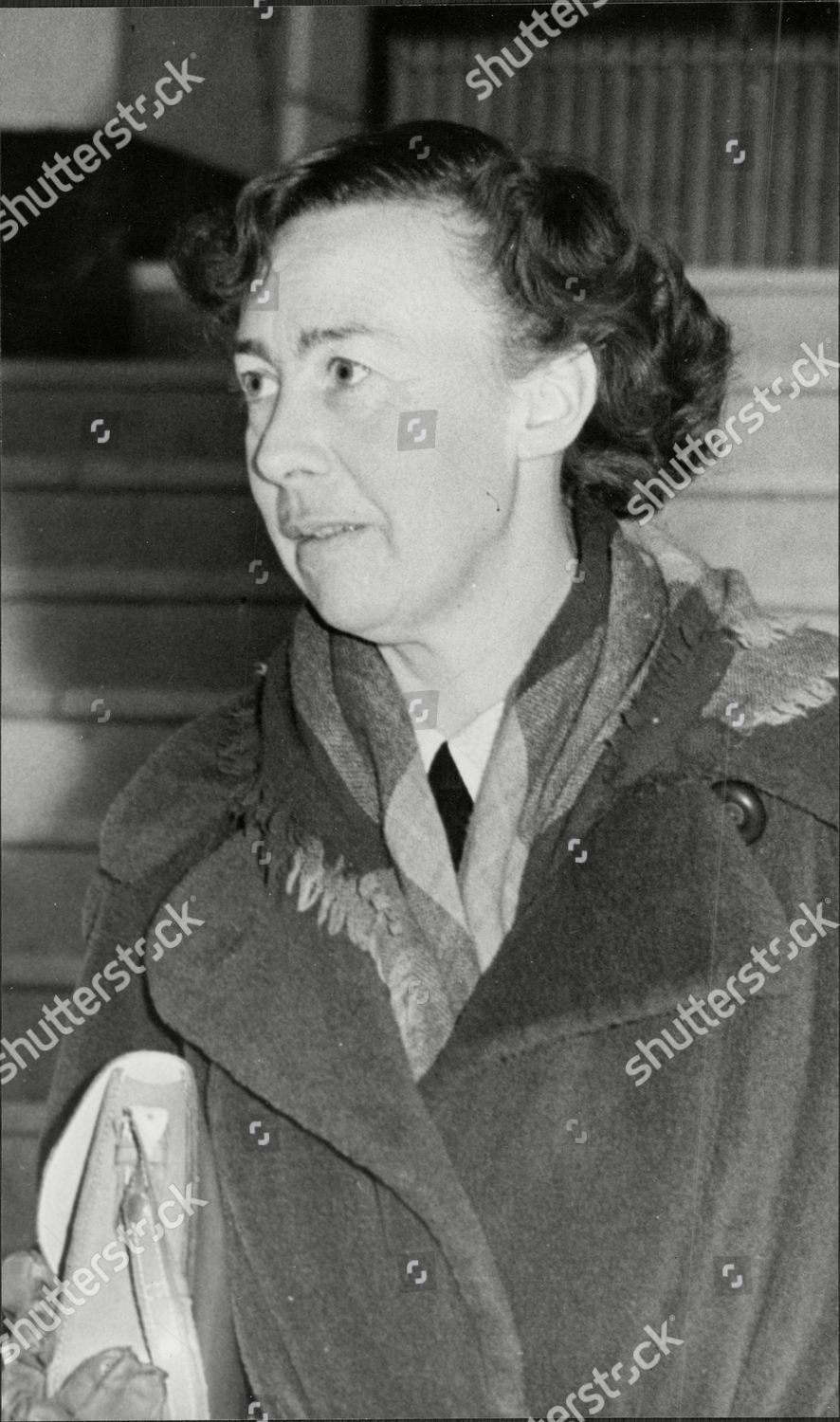
Mandatory Credit: Photo by ANL/Shutterstock (3880957a) Miss Eileen Tranmer The British Women’s Chess Champion. Miss Eileen Tranmer The British Women’s Chess Champion.
Eileen was a professional musician and had to stop playing when she became deaf which was dreadful for her.
In 1969 Eileen, Rowena Bruce and I were selected to play in the Ladies Chess Olympiad Team in Lublin, Poland. Sadly Eileen was taken ill just before the event so Rowena and I had to play all 13 rounds without a break. I was on Board 1 and at the end Rowena and I were exhausted and I had to withdraw from a tournament in the Czech Republic without playing a game. The food in Poland was awful so we said never again!
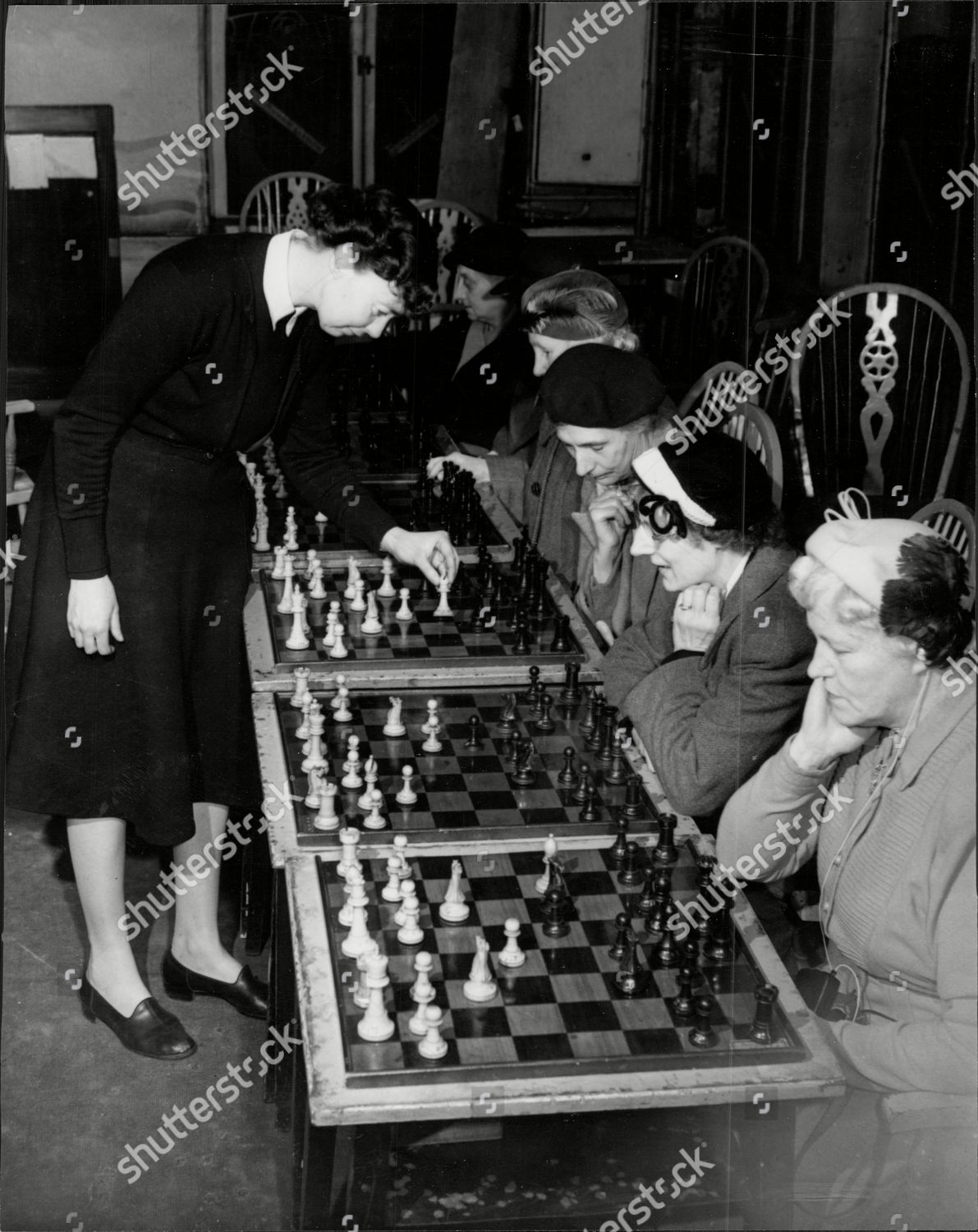
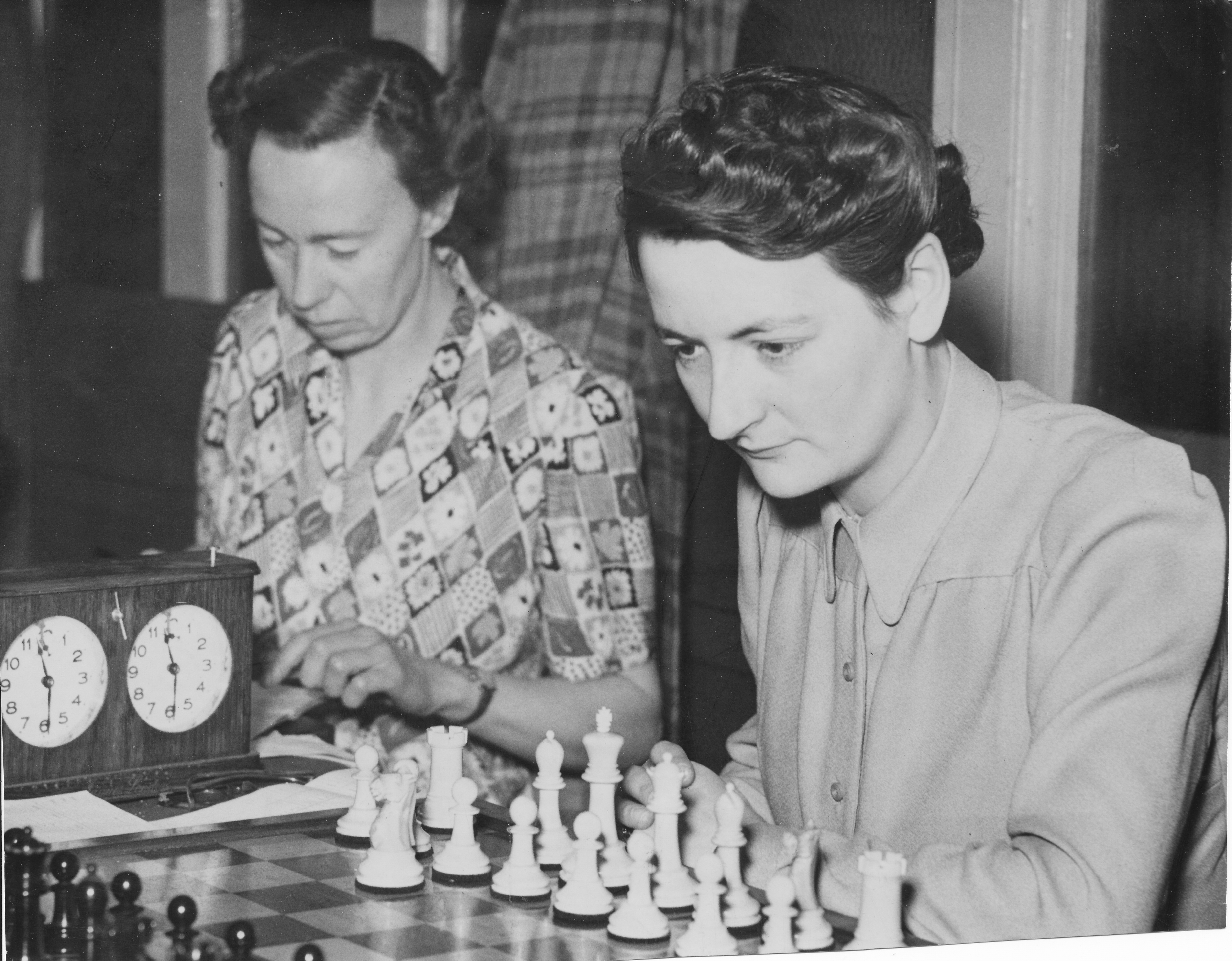
Mandatory Credit: Photo by ANL/Shutterstock (3880958a) Miss Eileen Tranmer The British Women’s Champion Chess Player Pictured Playing Some Of The Glasgow Ladies Chess Club At The Green’s Playhouse Cafe Glasgow. Miss Eileen Tranmer The British Women’s Champion Chess Player Pictured Playing Some Of The Glasgow Ladies Chess Club At The Green’s Playhouse Cafe Glasgow.
Eileen was very friendly with Harry Golombek. The expectation among the lady chess players was that they would get married but she never did. Harry did not drive and Eileen was very kind driving Harry and his elderly mother around.
Very sadly Eileen’s brother was killed in a car crash and after that Eileen suffered mental problems. Eileen lived near John and Jean Rogers and John said Eileen would turn up at their home in the middle of the night wanting to play chess.
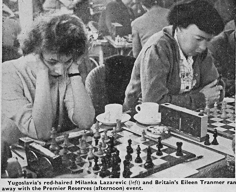
At Hastings 1959-1960 : Yugoslavia’s red-haired Milanka Lazarevic and Britain’s Eileen Tranmer ran away with the Premier Reserves (afternoon event).
The last time I saw Eileen was at Paignton. Her friend Olive Chataway brought her to Paignton and Eileen played in the bottom tournament and did badly. Eileen did not recognise myself or Rowena which was very sad.
Mandatory Credit: Photo by ANL/Shutterstock (4745287a) Miss Eileen Tranmer 43-year-old British Women’s Chess Champion. Box 556. Miss Eileen Tranmer 43-year-old British Women’s Chess Champion. Box 556.
Eileen later left Acton and moved to Tring. Eileen was a pleasant and modest person and was well liked. She had a good sense of humour.”
From the obituary in The Times of London we learn that her last few years were over-shadowed by an illness that preyed on her mind.
We take the following game from the August 1944 issue of BCM. The game was played in the BCCA Championship, and curiously enough there was an enquiry about that event to the BCF only a short while ago – a Georgian journalist wishes to quote that wartime performance as an early example of success by a woman in male chess company! ”
Gerald Abrahams in Not only Chess, wrote about Eileen (Chapter 18 : What Achilles Saw Among Women) as follows :
“To revert to the British Ladies, they were joined in the late 1930s by a very able pupil of Miss Menchik, the Yorkshire Clarinettist Eileen Tranmer; a woman whose chess I have seen to express some admirable qualities of mind and character. I had the privilege of watching her is Moscow in 1949-50, when, handicapped by influenza of a particularly virulent kind – what the Russians call “grippe” – she won some five or six consecutive games, to finish in the prize list of the new official Women’s World Championship. There had been two championships before, which Vera has won easily. Since Vera had unhappily perished in the Blitz, they looked at Moscow for her successor.”
We remember WIM Rowena Bruce who died this day (September 24th) in 1999.
Rowena Mary Dew was born on Thursday, May 15th, 1919 in Plymouth, Devon. Her father was Clement Warner Harvey Dew and her mother was Mary Jane Rowe.
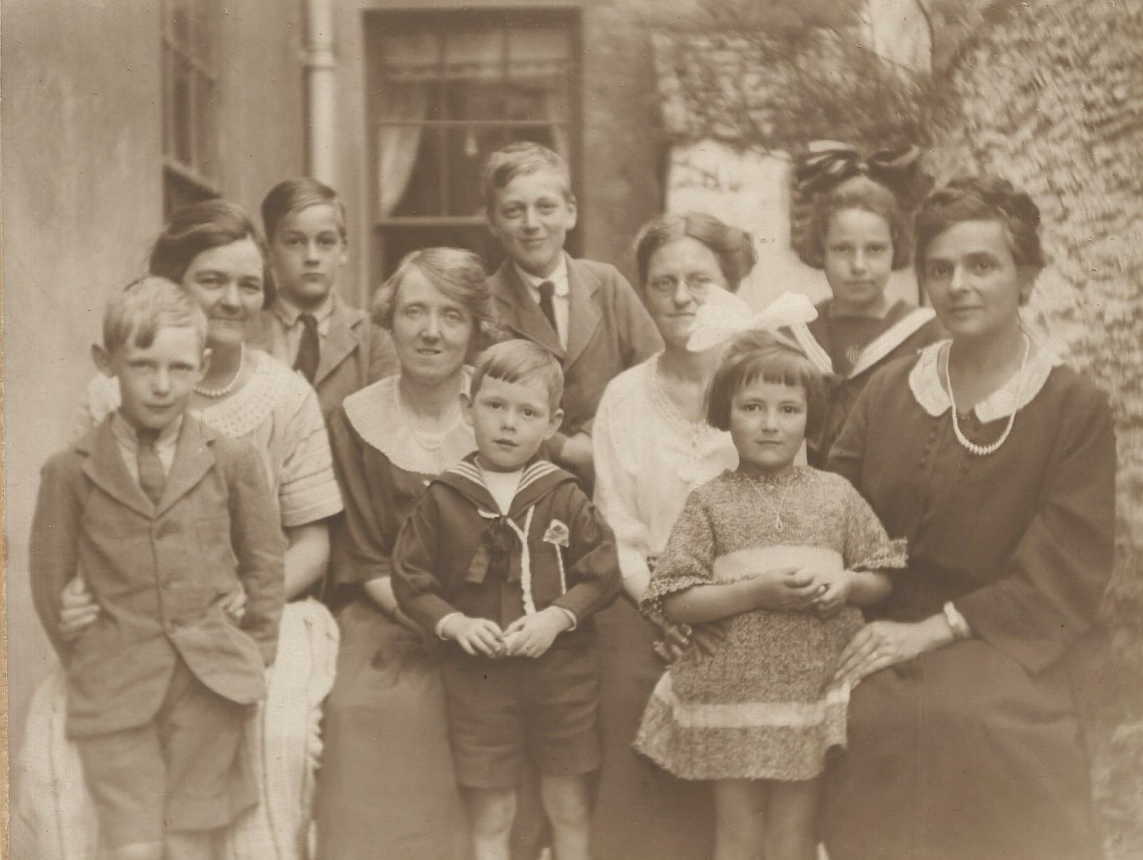
The Bruce and Dew families circa 1923. Rowena is at the front and on the right aged around four years. Source : ancestry.co.uk
She married Ronald Mackay Bruce in July 1940 when she was 21 years old.
Her father Clement Warner Harvey passed away on 7 October 1957 in Plymouth, Devon, at the age of 79. Her mother Mary Jane passed away on 3 August 1958 in Cornwall at the age of 73. Her husband Ronald Mackay passed away in April 1991 in Plymouth, Devon, at the age of 87. They had been married 50 years.
From The Anglo-Soviet Radio Chess Match by Klein and Winter :
“Mrs RM Bruce was born in Plymouth in 1919, and learned chess at the age of twelve. She won the Girls’s World Championship in 1935 and the British Ladies Championship in 1937. During the war she served with the WVS in Plymouth. Apart from chess, she is interested in music and plays the cello.
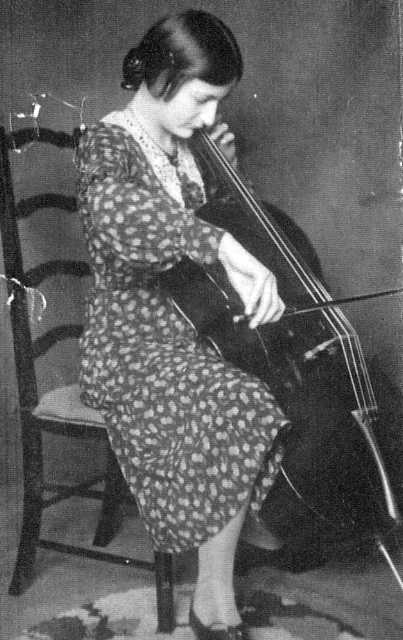
Rowena practising the cello. Courtesy of Keverel Chess
She is married to RM Bruce, who is a well-known Plymouth player.”
In 1984 both Rowena and Ron received the BCF President’s Award for Services to Chess.
From British Chess (Pergamon Press, 1983) by Botterill, Levy, Rice and Richardson :
“I was taught by my Mother Mrs. May Dew, when recovering from a mastoid operation in 1930, and I joined Plymouth Chess Club on 5th November 1931, aged 12.5.
I started receiving chess tuition from the Plymouth Match Captain, Ronald Bruce in 1934. (Married him in 1940!).
I won the Girls’ World Championship in 1935. I won the British Ladies’ Championship for the first time in 1937, and again in 1950, 1951, 1954, 1959, 1960, 1962 and 1963. I tied for first place in 1955, 1967 and 1969.
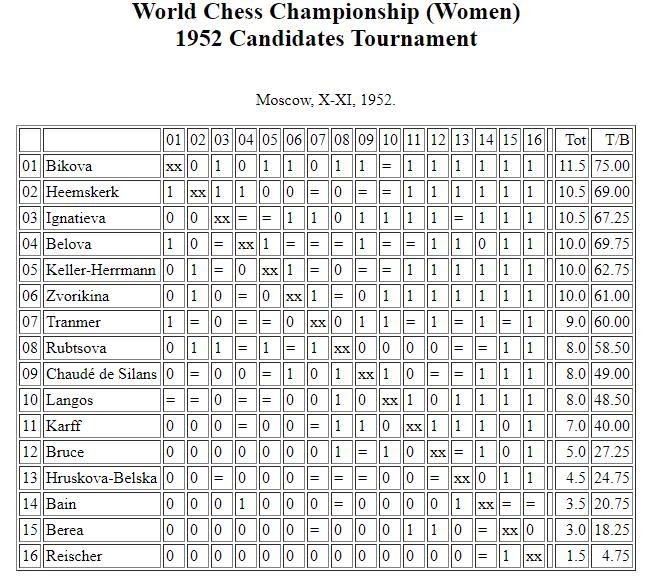
I represented Great Britain in the West European Zonal tournament held in Venice 1951, where I finished 2nd. This qualified me to represent Great Britain in the Candidates tournament held in Moscow in 1952. I finished 12th out of 16.
World Chess Championship (Women) 1952 Candidates Tournament
In 1952 we adopted a little girl – Rona Mary.
Other tournaments abroad included zonals in Italy, Yugoslavia and Germany, and Olympiads in Germany, Poland and Bulgaria.
This last-named ended in disaster because I collapsed with a stroke during my second game. Obviously my chess playing was affected, but I was indeed fortunate to make a fairly good recovery.
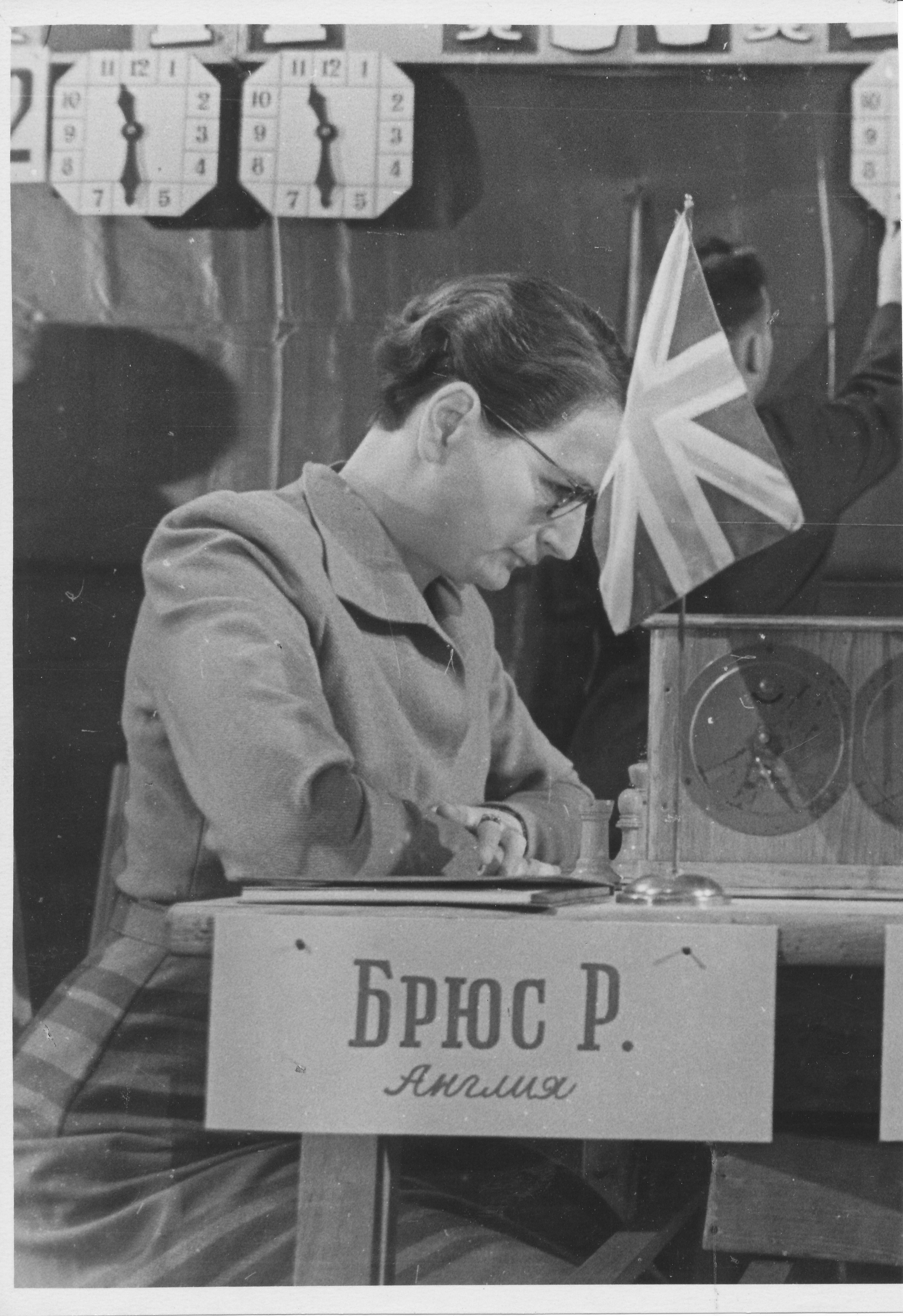
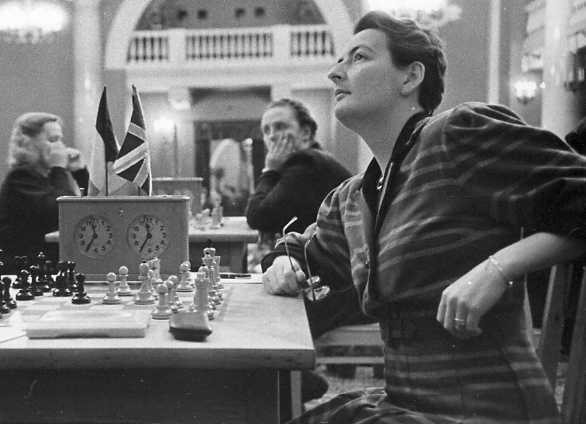
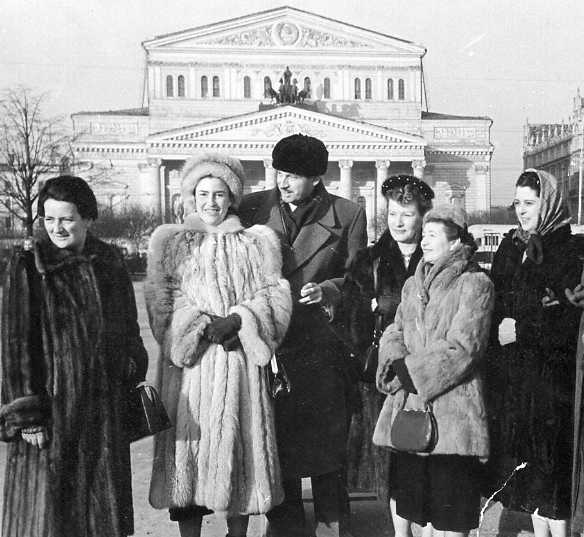
WIM Rowena Mary Bruce at the 1952 Moscow Candidates tournament
I returned to competitive chess playing a year later but, in the meantime, several young players have surged forwards, and that British Ladies’ Championship seems to have become much more difficult to win !
But I now have three grandchildren!
BCN is grateful to WCM Dinah Norman for sending us these memories :
“Rowena Mary Bruce (need Dew) was born on 15 May 1919 and died in Plymouth in 1999. Rowena was the youngest of 3 children born to Harvey and Mary Dew. Mary Dew was a member of the Plymouth Chess Club and tried unsuccessfully to get her 2 sons interested in the game but Rowena was the only child who was interested.
When Rowena was 10 her mother organised private lessons for her with the Plymouth Champion, Ron Bruce. At the age of 21 Rowena married Ron Bruce and it was a very successful and happy marriage. They had an adopted daughter Rona who had no interest in Chess. Rowena had to wait until she was 21 before she could marry Ron. Rowena lived in Plymouth all her life.
Rowena and Ron married in July 1940. Ron and Rowena cemented a formidable playing and organising partnership which benefited chess in Devon for almost half a century.
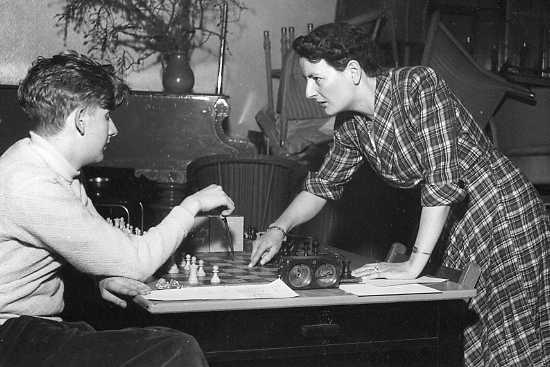
A stern-looking Rowena offers advice to one of the juniors at the WECU Congress, Easter 1951, in the analysis room at the Penolver Hotel, Newquay. Courtesy of Keverel Chess
After the War Rowena was one of the leading quartet of British Lady players which included Elaine Pritchard (née Saunders), Anne Sunnucks and Eileen Tranmer. In 1951 Rowena played in the Ladies Zonal in Venice and qualified for the Candidates in Moscow to be played the following year.
AT the age of 53 she qualified for the East European Zonal in Sofia, Bulgaria in 1972. Sadly in Round 2 of that event she collapsed at the board with a major cerebral haemorrhage which left her right side paralysed. By sheer force of will after many months of convalescence she taught herself to speak and walk again. She had to give up playing her cello which was awful for her.
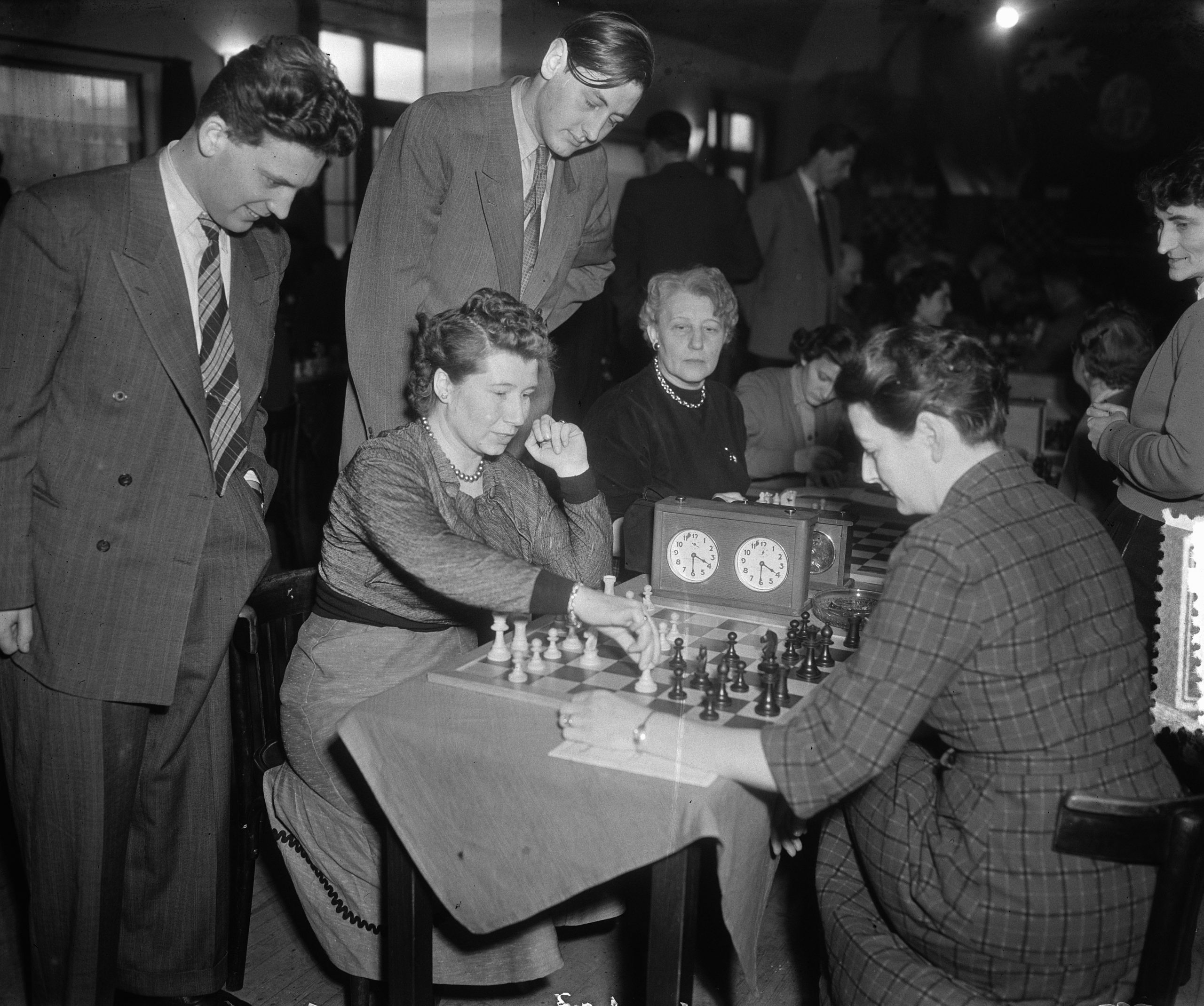
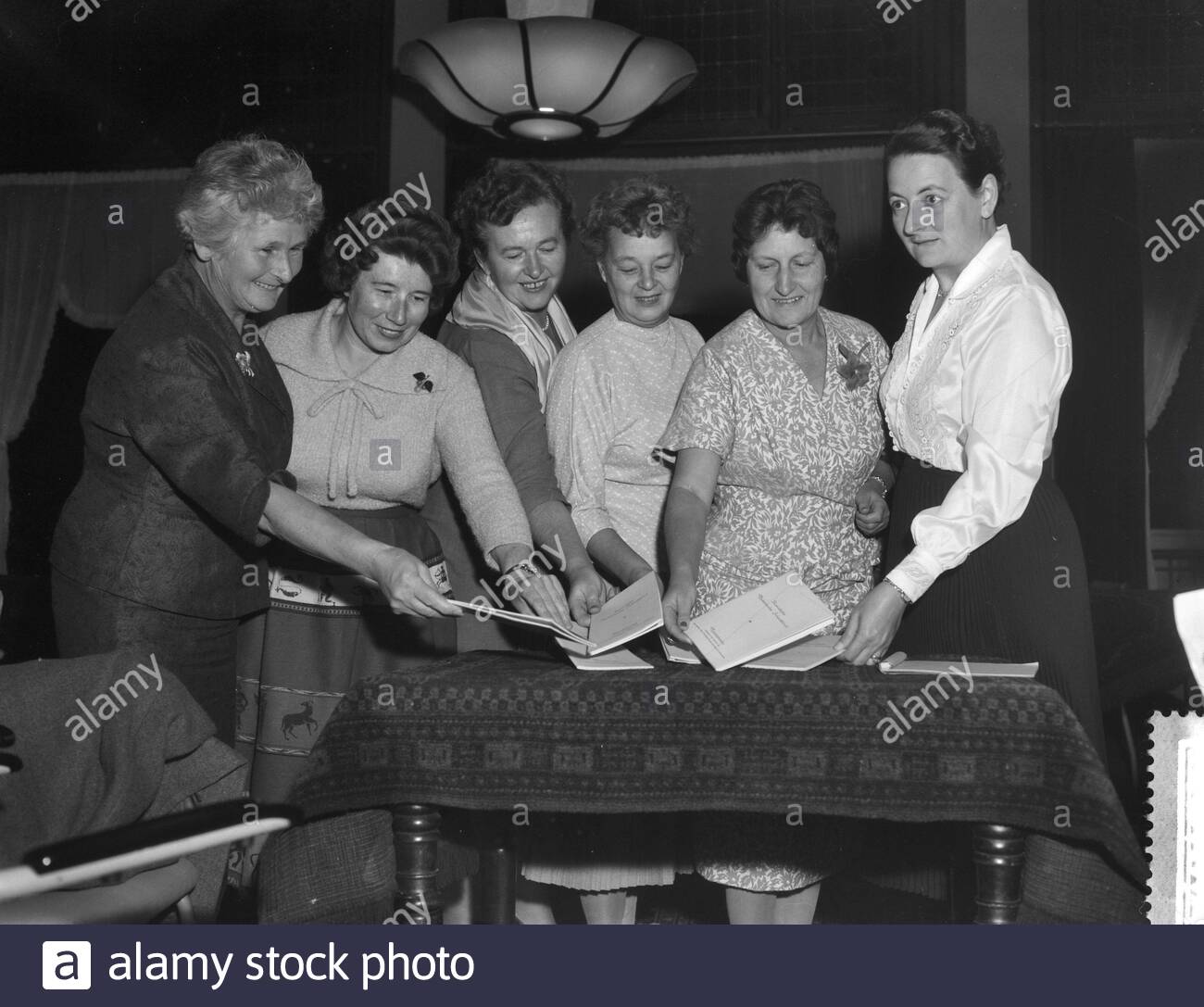
Ladies Chess Tournament Fenny Heemskerk, Rowena Mary Bruce (née Dew), Donner, Architect Date: January 12, 1953 Personal name: Architect, , Bruce, R., Donner, , Heemskerk, Fenny Institution name: Block Chess Tournament – Image ID: 2ARK3JK
The steely determination with which she followed her 75 year chess career and her recovery from serious illness belied her gentle nature. She was a modest, kind and gracious person who always thought the best of others.
She won the British Ladies title 11 times.
I shared the title with her in 1967 and 1969 after 2 play offs. She was a very pleasant and sporting opponent.”
From The Encyclopedia of Chess (Robert Hale, 1970 & 1976) by Anne Sunnucks :
“International Woman Chess Master and winner of the British Ladies Championship on 10 occasions.
She was taught to pay chess by her mother, who was the Devon Lady Champion, after a mastoid operation when she was 10. In 1931 she joined Plymouth Chess Club, where she met R. M. Bruce, the Devonshire Chess Captain, who coached her and was largely responsible for later success. She married him in 1940.
Opening Ladies Danlon chess tournament in Amsterdam, v.l.n.r. T. Roodzant, F. Heemskerk, I. Larsen, L. Timofeeva, E. Rinder, R. Bruce Date: October 21, 1959 Location: Amsterdam, Noord-Holland Keywords: group portraits, chess Person Name: Bruce, Rowena Mary, Heemskerk, Fenny , Larsen, I., Rinder, Elfriede, Roodzant, Toos, Timofeeva. Lidia – Image ID: 2AW6KHJ
In 1935 she won the Girls’ World Championship and two years later the British Ladies’ Championship for the first time. She has won the title outright or been joint holder on 10 occasions in 1937, 1950, 1951, 1954, 1955, 1959, 1960, 1962, 1963 and 1967.
Mrs Bruce has represented Great Britain in matches against the USSR and the Netherlands and the British Chess Federation in qualifying tournaments for the Women’s World Championship. In Venice in 1951 she came 2nd in the Western European Qualifying Tournament for the Women’s World Championship and thereby qualified for the Candidates tournament in 1952, when she came 12th out of 16.
Rowena at the 1952 Moscow Zonal tournament. Courtesy of Keverel Chess
Apart from chess, her hobbies are music, gardening and bridge.
She is principal ‘cellist in the Plymouth Orchestral Society.”
An obituary (presumably written by John Saunders) appeared in the British Chess Magazine, Volume CXIX (119, 1999), Number 11 (November), page 584 :
“Rowena Bruce died peacefully at home on 23 September following a long illness. Rowena Mary Dew was born in Plymouth on 15 May 1919, and she was taught the game at the age of 10, while she was convalescing from surgery, by here mother Mary Dew, herself a very able player who had been Devon Ladies’ Champion.
Rowena joined the Plymouth Chess Club, where she met her future husband, Ron Bruce, himself a strong player. She won the World Girls’ Championship in 1935 and the British Women’s title two years later. Rowena married Ron in 1940 and won the British title under her married name ten more times (seven outright and three jointly) between 1950 and 1969.
She represented Great Britain in matches against the USSR and the Netherlands. She qualified for the Women’s World Championship by coming 2nd in the Western European Zonal in Venice, and in the subsequent Candidates tournament in Moscow in 1952 she came 12th out of 16. She was awarded the women’s international master title in 1951.
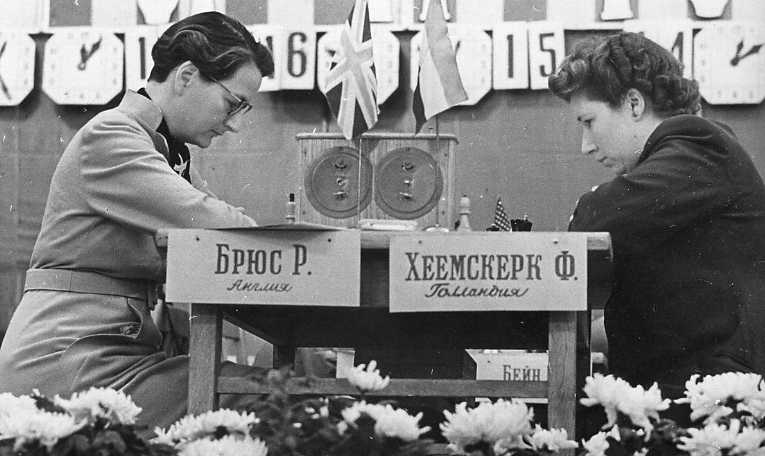
Rowena locking horns with her friend Fenny Heemskerk, who finished in a magnificent 2nd place. Courtesy of Keverel Chess
The contribution to chess that Rowena and Ron Bruce made to national, west country and Devon chess was well recognised at the highest level, and when the British Chess Federation instituted a new award in 1983, the President’s Award for Services to Chess, they won it jointly in only its second year. Ron died in 1991.
Rowena was a past president of the Devon County Chess Association and the West of England Chess Union and continued playing for Devon until about four years ago when her increasing frailty made it impossible for her to travel to away matches.
Her other accomplishments included music : she was a principal cellist in the Plymouth Orchestral Society. She also partnered husband Ron in strictly non-competitive bridge for many years. She leaves a daughter Rona and three grand-children.”
WIM Rowena Mary Bruce
From The Encyclopedia of Chess (Batsfords, 1977) by Harry Golombek :
“International Woman master and eleven times British Ladies champion or co-champion.
At the age of fifteen in 1935, Miss Dew won the girls World championship and two years later, still under he maiden name, se won the British Ladies championship at Blackpool. Thereafter she won the championship under her married name in 1950, 1951, 1954, 1955, 1959, 1960, 1962, 1963, 1967 and 1969.
Her best international result was a 2nd in the 1951 Western European Zonal tournament, qualifying for the Women’s Candidates tournament in Moscow 1952, where she came 12th/16. She has represented England in a number of team events, has excellent combinative powers, but lacks steadiness in strategy.”
Rowena (far left) during the 1952 Moscow Candidates tournament. Courtesy of Keverel Chess
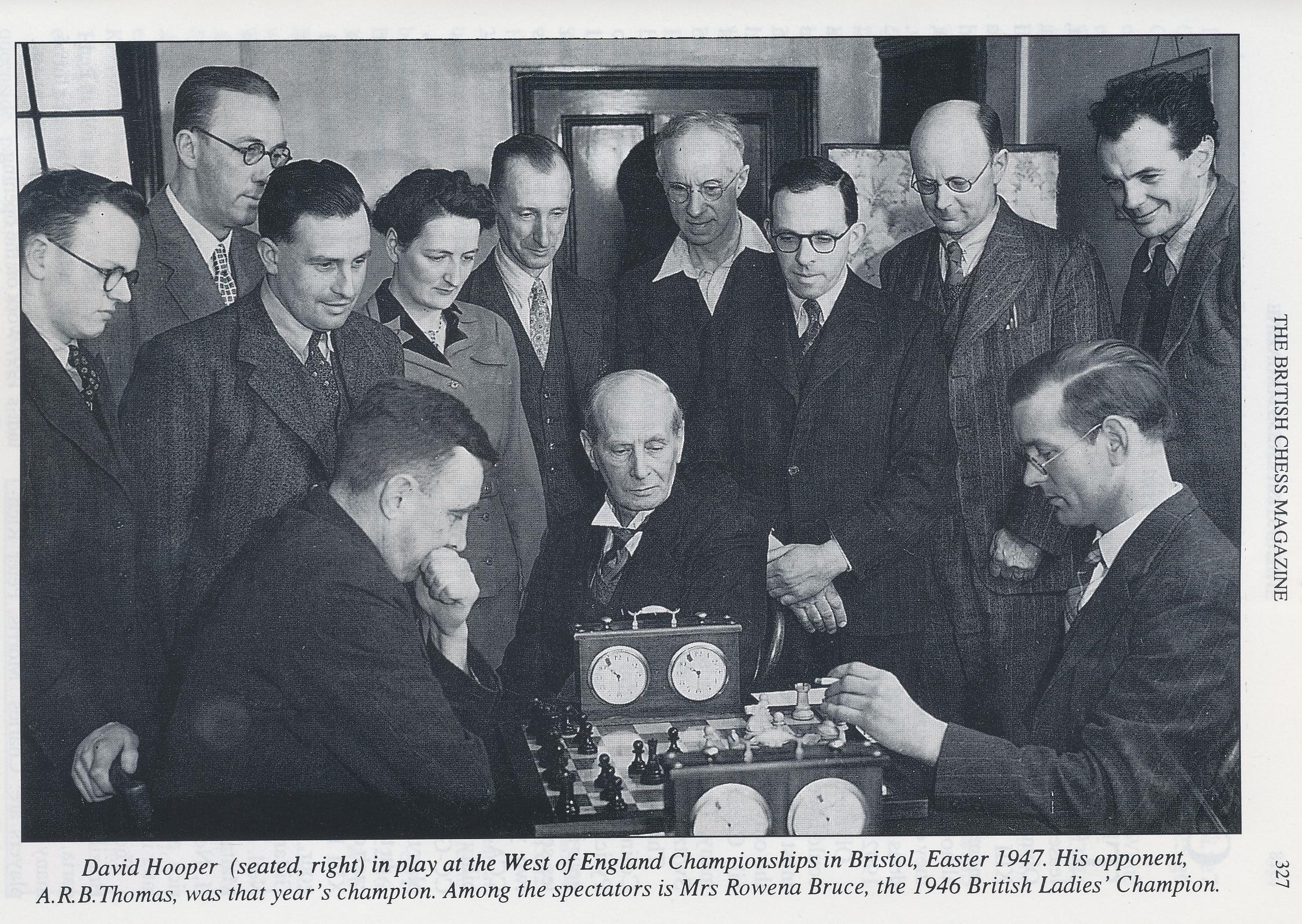
David Hooper (seated right) in play at the West of England Championships in Bristol, Easter, 1947. His opponent , ARB Thomas , was that year’s champion. Among the spectators is Mrs. Rowena Bruce, the 1946 British Ladies’ Champion. BCM, Volume 118, #6, p.327. The others in the photo are L – R: H. V. Trevenen; H. Wilson-Osborne (WECU President); R. A. (Ron) Slade; Rowena Bruce; Ron Bruce; H. V. (Harry) Mallison; Chris Sullivan; C. Welch (Controller); F. E. A. (Frank) Kitto.
“Rowena Mary Bruce (15 May 1919 – 24 September 1999), née Dew, was an English chess player who held the title of Woman International Master (WIM, 1951). She was an eleven-time winner of the British Women’s Chess Championship (1937, 1950, 1951, 1954, 1955, 1959, 1960, 1962, 1963, 1967 and 1969).
Biography
From the end of the 1930s to the end of the 1960s, she was one of England’s strongest women chess players. In 1935, she won the FIDE World Girls Championship. Rowena Mary Bruce won the British Women’s Chess Championship eleven times: 1937, 1950, 1951, 1954, 1955, 1959, 1960, 1962, 1963, 1967 and 1969[1]. In 1952, in Moscow, she participated in the Women’s Candidates Tournament where she took 12th place[2]. In 1951, she was awarded the FIDE Woman International Master (WIM) title.
On 21 June 1946, Bruce played (and lost) a “radio chess” match against Lydmilla Rudenko. Bruce was one of two women who were part of a twelve member British team who played in a four day tournament. The British team played their moves in London while the Russian team played their moves in Moscow.”
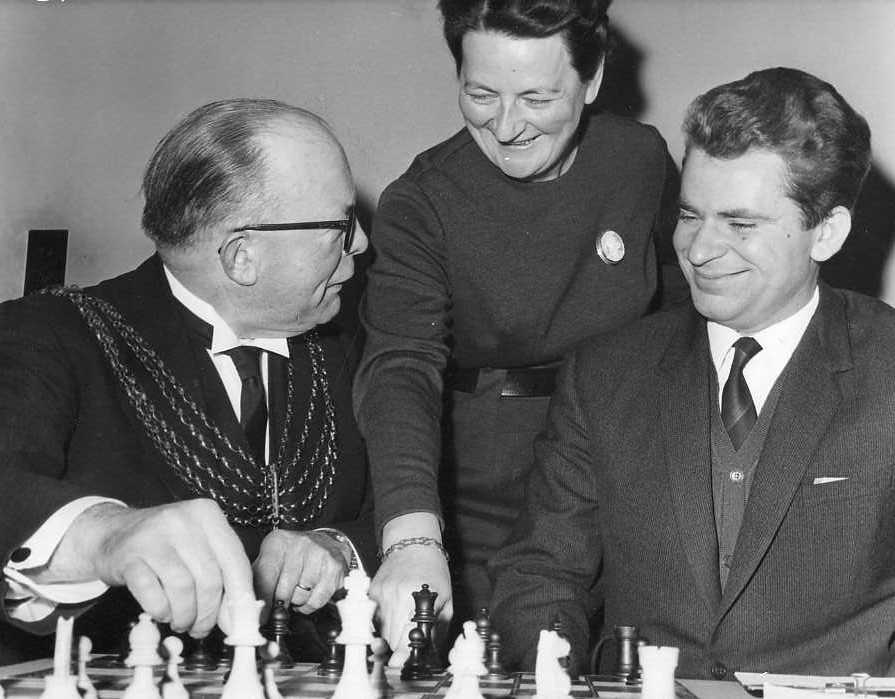
Rowena with Spassky and the Lord Mayor of Plymouth, Alderman Pascho.
“Rowena Mary Bruce played for England in the Women’s Chess Olympiads:
In 1966, at second board in the 3rd Chess Olympiad (women) in Oberhausen (+5, =5, -2) where she won an individual silver medal, and
In 1969, at second board in the 4th Chess Olympiad (women) in Lublin (+5, =3, -6).
From 1940 to 1991 she was married to Ronald Bruce (1903–1991)”
We focus on the British Chess Scene Past & Present!
This website uses cookies to improve your experience. We'll assume you're ok with this, but you can opt-out if you wish. Cookie settingsACCEPT
Privacy & Cookies Policy
Privacy Overview
This website uses cookies to improve your experience while you navigate through the website. Out of these cookies, the cookies that are categorized as necessary are stored on your browser as they are as essential for the working of basic functionalities of the website. We also use third-party cookies that help us analyze and understand how you use this website. These cookies will be stored in your browser only with your consent. You also have the option to opt-out of these cookies. But opting out of some of these cookies may have an effect on your browsing experience.
Necessary cookies are absolutely essential for the website to function properly. This category only includes cookies that ensures basic functionalities and security features of the website. These cookies do not store any personal information.
 Save as PDF